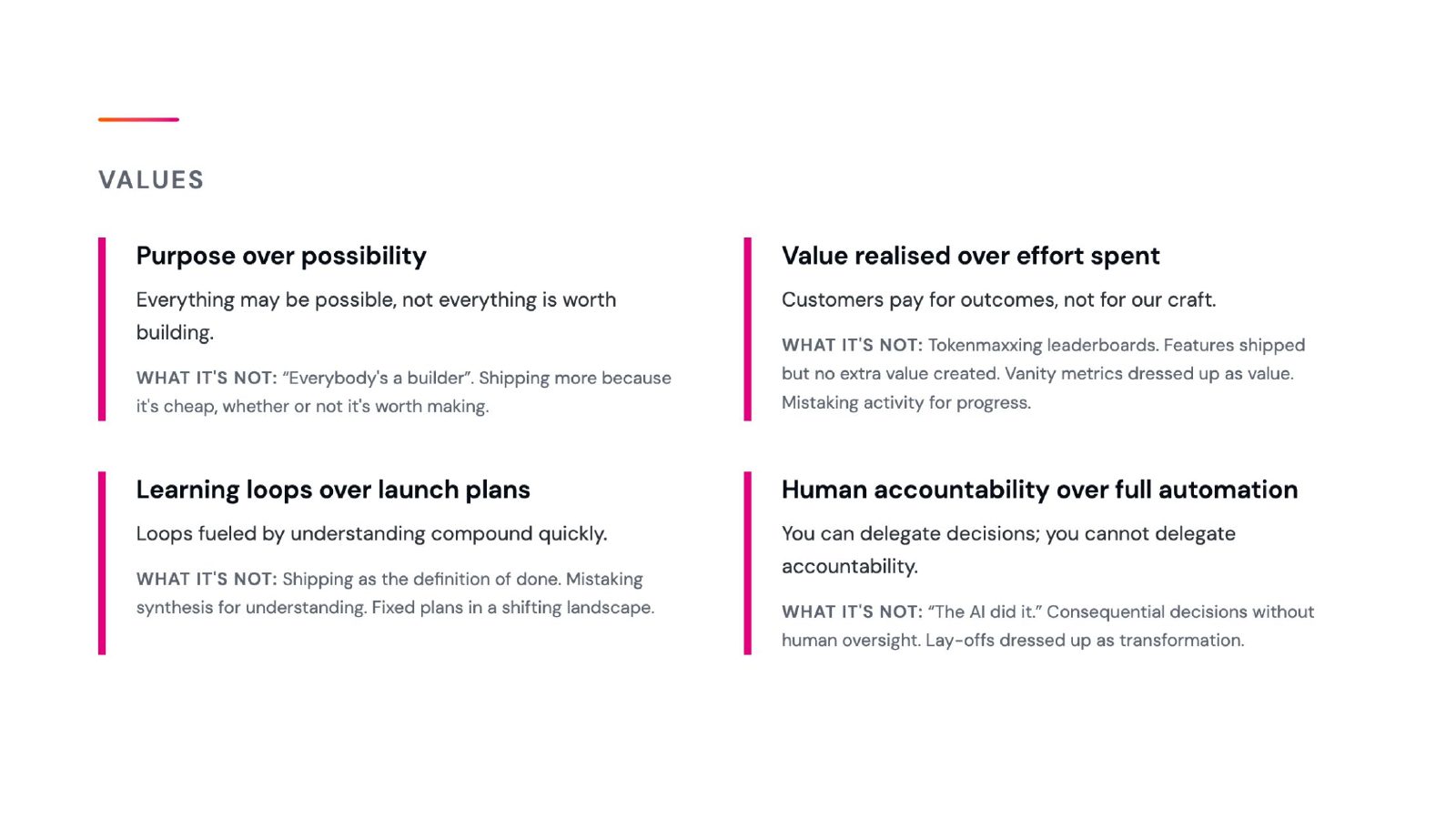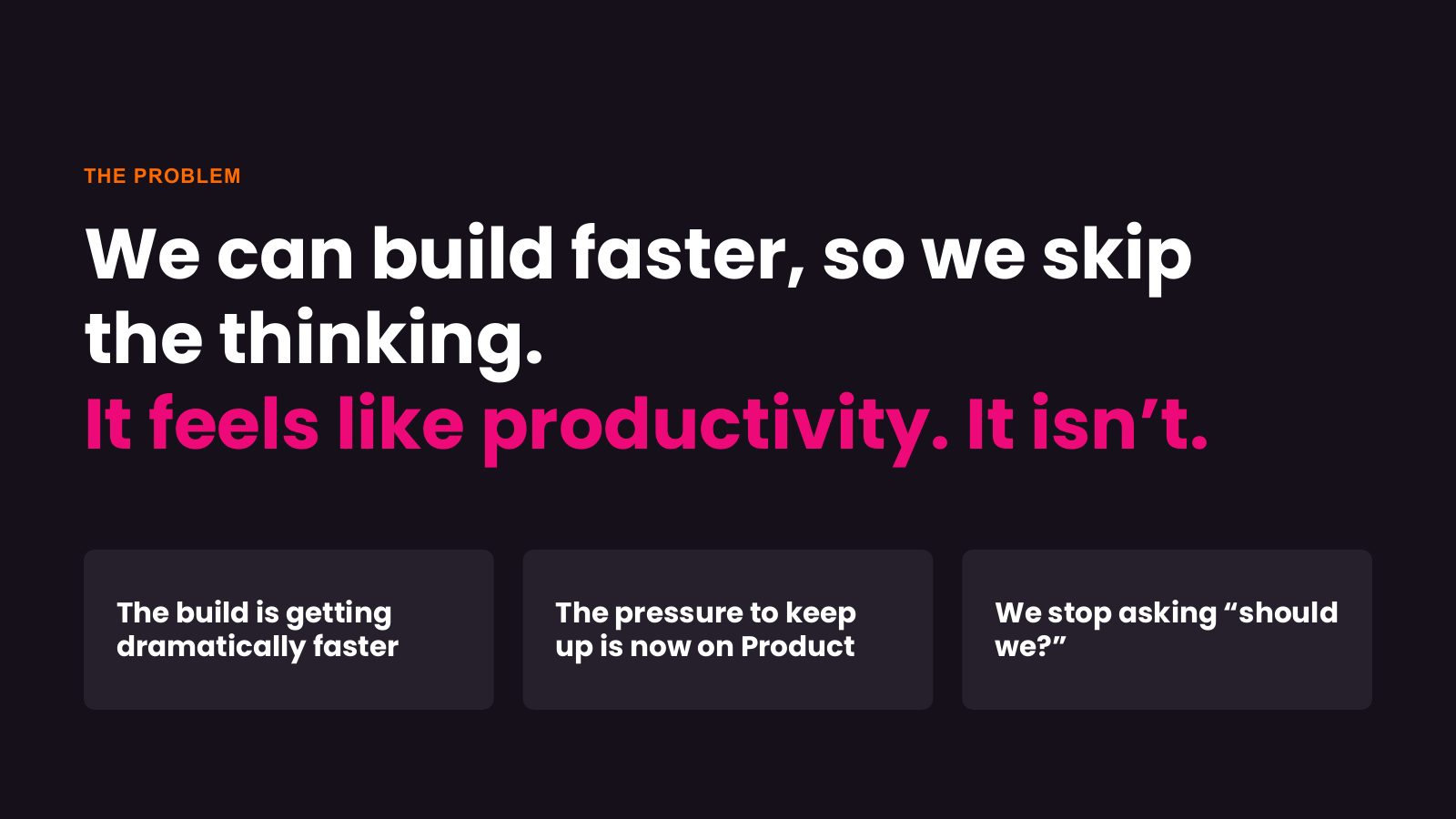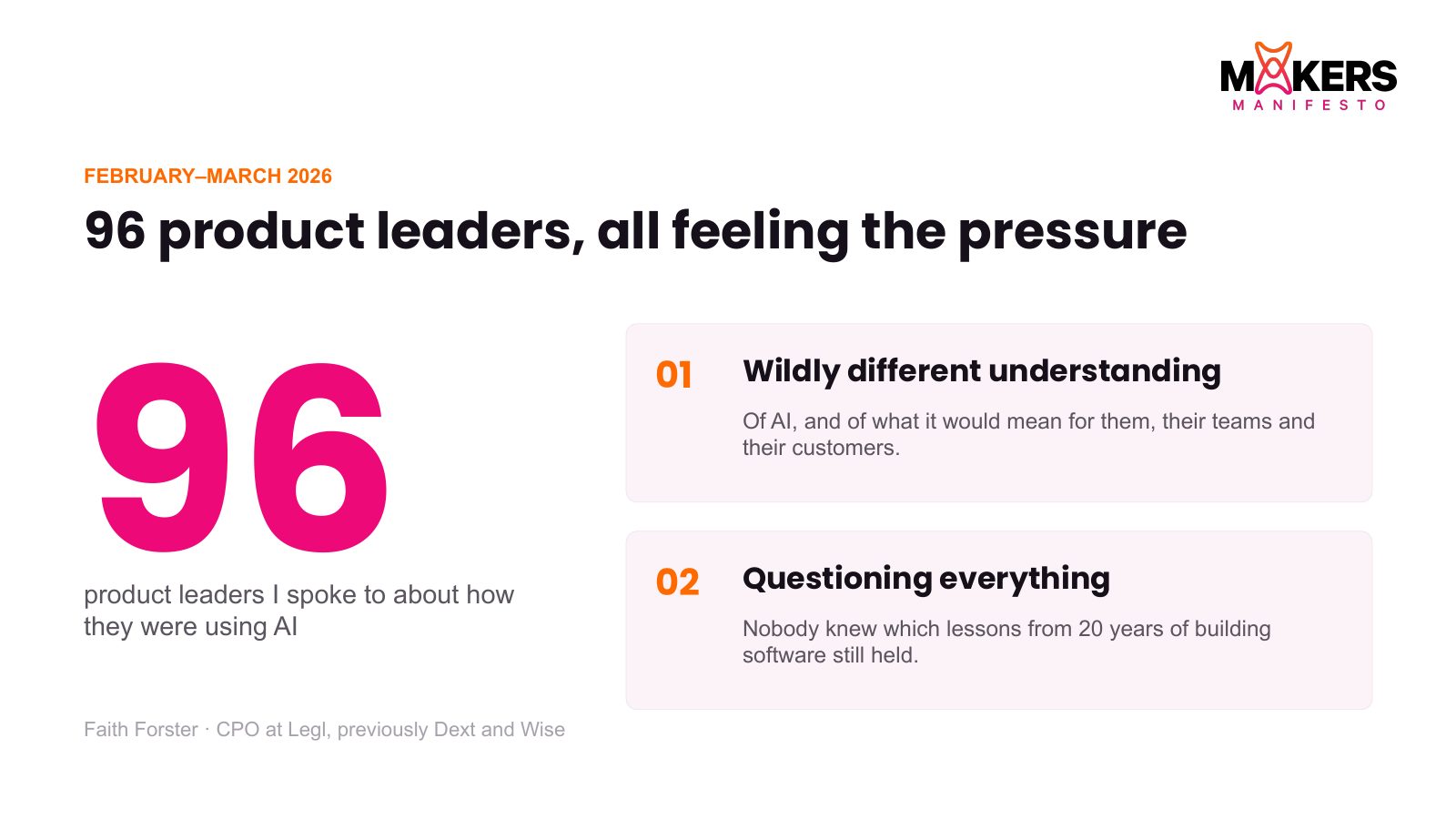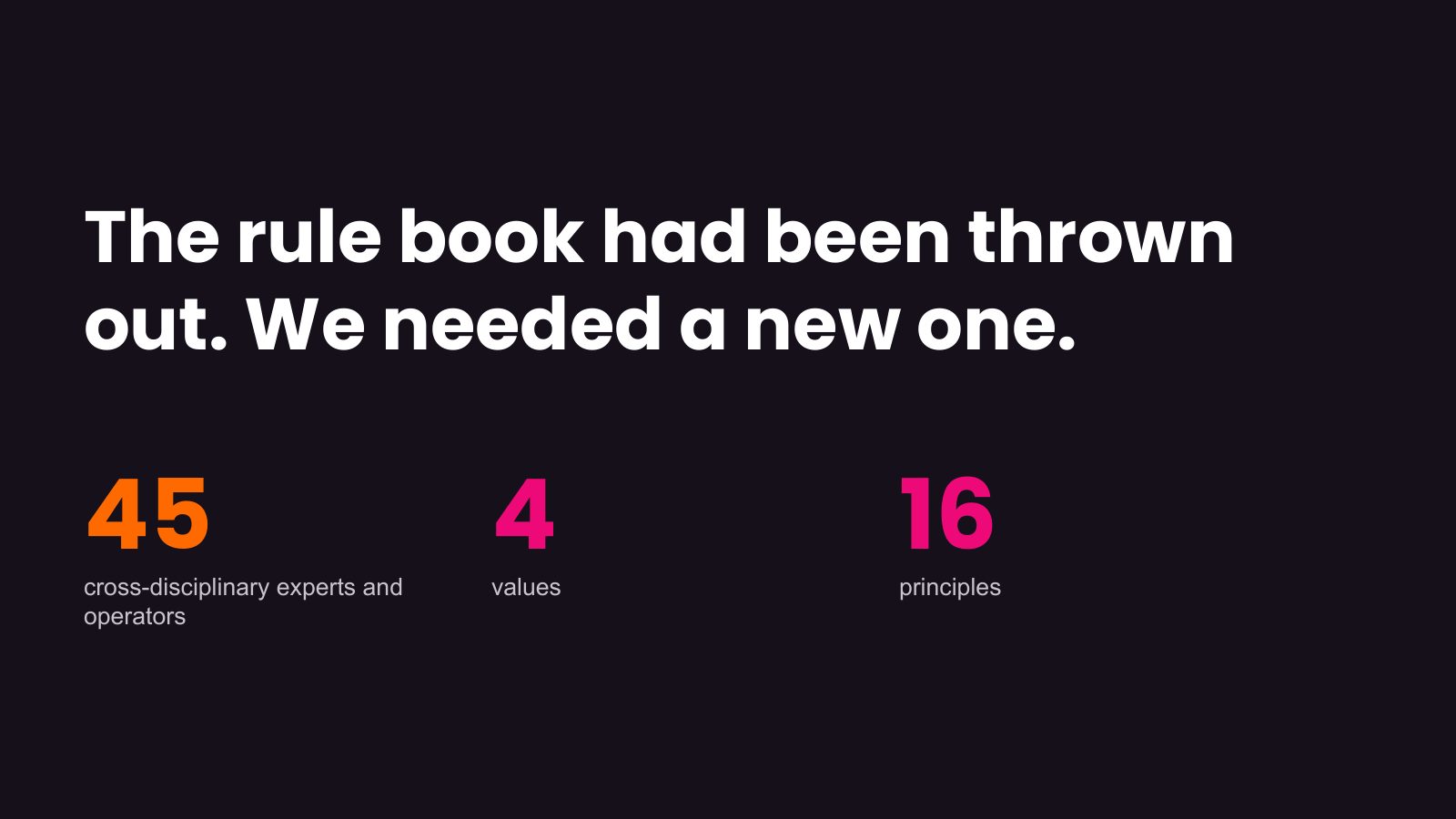
Faith Forster opens with a familiar Monday morning. Engineers or their agents have built three features over the weekend, nobody knows who asked for them, sales want to demo, and the CEO has seen a competitor's release video. Her diagnosis: AI has made engineering much faster, which puts pressure on product to keep up, so people shortcut or skip discovery and nobody asks whether the feature should exist. It feels like progress and often is not. In spring she spoke to 96 product leaders about their AI use and found wildly different levels of understanding. The old rule book was gone, so she gathered 45 cross-disciplinary operators and wrote the Makers Manifesto: four values, 16 principles, an Agile Manifesto for the AI age.
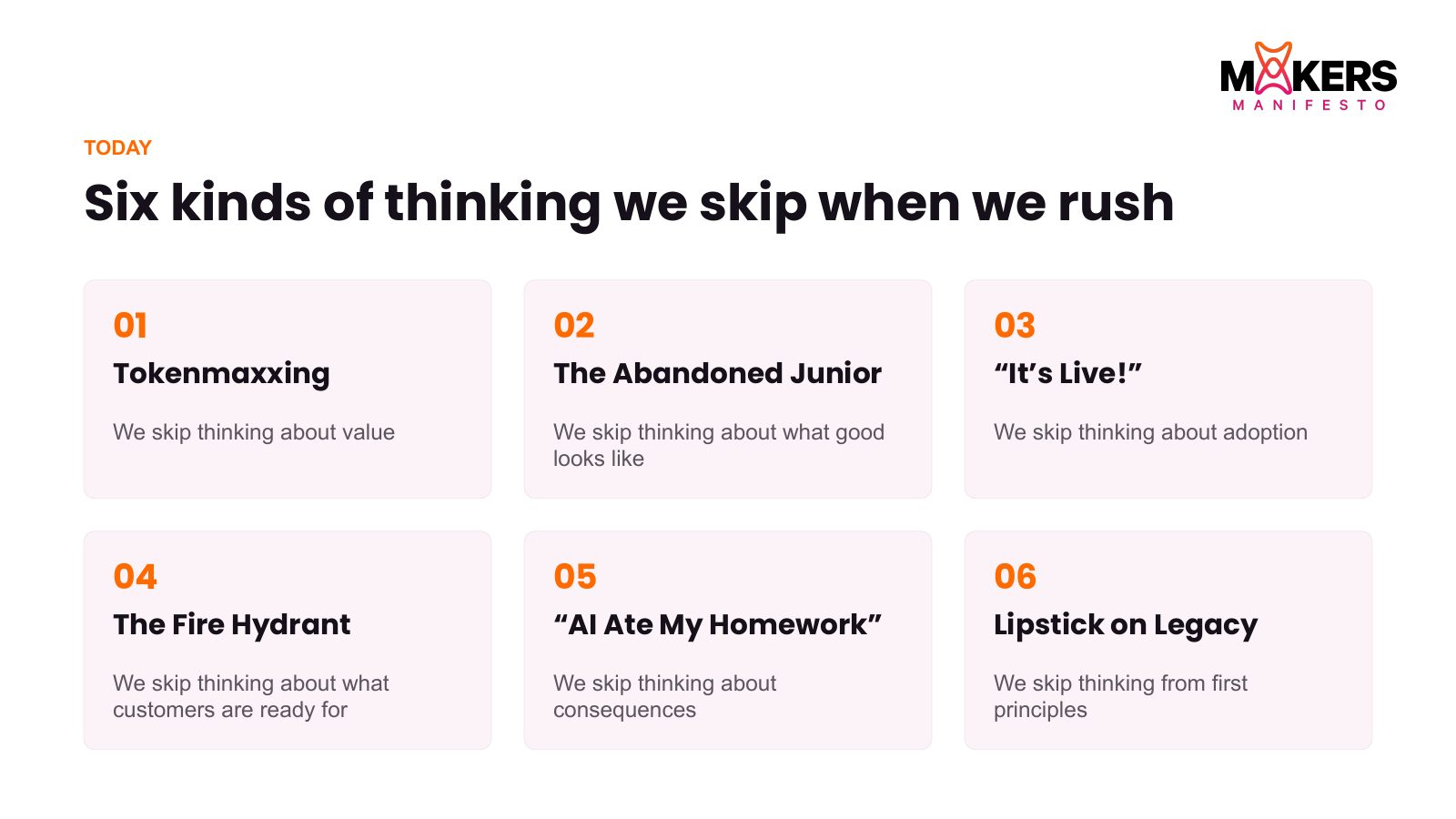
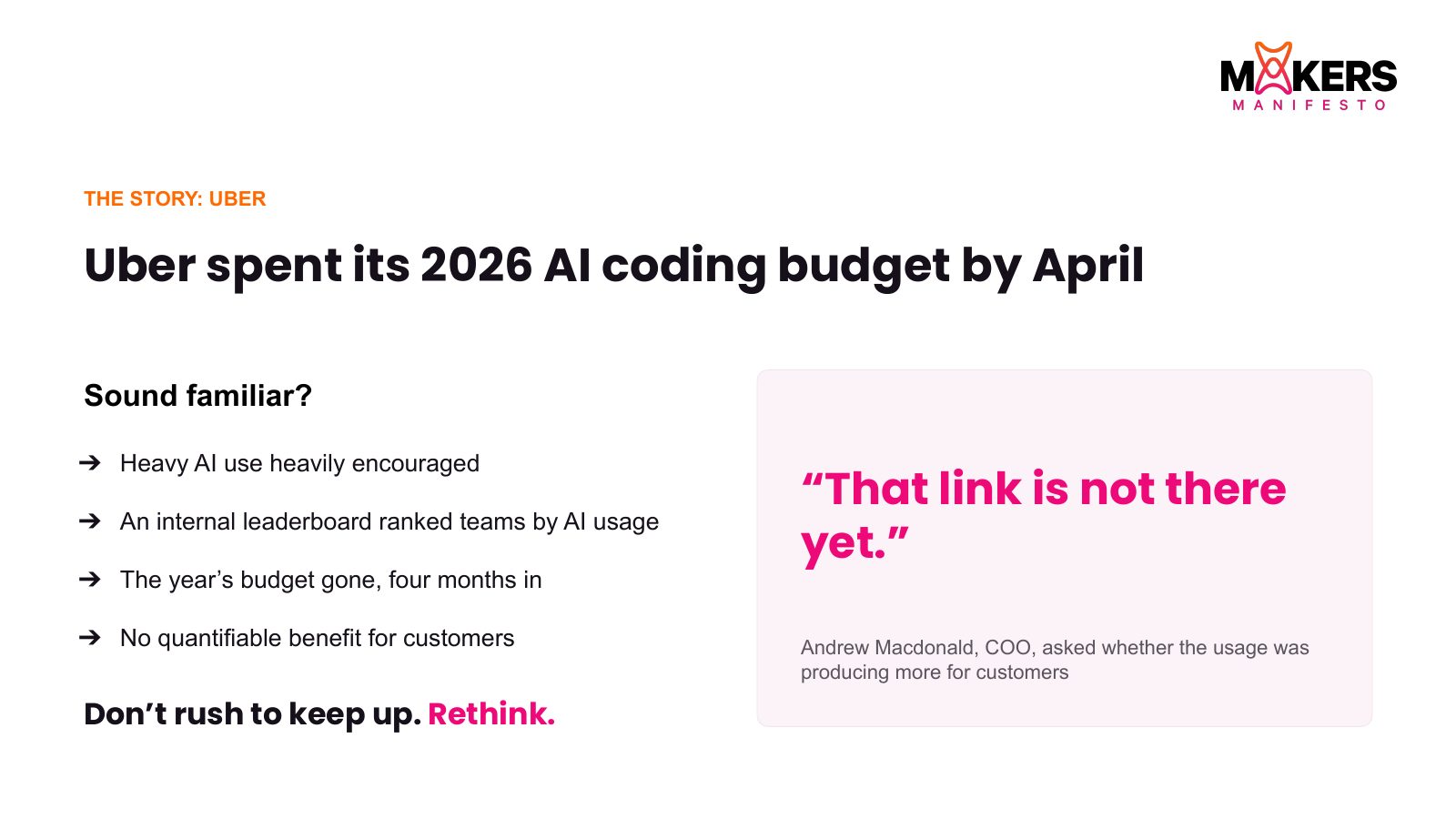
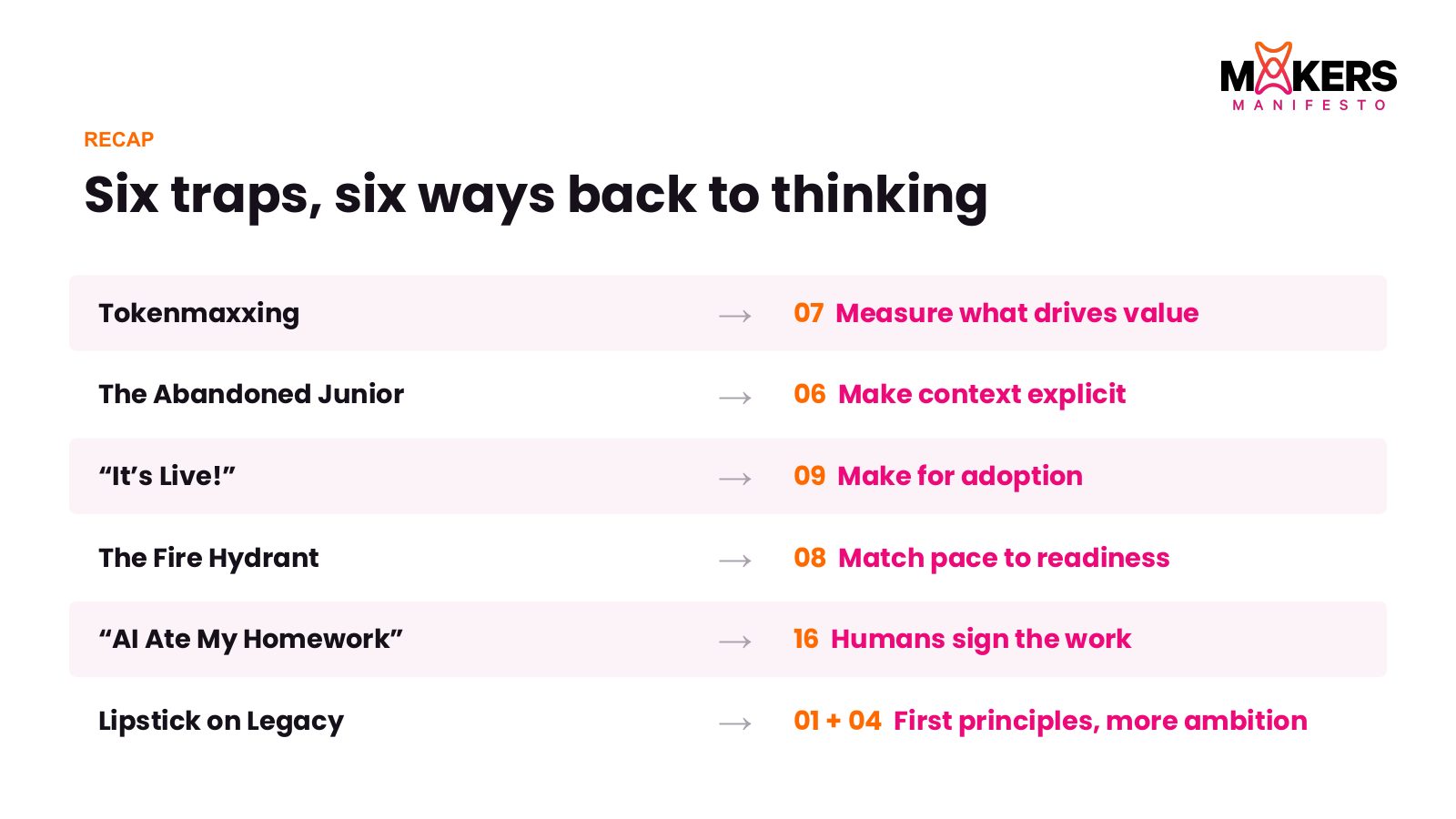
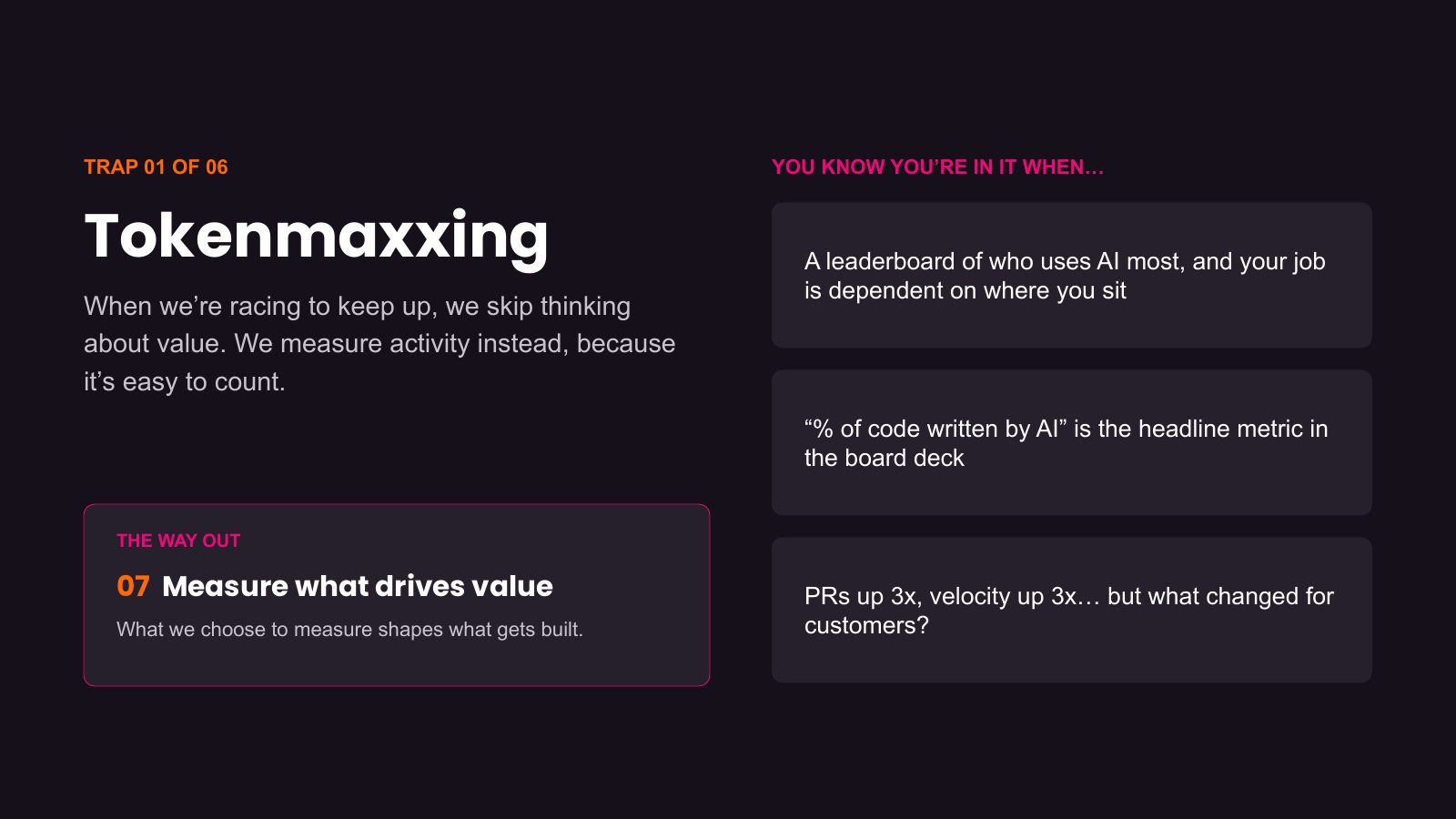
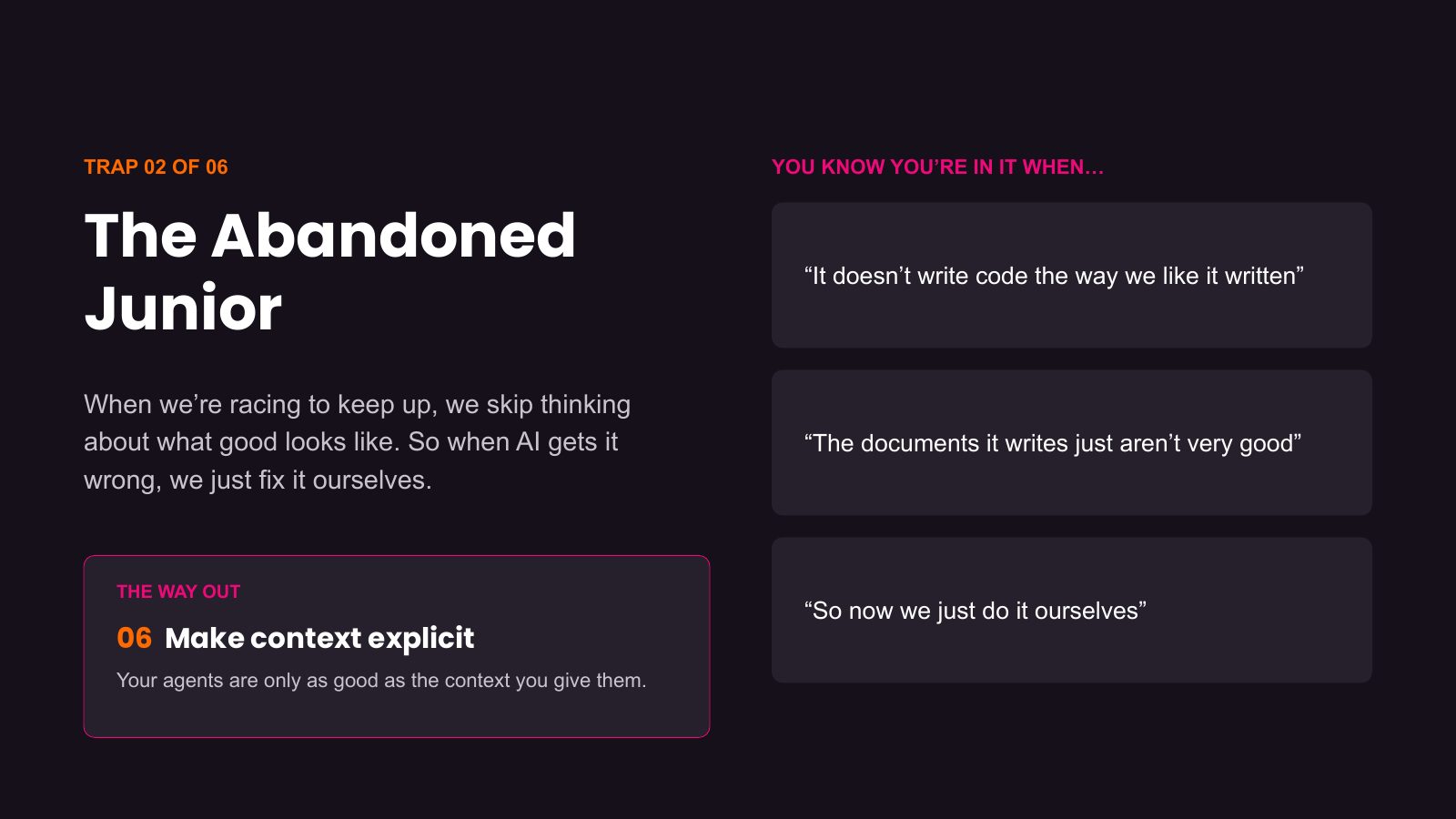
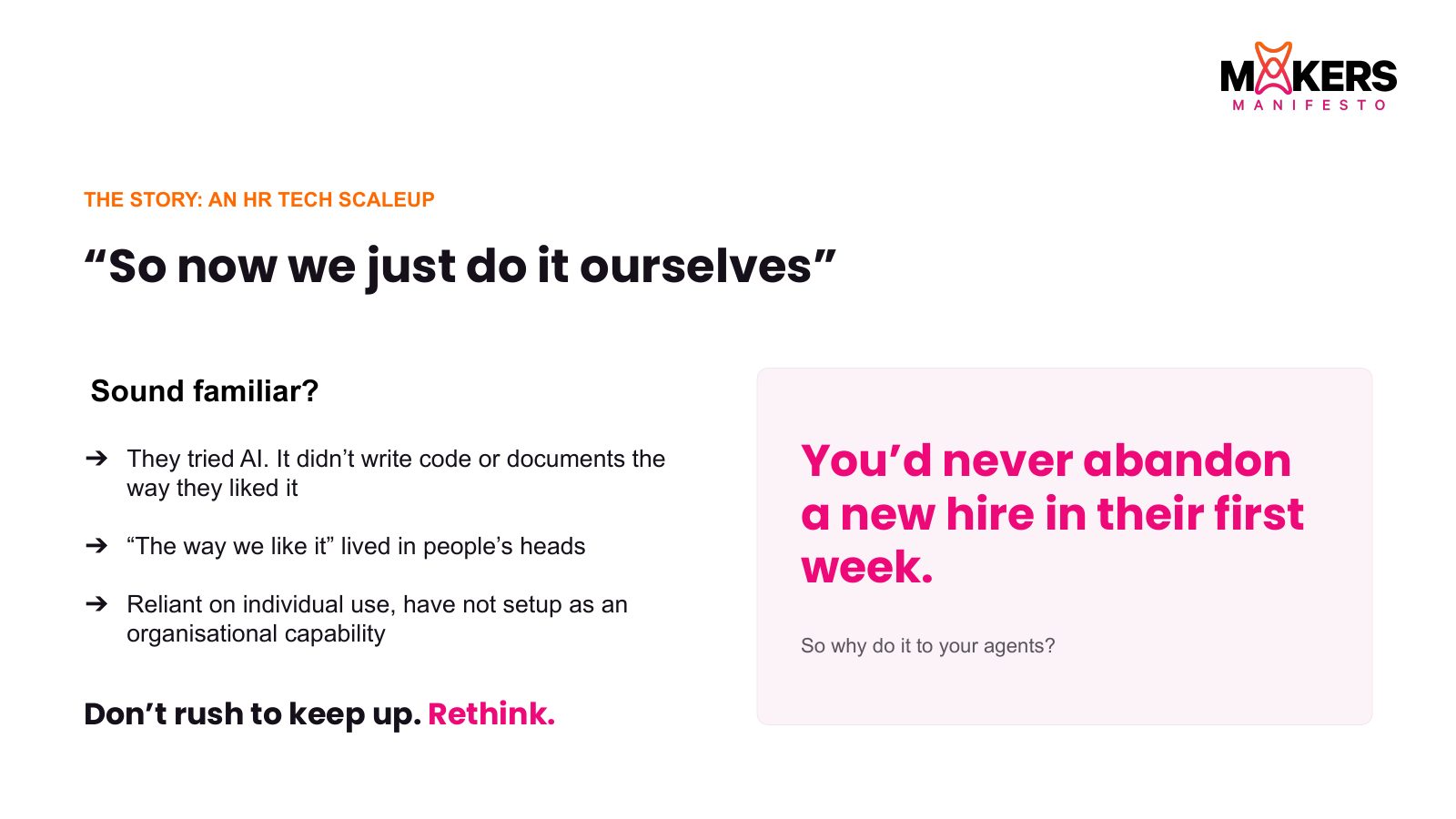
The talk was announced with four traps and grew to six, each a kind of thinking teams skip when they rush, each paired with a principle. Tokenmaxxing is measuring activity instead of value, with Uber as the cautionary tale: a leaderboard ranked teams by AI usage, the year's budget was gone in four months, and when asked what customers got, COO Andrew Macdonald said that link is not there yet. Principle 7, measure what drives value. The Abandoned Junior is handing agents work with no context, then concluding AI does not work, as she saw on the board of an HR tech scale-up. The way we like it had never been written down. Principle 6, make context explicit. Onboard your agent the way you would onboard a graduate.
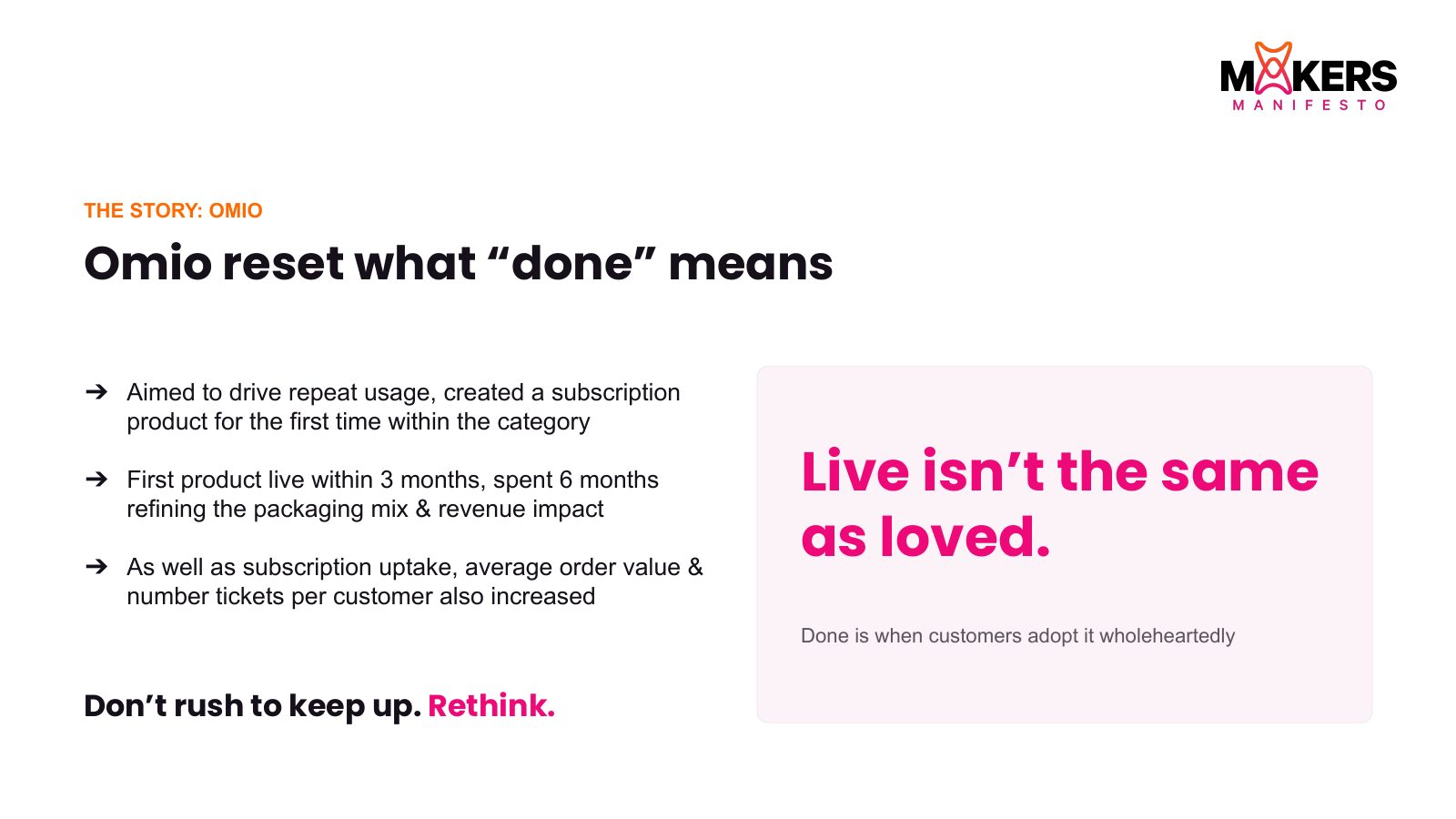
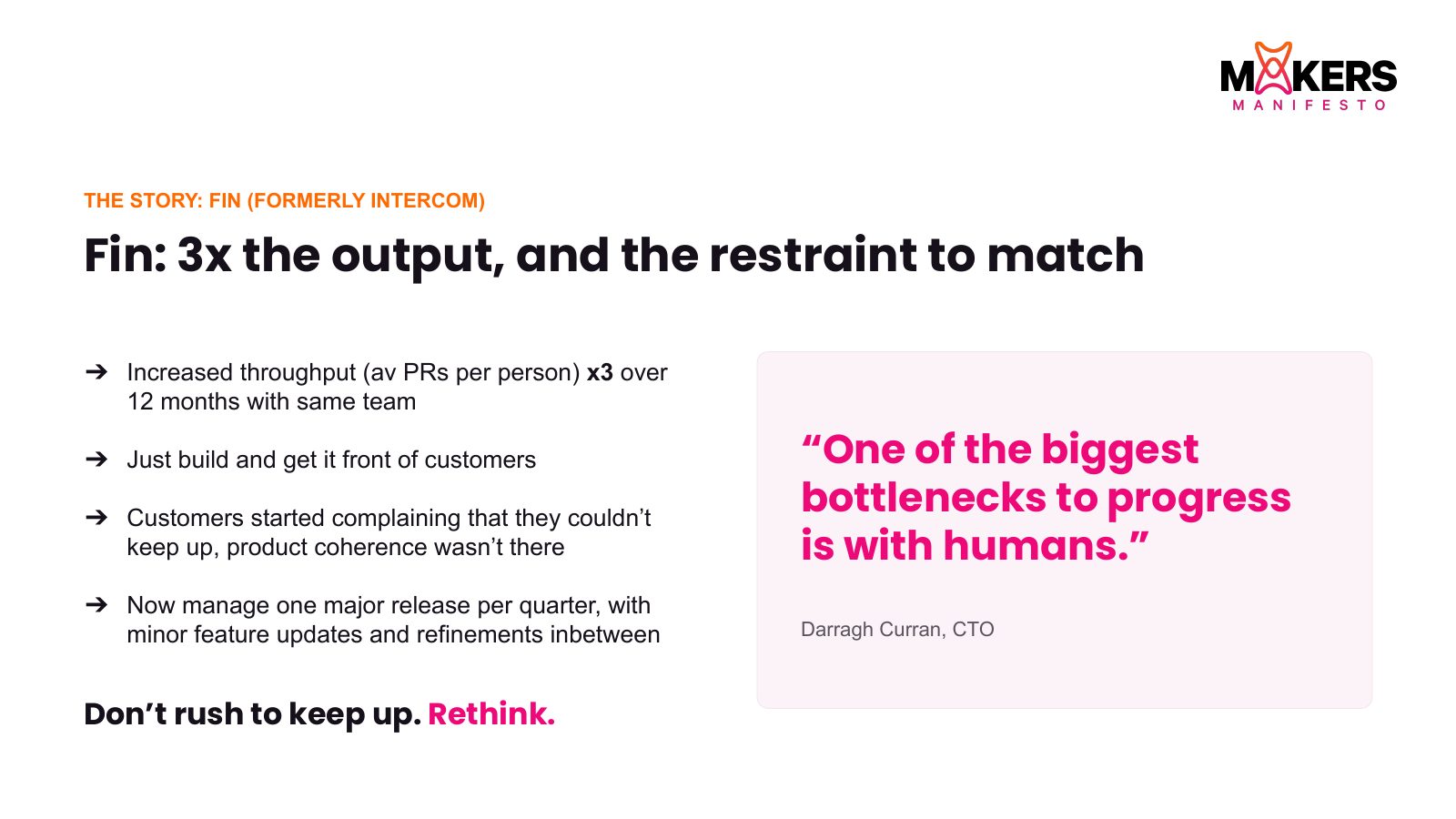
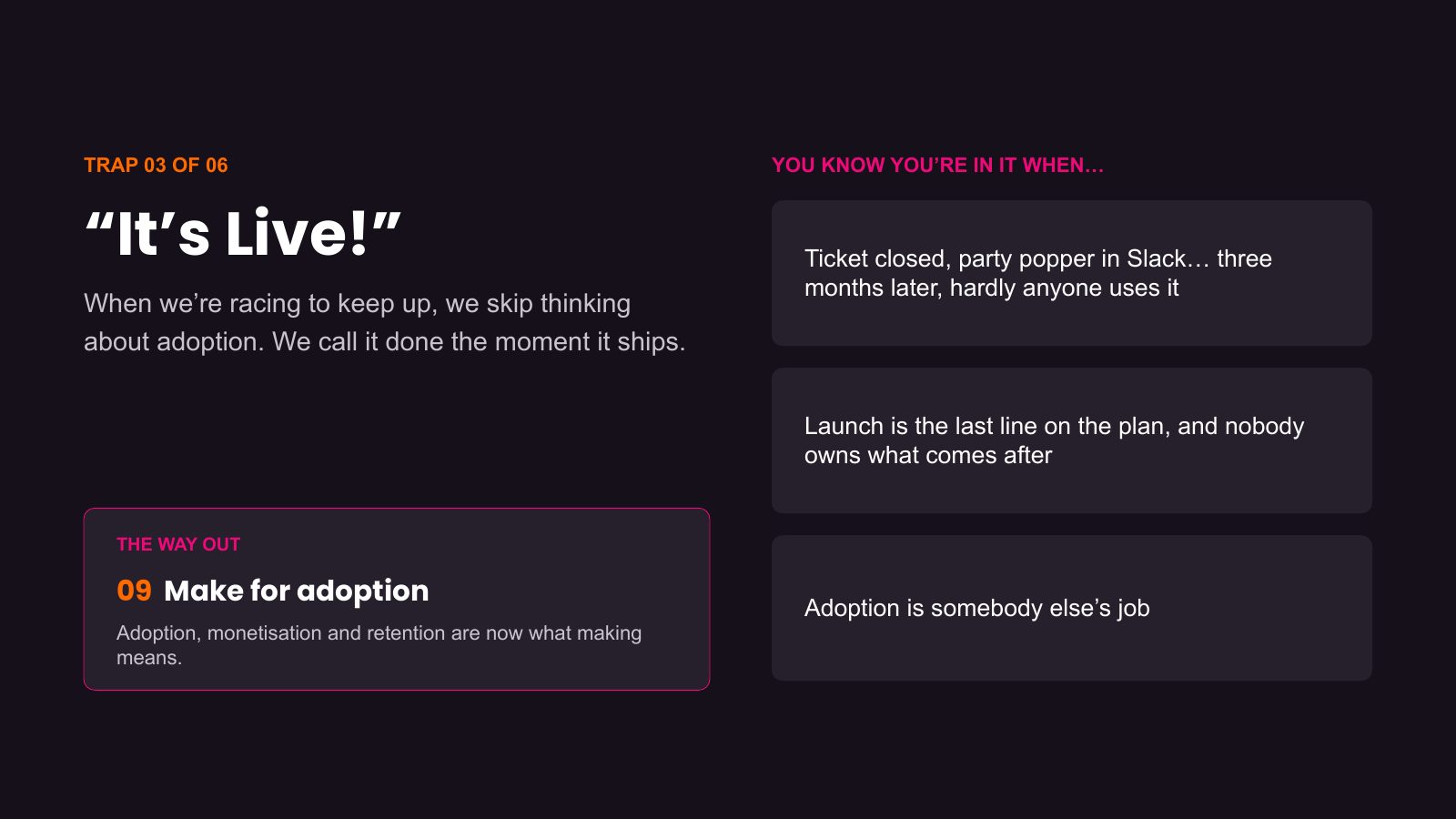
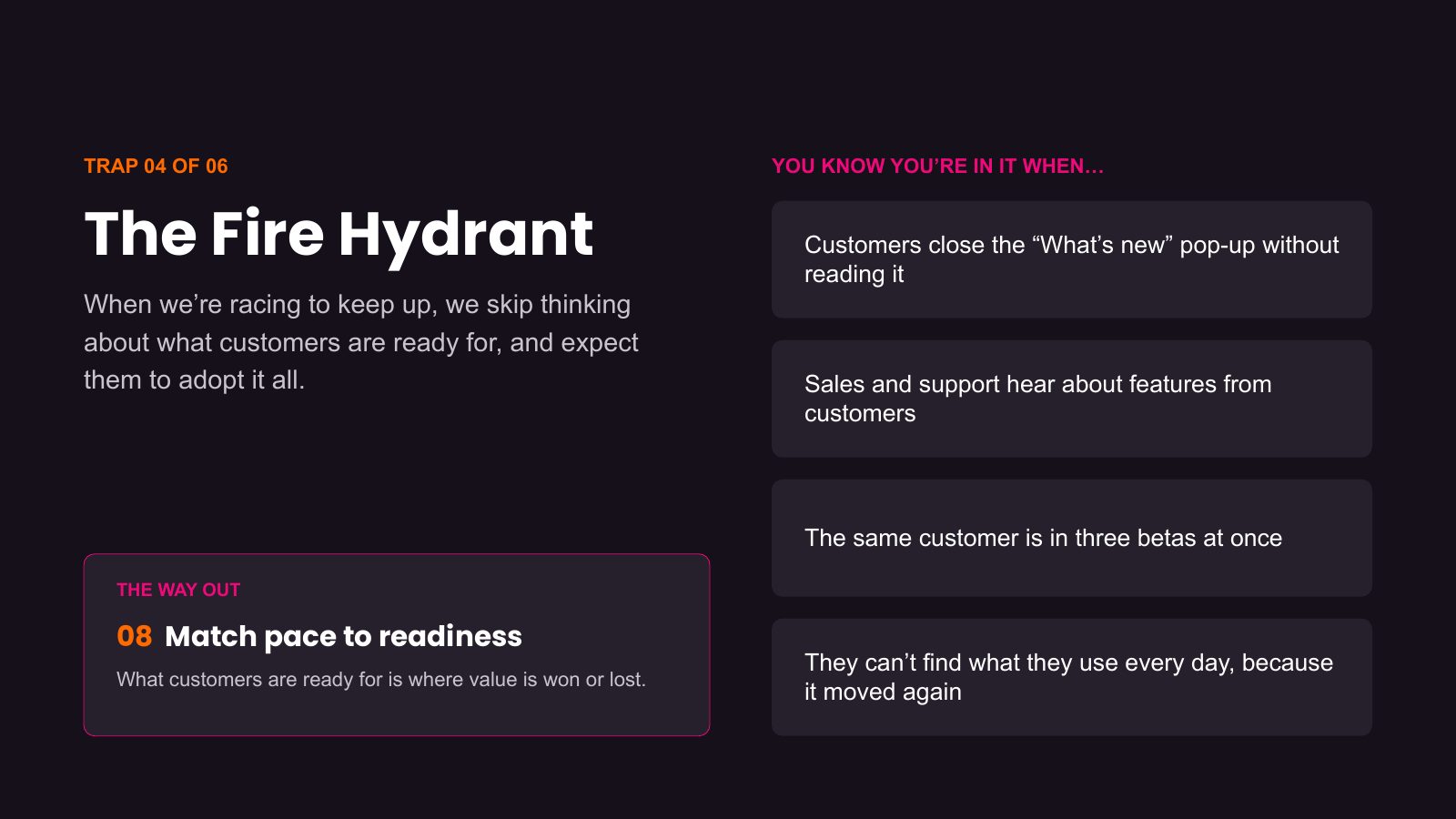
It's Live is calling a feature done when it ships. Faith's line is that distribution, adoption, monetization and retention are not what comes after the making, they are the making now. Omio put a subscription live within three months and then spent six months refining packaging and revenue impact until average order value and tickets per customer rose. Principle 9, make for adoption. The Fire Hydrant is shipping faster than customers can absorb. Fin, formerly Intercom, tripled throughput and shipped nine tier one releases in two months until customers complained that the product no longer made sense; they now run one major release per quarter. Principle 8, match pace to readiness. Humans are the bottleneck, and often those humans are your customers.
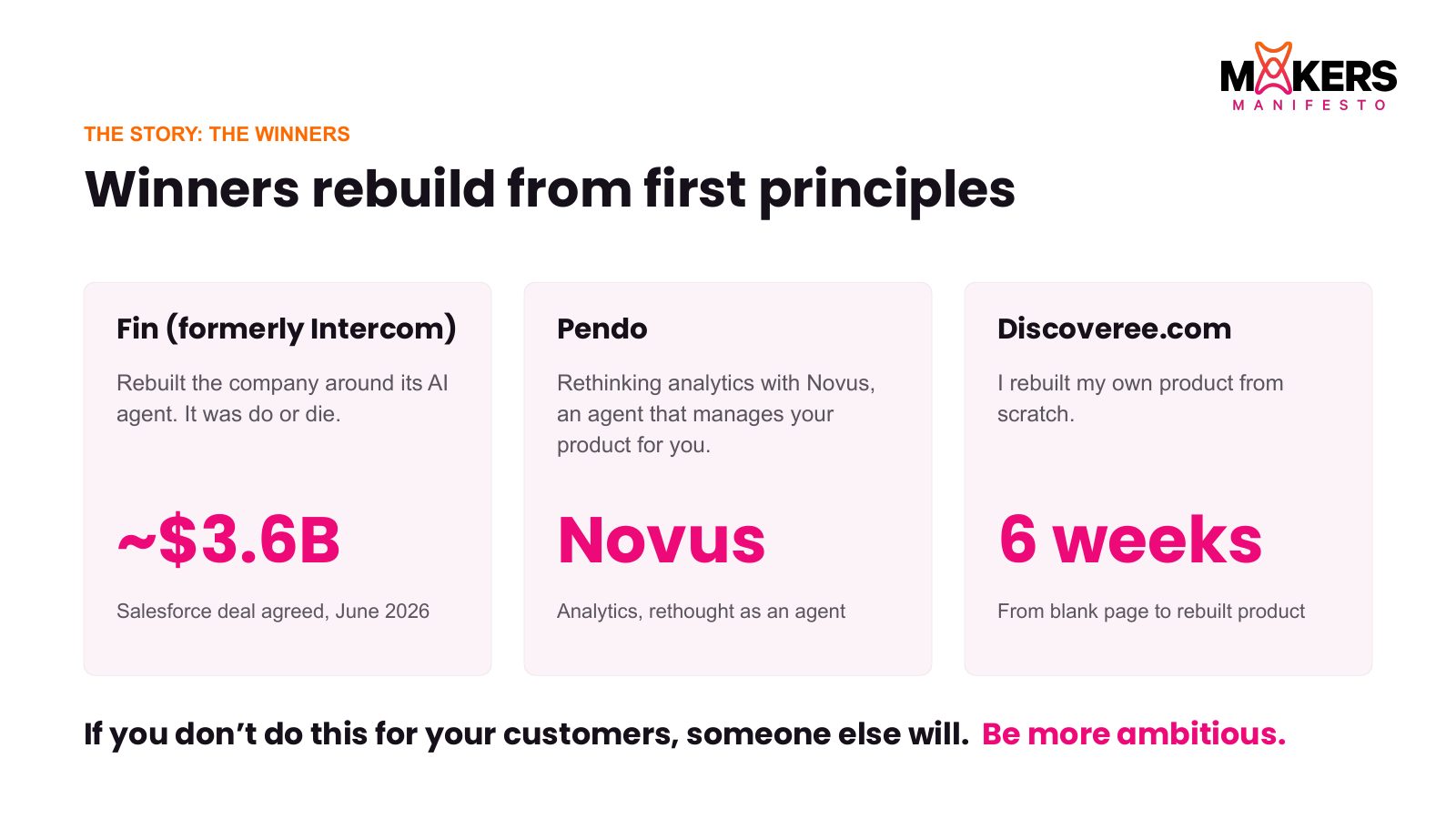
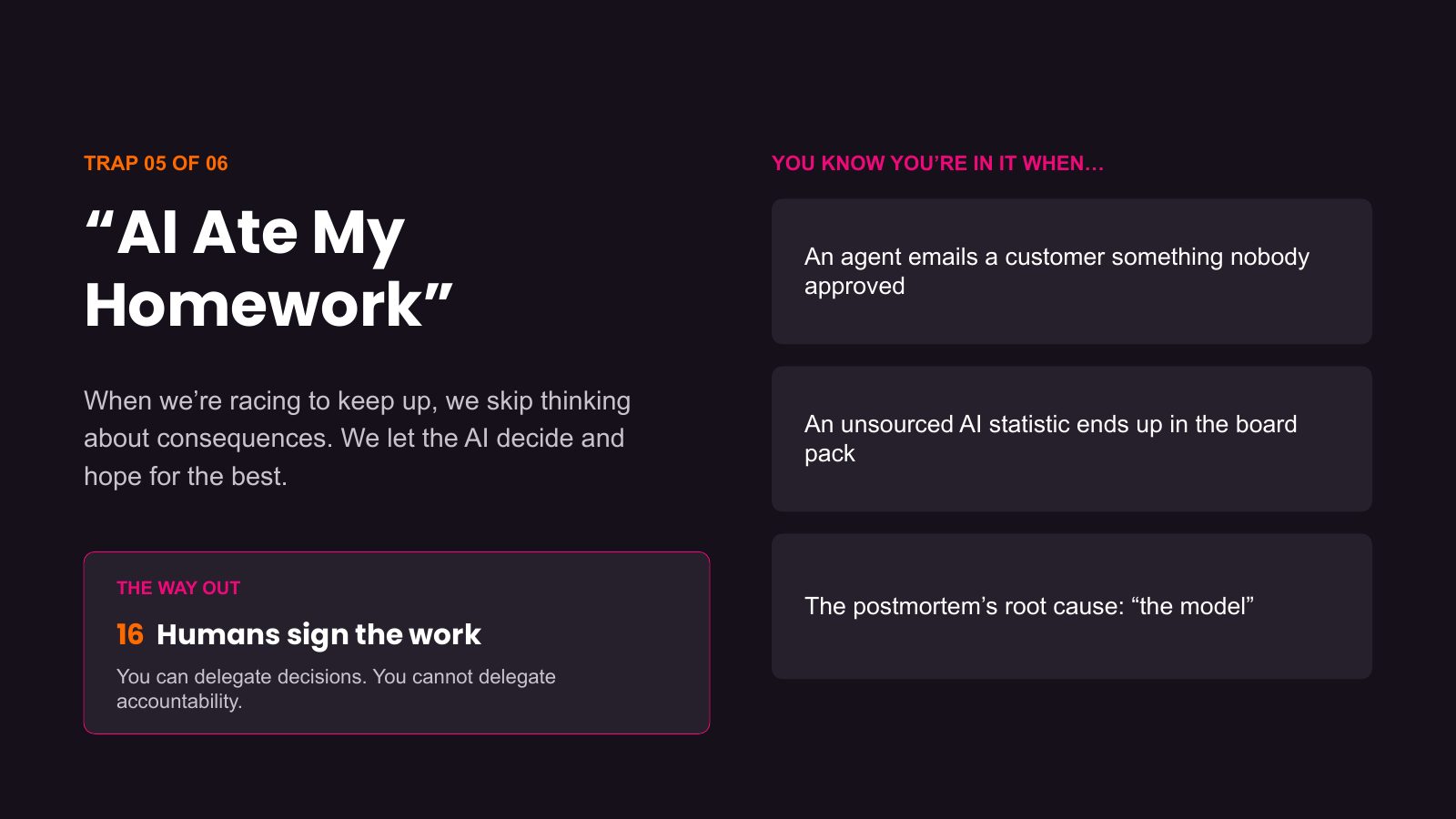
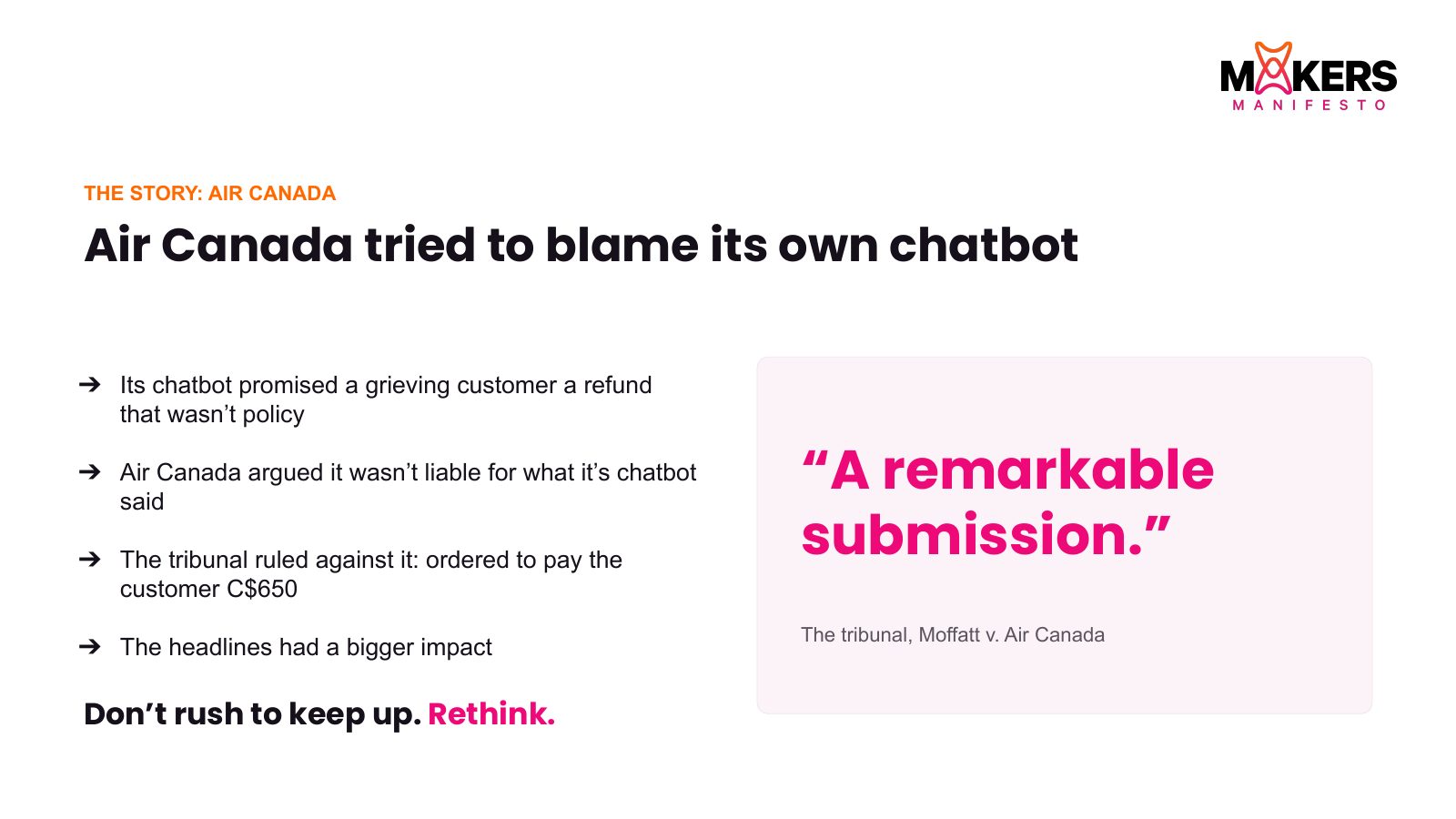
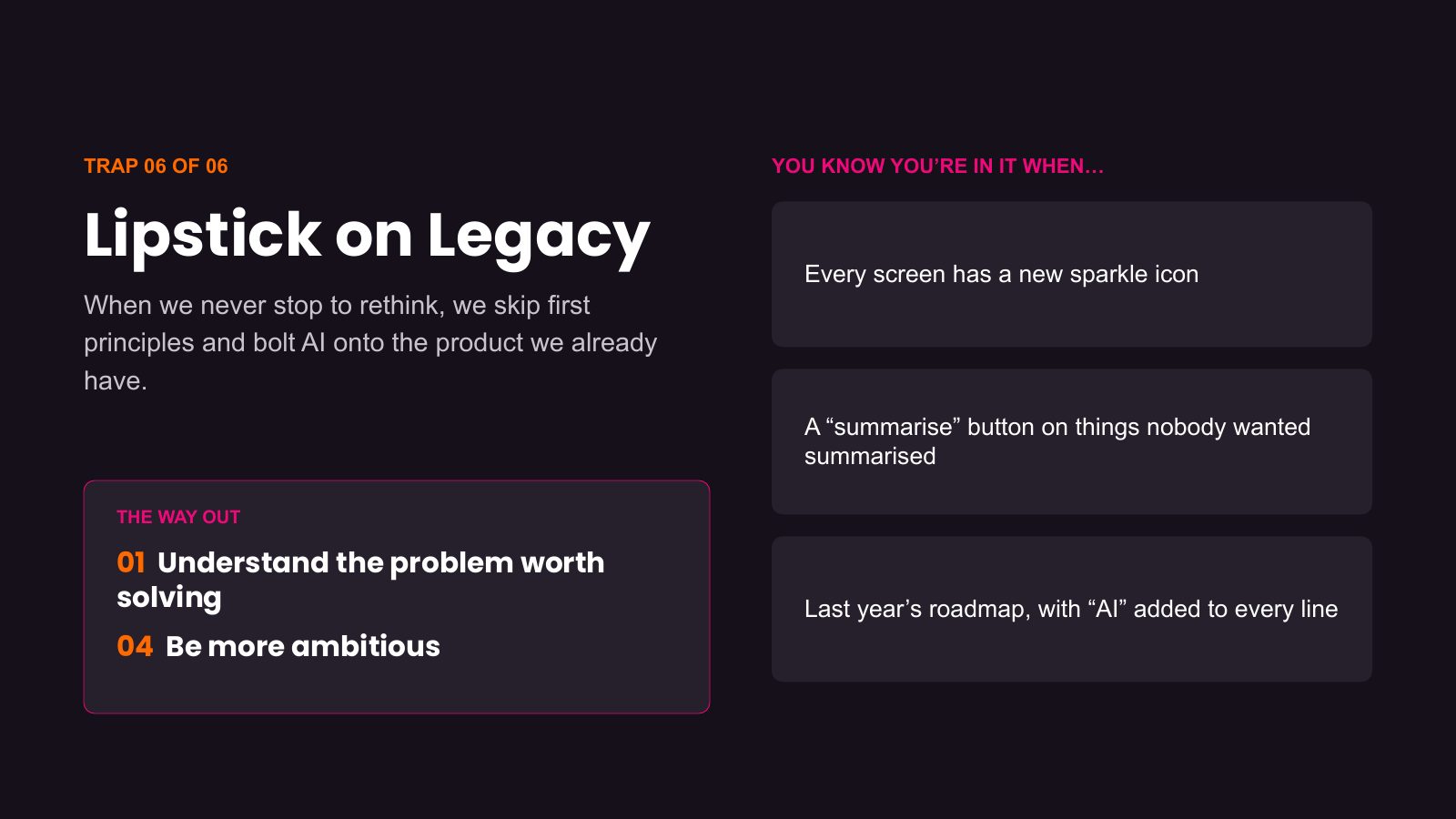
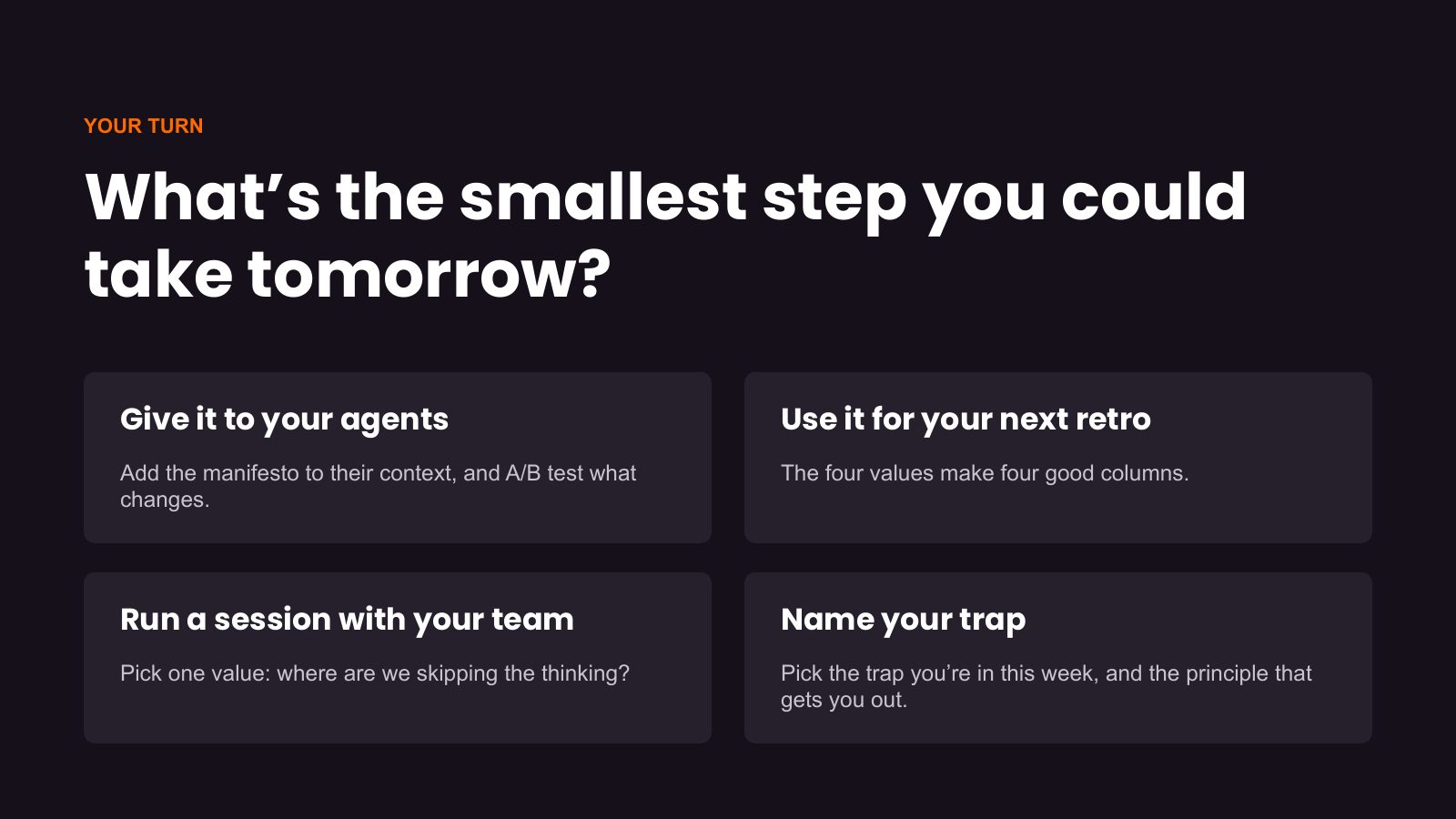
AI Ate My Homework is letting the model decide and hoping for the best. Deloitte Australia repaid half a million dollars after an unsourced AI statistic landed in client work, and Air Canada tried to blame its own chatbot in a tribunal, which called that a remarkable submission. Principle 16, humans sign the work: you can delegate decisions but not accountability. Lipstick on Legacy is adding a sparkle icon to last year's roadmap instead of asking what problem is worth solving. The winners rebuild: Fin sold to Salesforce for about 3.6 billion dollars, Pendo rethought analytics as an agent with Novus, and Faith rebuilt Discoveree in six weeks. Her closing ask: download the manifesto, give it to your agents, run a retro on one value, and name your trap.