AI End-2-End PM Workflows · 13:00 · 25 min

Run Your Product From Chat

Thomas HartmannCo-Founder, Product Masterclass. Author of From Project to Product Mode

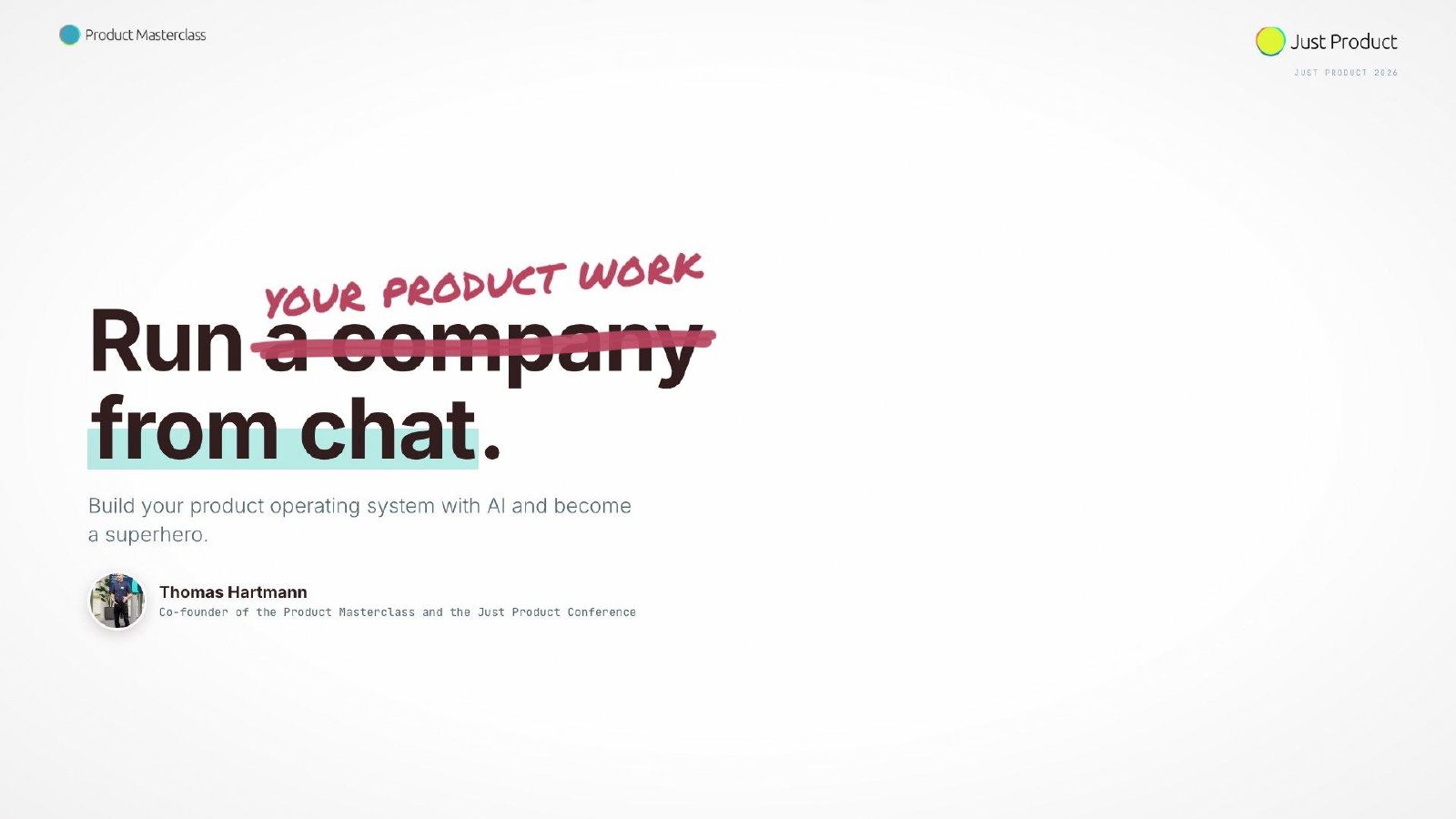
Connect AI to your tools and context, encode your workflows as skills, and the operational grind disappears, freeing you for strategy.

Thomas Hartmann
Chapters
Highlights

The moments worth replaying.

Short clips, each a complete thought. Share them, or jump to the spot in the full talk.

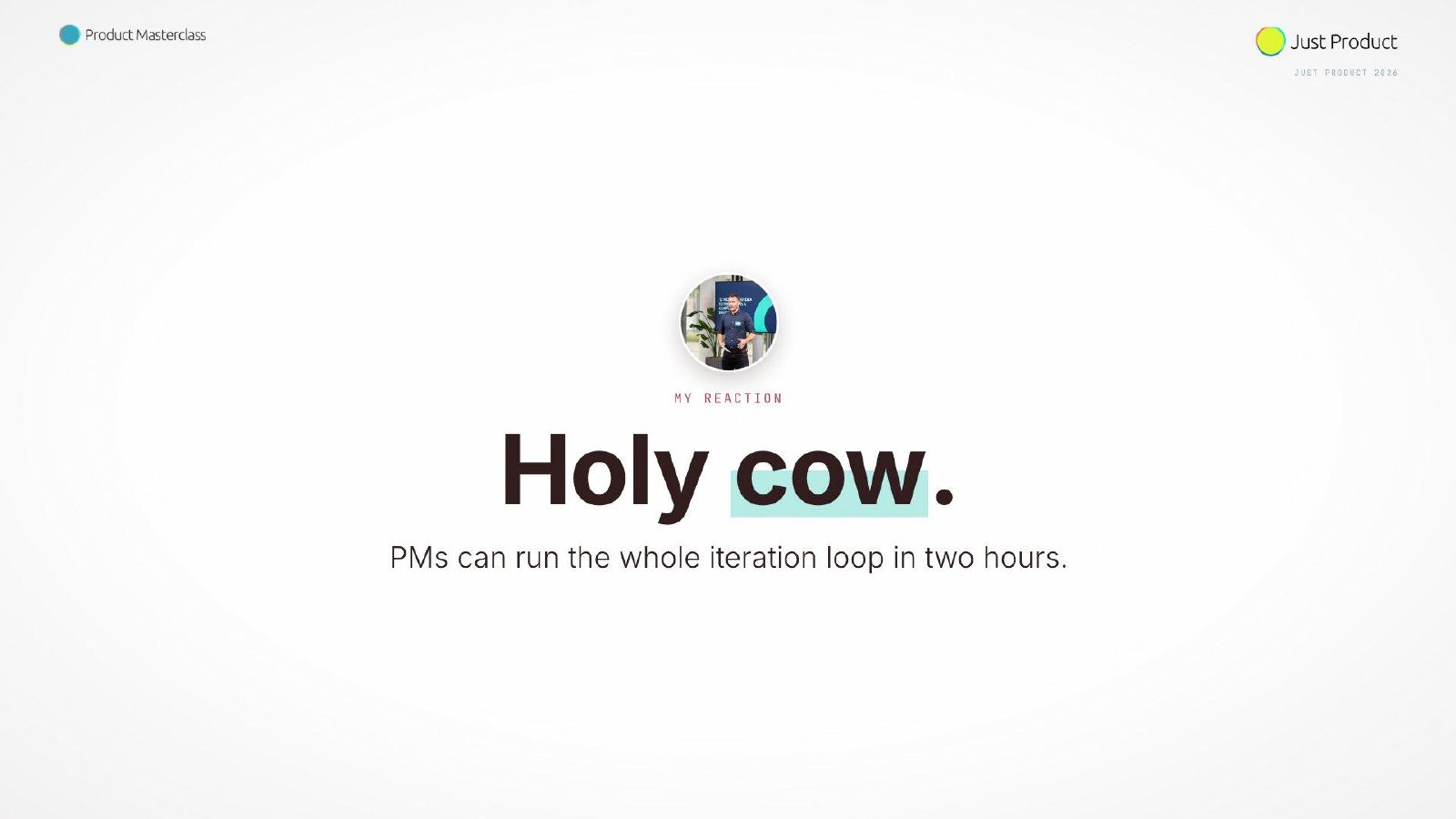
Two hours instead of four weeks

The hackathon story where an engineer PM went from interviews to prototype in two hours and sent Thomas home with sleepless nights.

3:18 IN THE TALK · 78 S
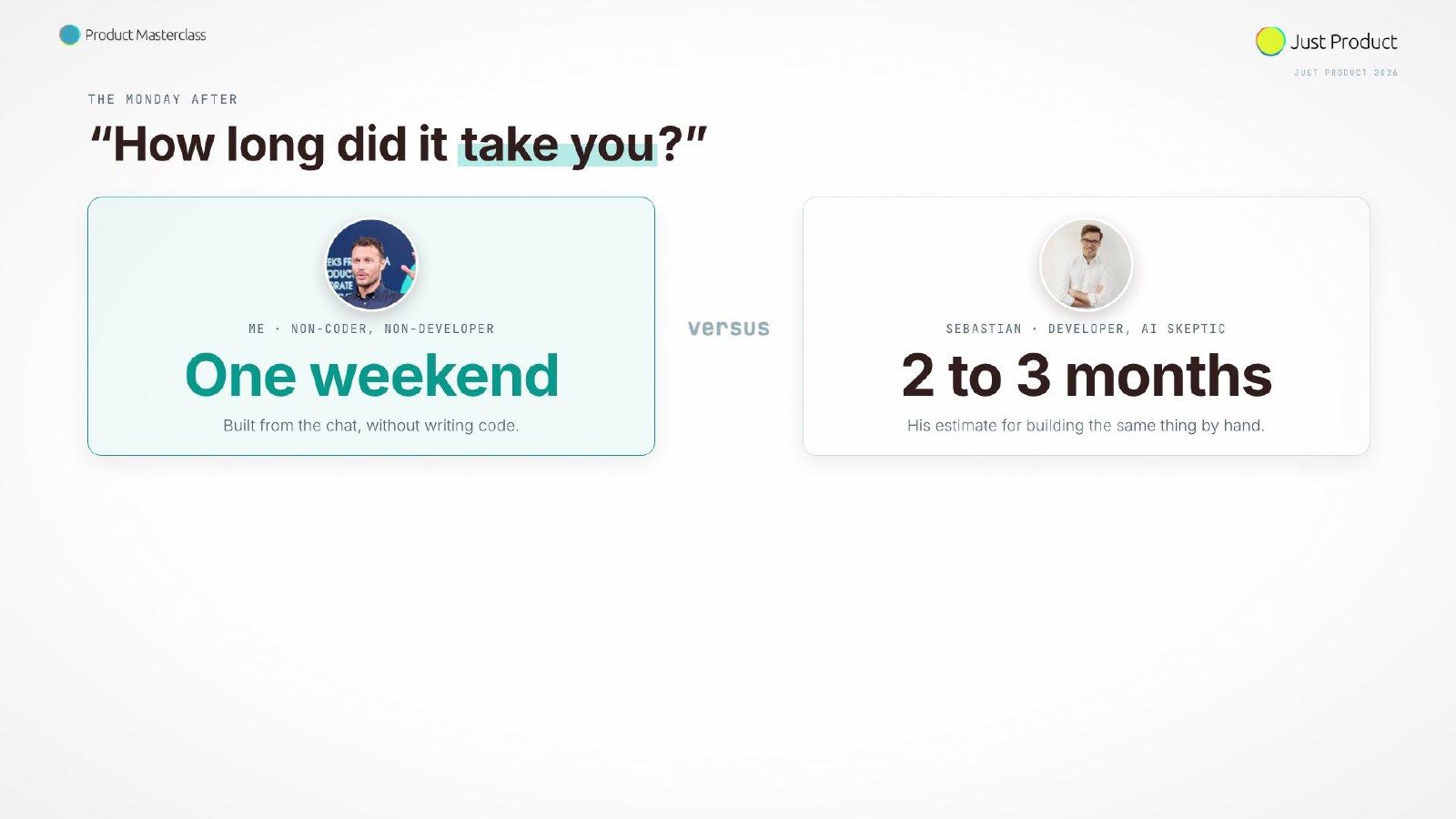
A weekend app worth three developer months

Thomas builds a working app over a weekend and Sebastian estimates two to three months for the same thing.

4:57 IN THE TALK · 86 S
Task one done: 10x and 46 skills

The live demo pays off and Thomas does the math on speed and freed capacity.

12:47 IN THE TALK · 54 S
Three days of work in two hours

The alumni story pipeline shows AI enabling work that was impossible before, plus data questions answered on the spot.

13:41 IN THE TALK · 65 S
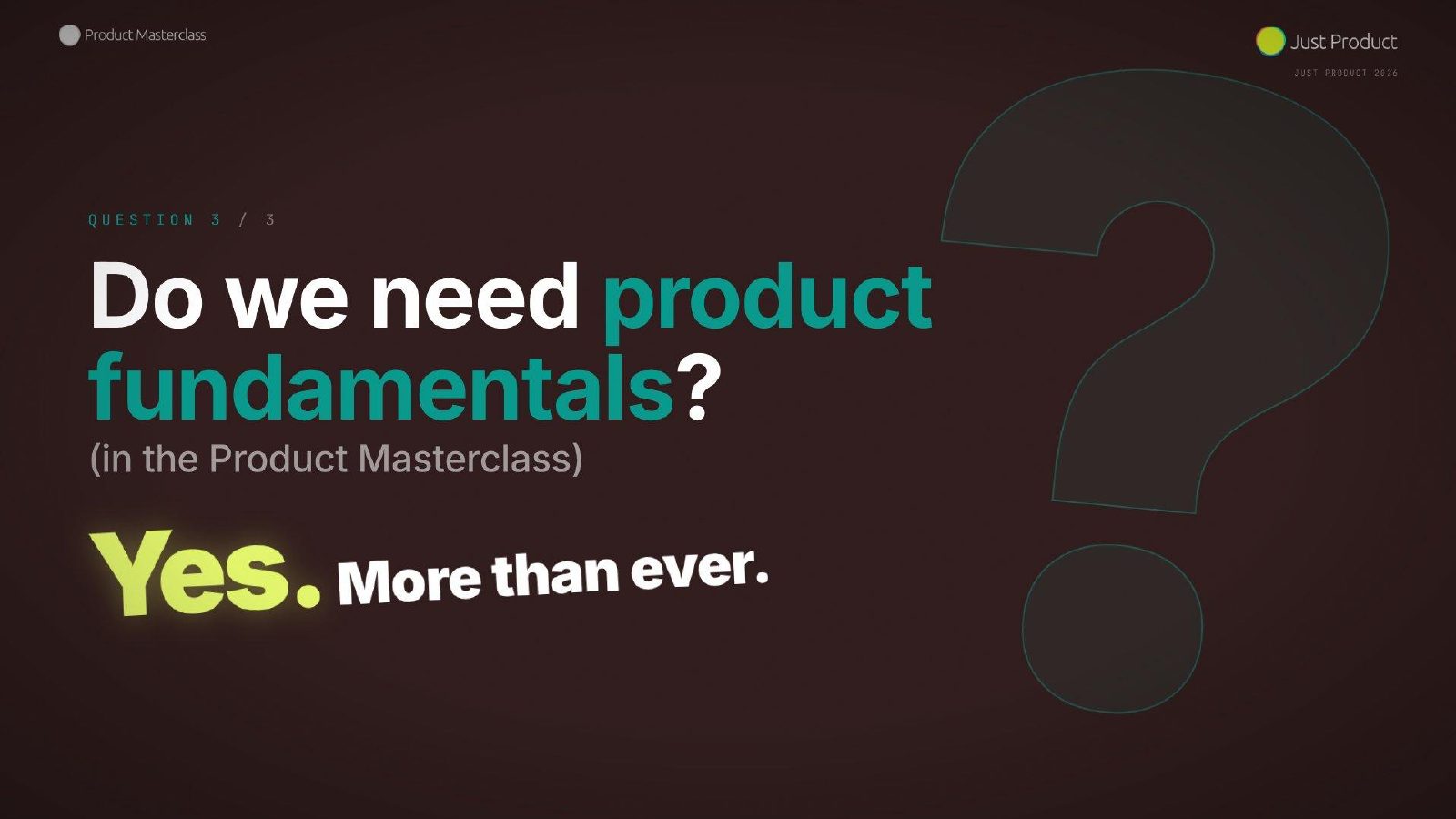
A fool with a tool is still a fool

The core argument that fundamentals matter more with AI, delivered as a memorable line.

20:07 IN THE TALK · 61 S
The chef at the pass

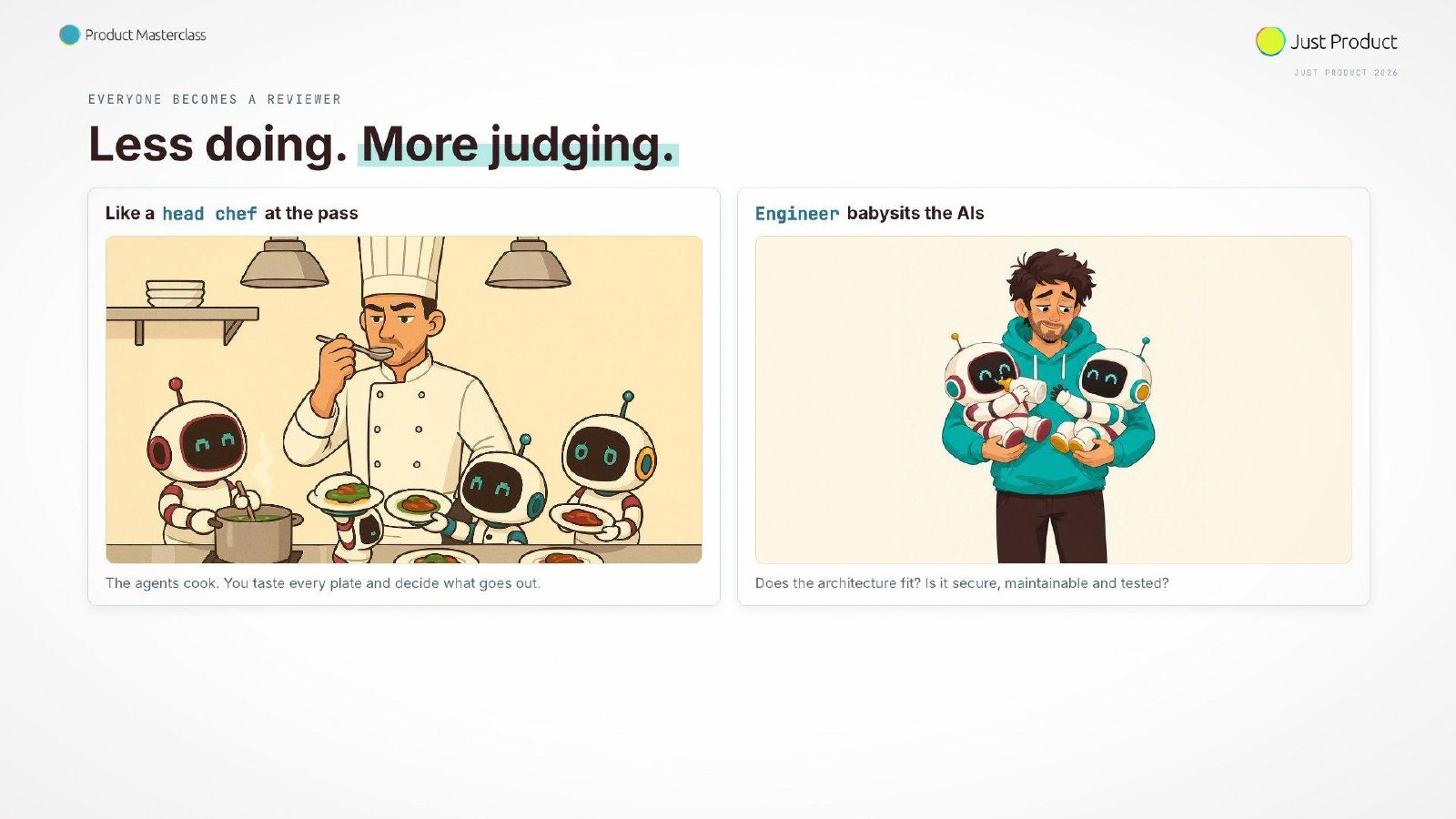
The vivid image of the PM's new job: reviewing everything the agents cook and finding the hair in the soup.

21:28 IN THE TALK · 57 S
In short

What Thomas argued.

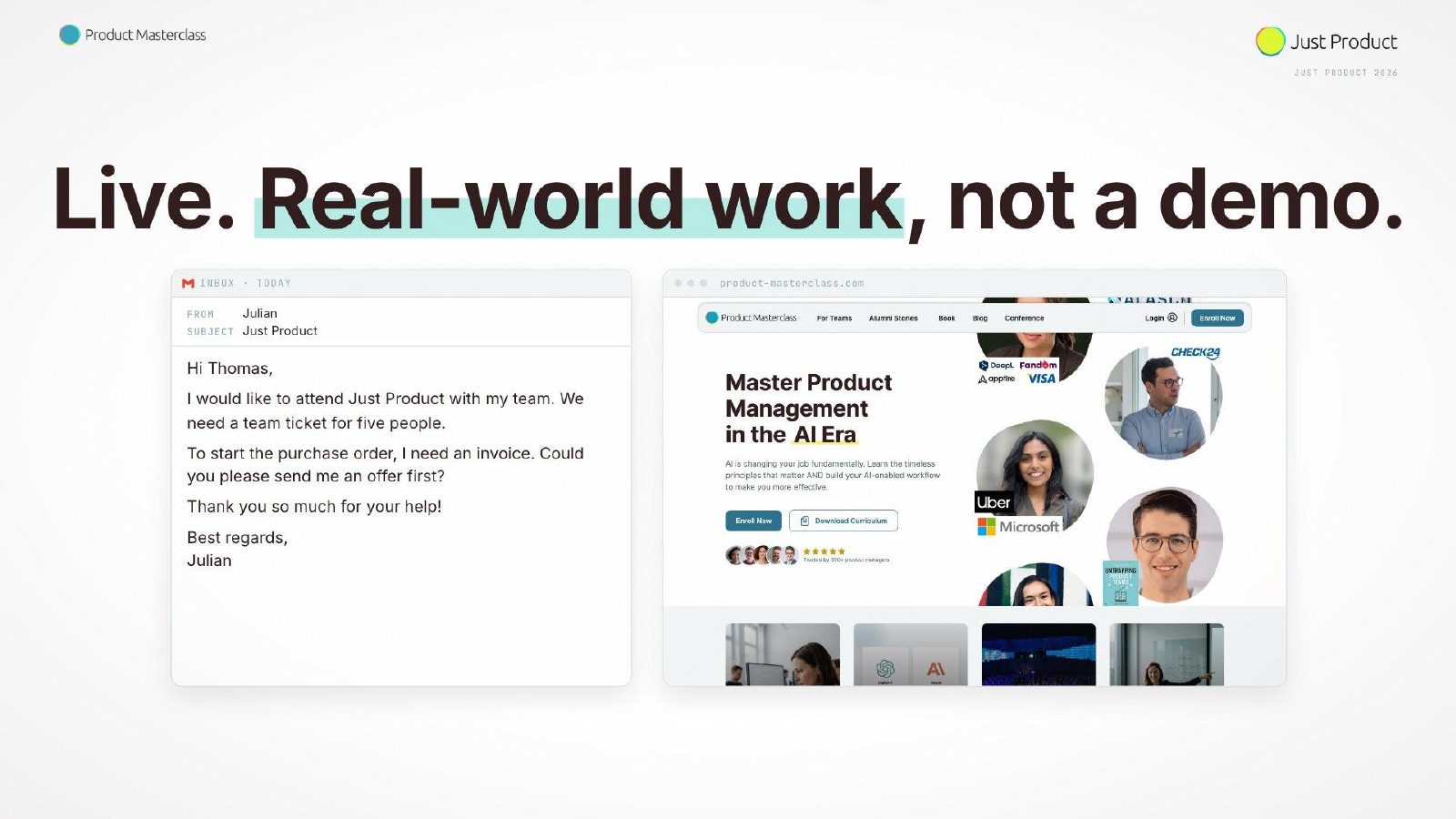
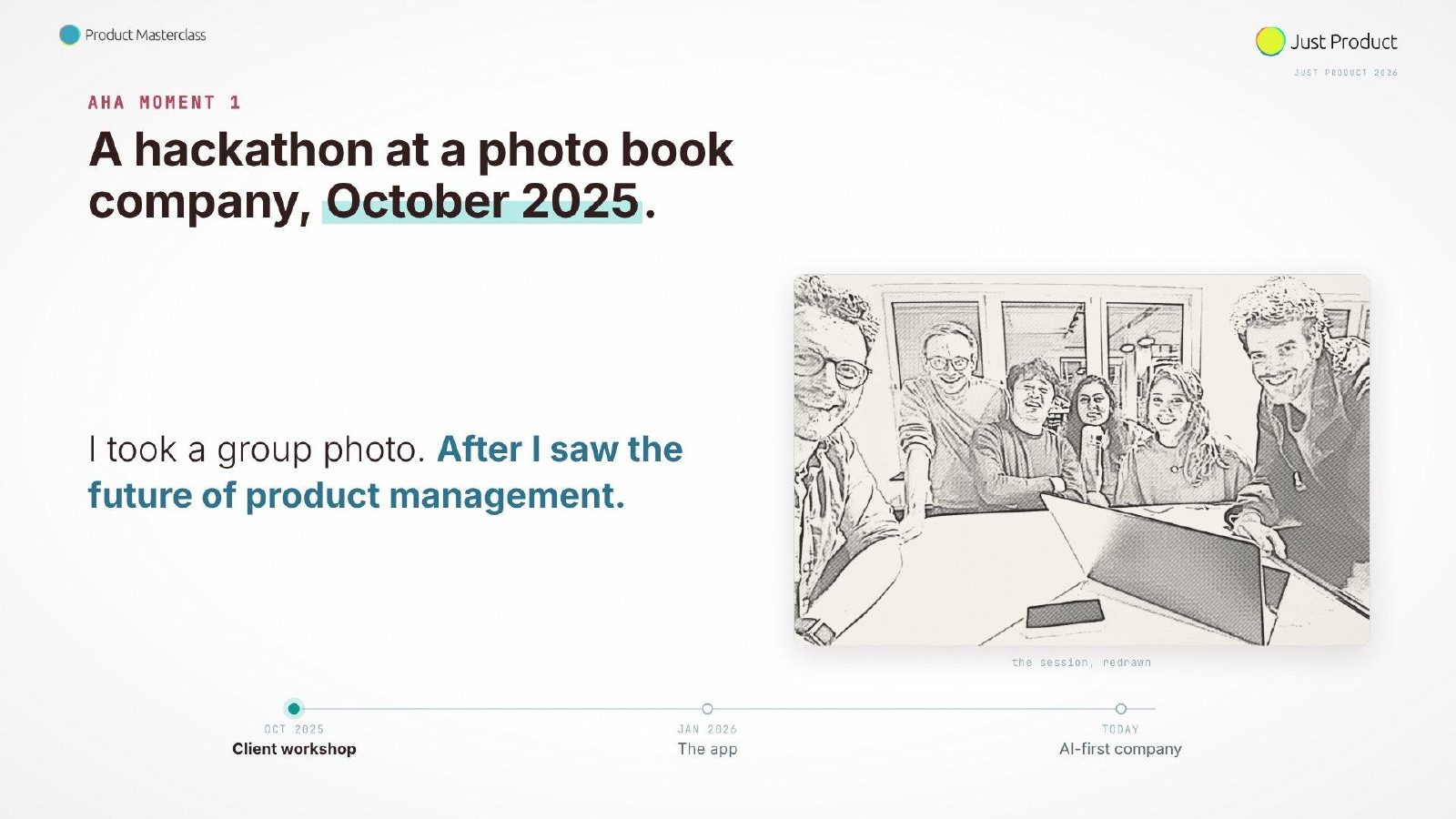
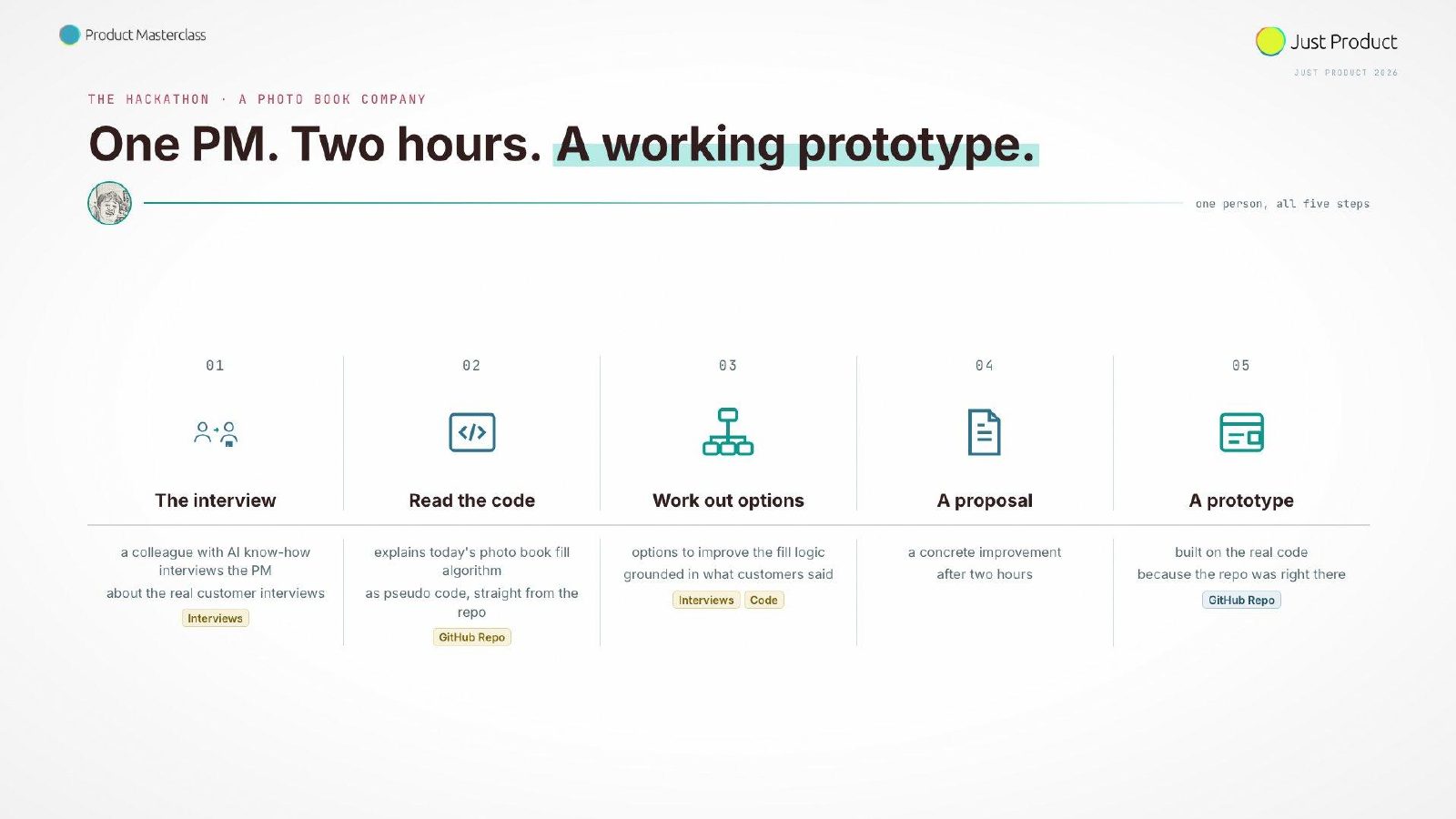
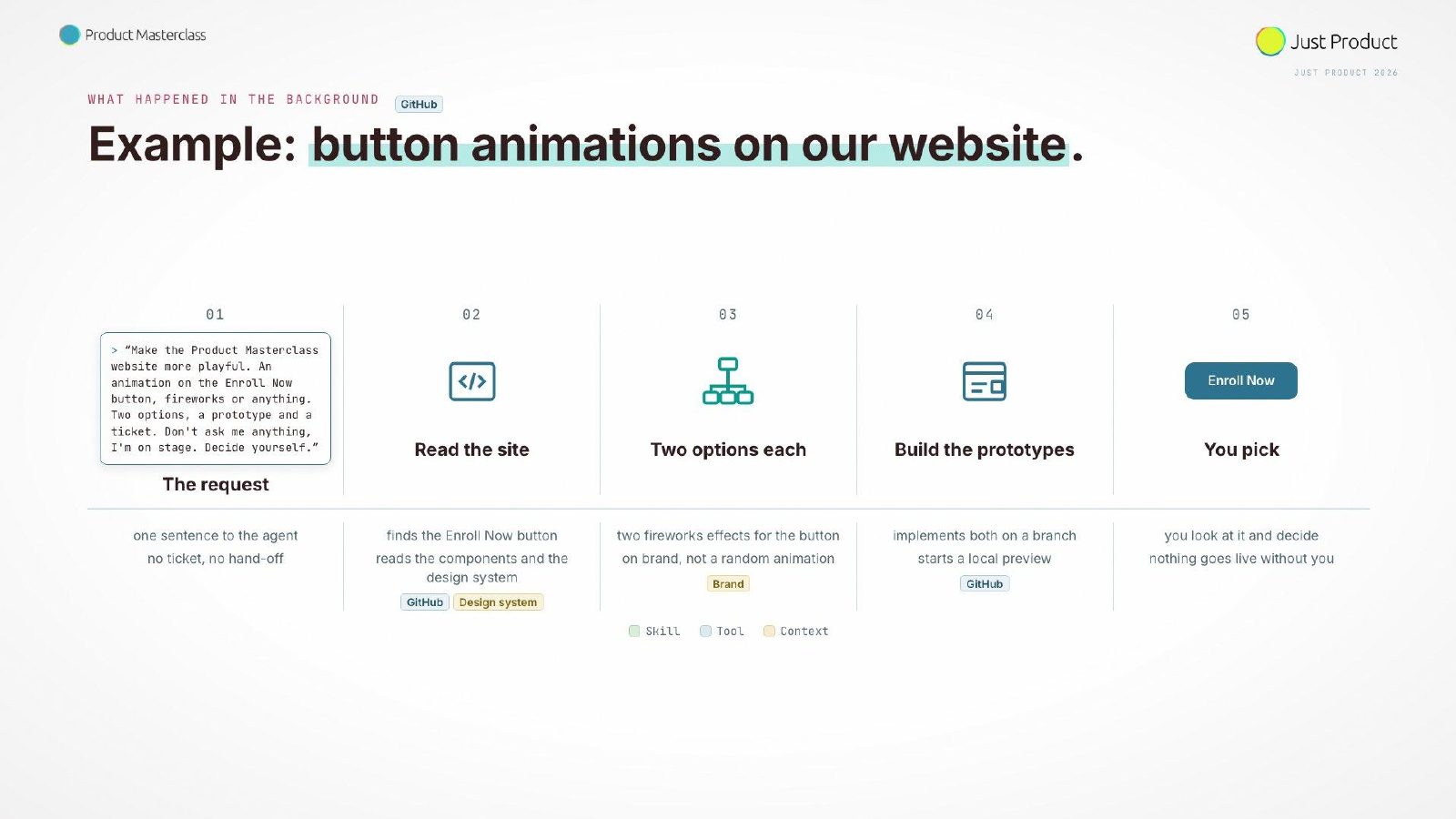
Thomas opened by interrupting his own talk. He had two things to do first: answer an email from Julian, who wanted a team ticket for Just Product and needed an offer to start his purchasing process, and act on Sebastian's complaint that the website button was boring. He typed both requests into chat, asked for three playable button prototypes, told the AI not to ask questions and let it run. Then he explained the year behind that casual move. In October 2025, at a client hackathon, an engineer and product manager interviewed a colleague, pulled the photo book selection algorithm from GitHub, brainstormed changes with AI and had a prototype in two hours. That used to take Thomas four weeks. He went home convinced everyone was going to be replaced.

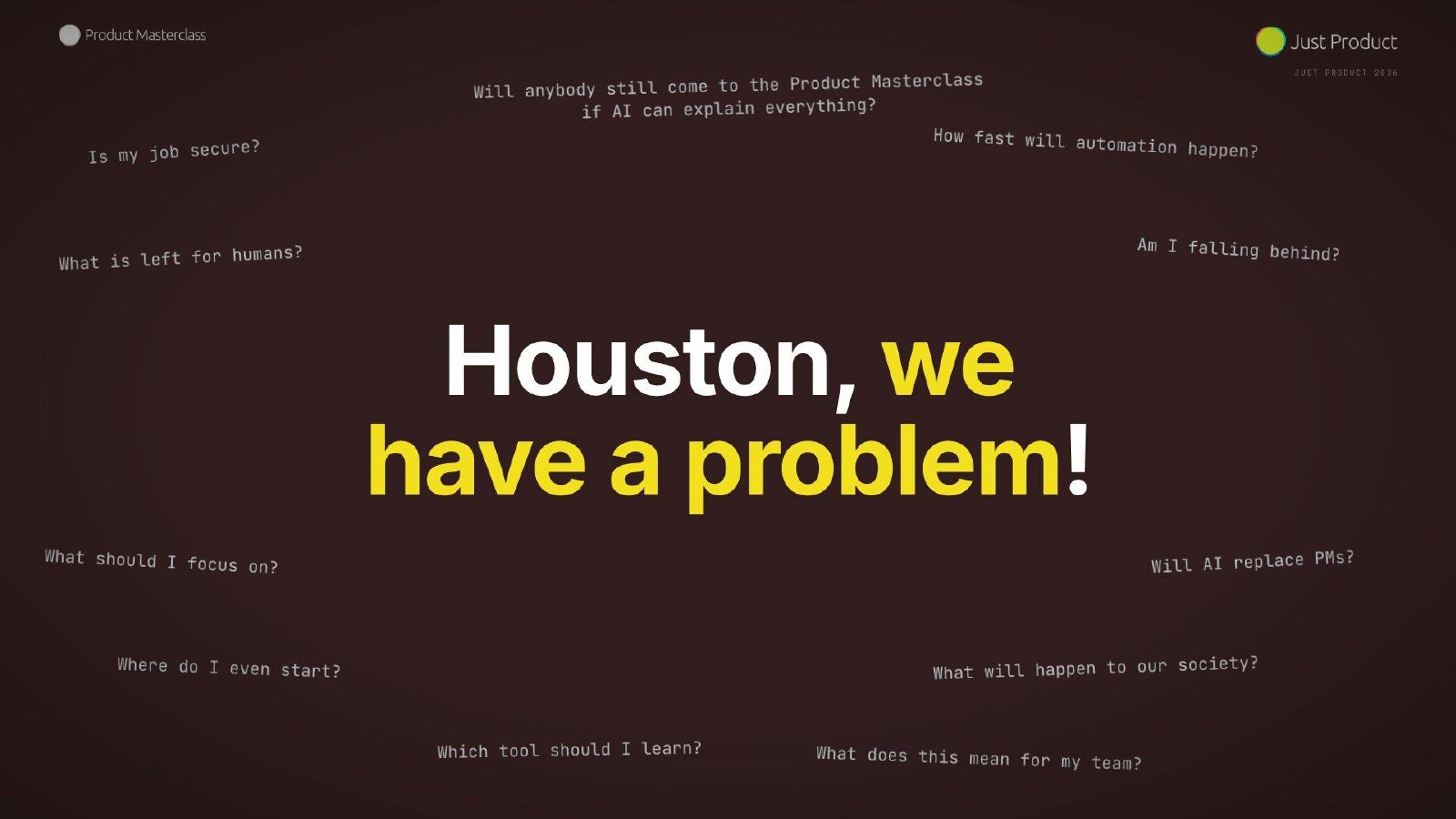
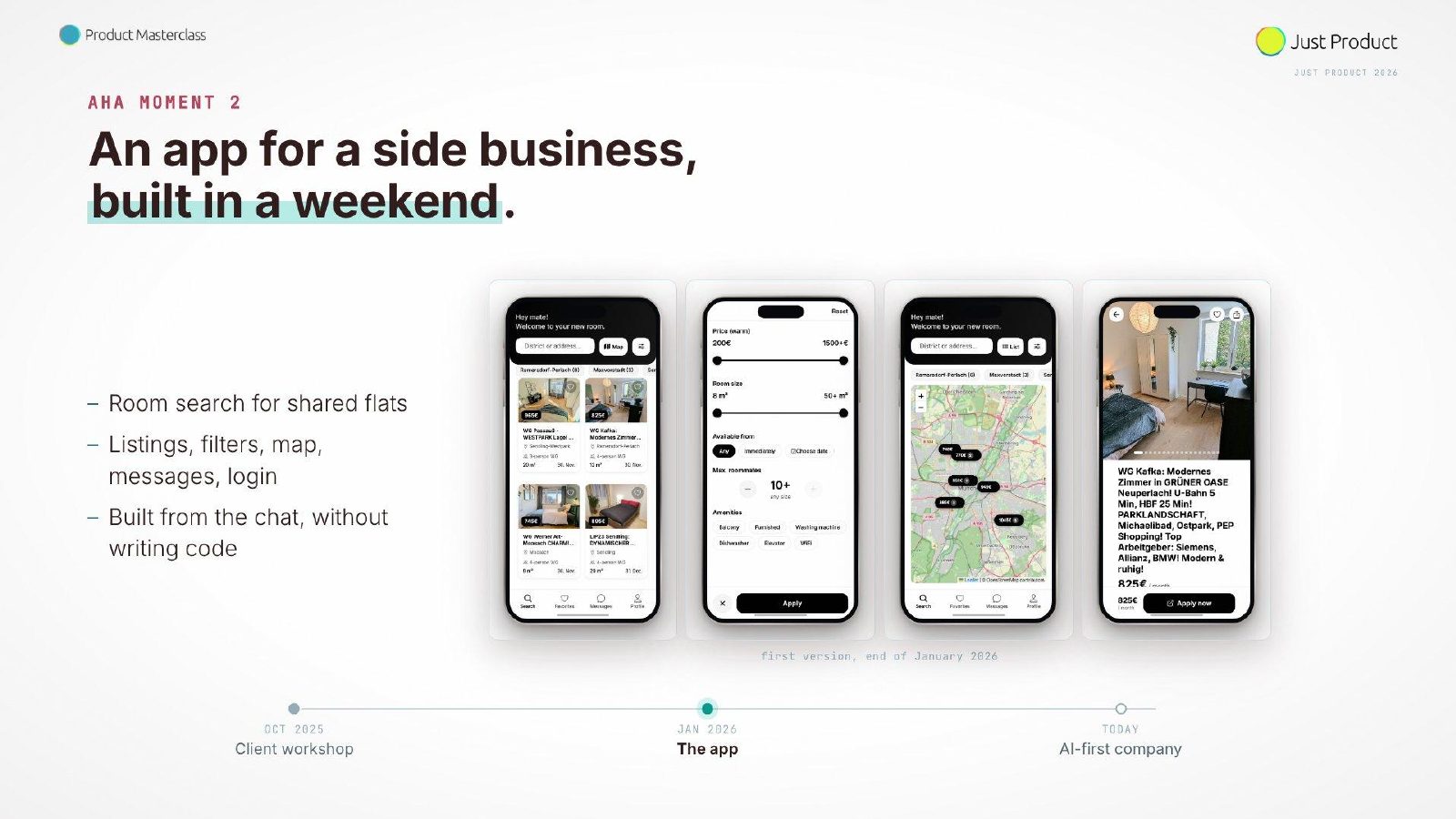
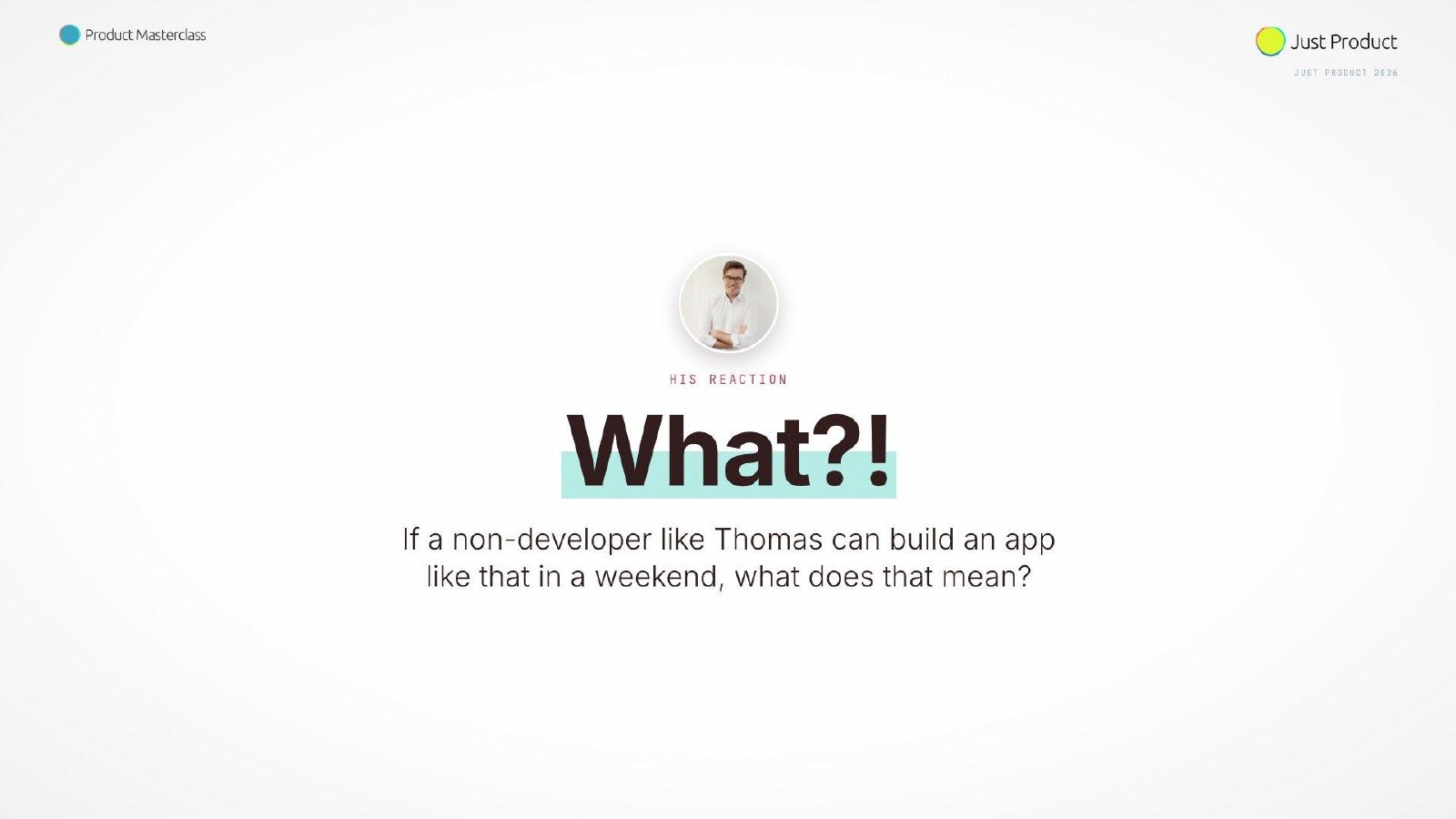
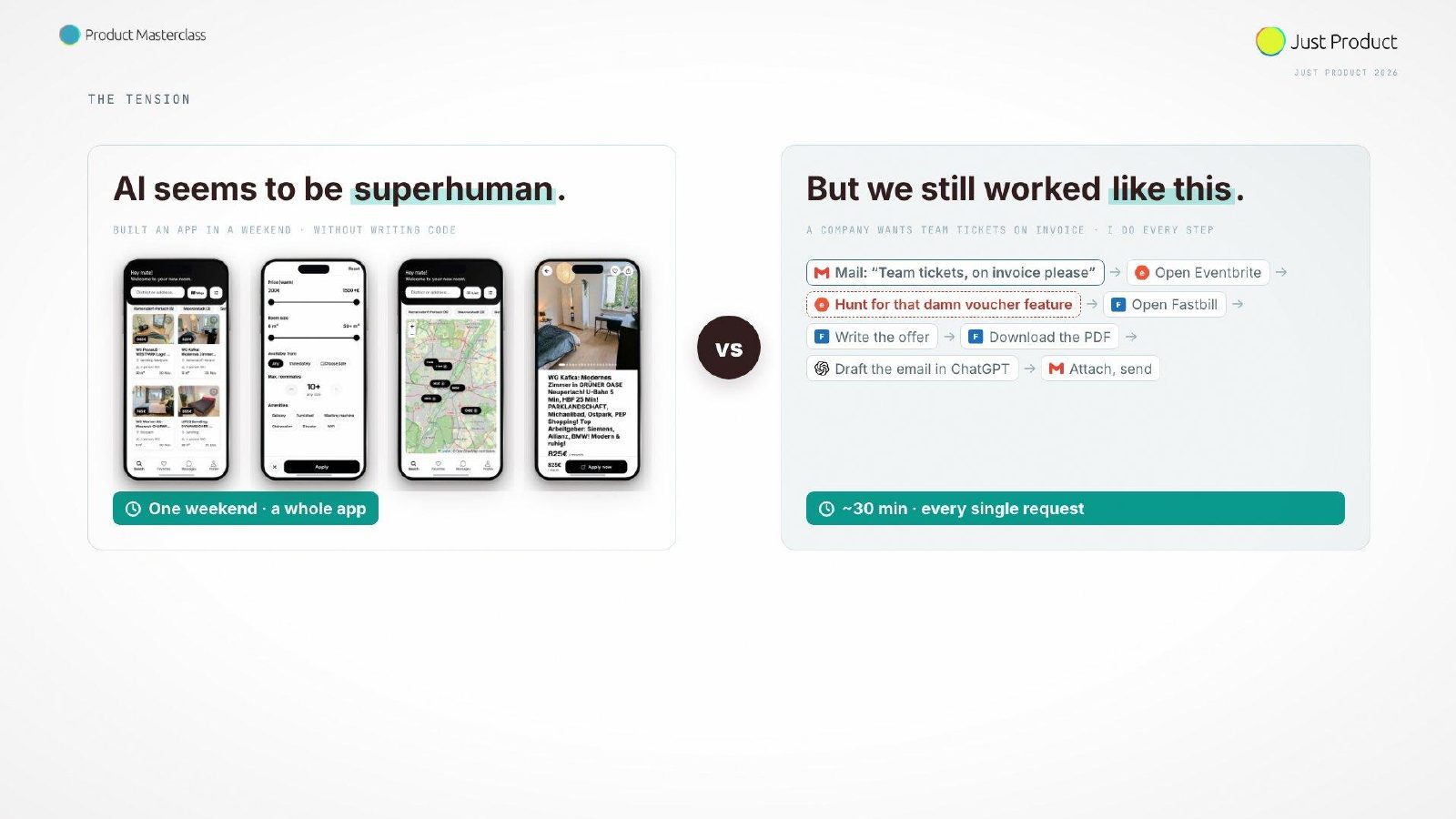
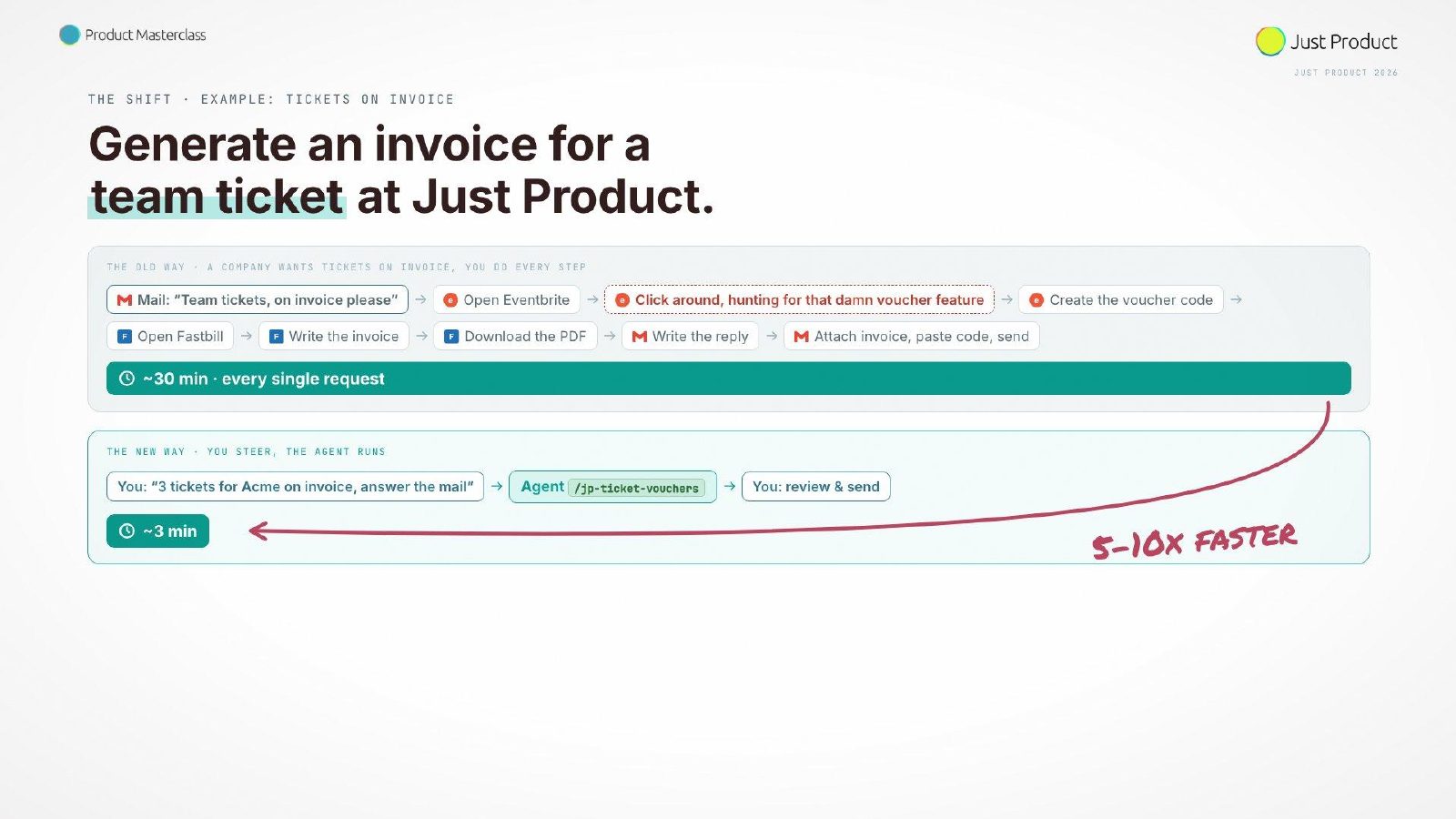
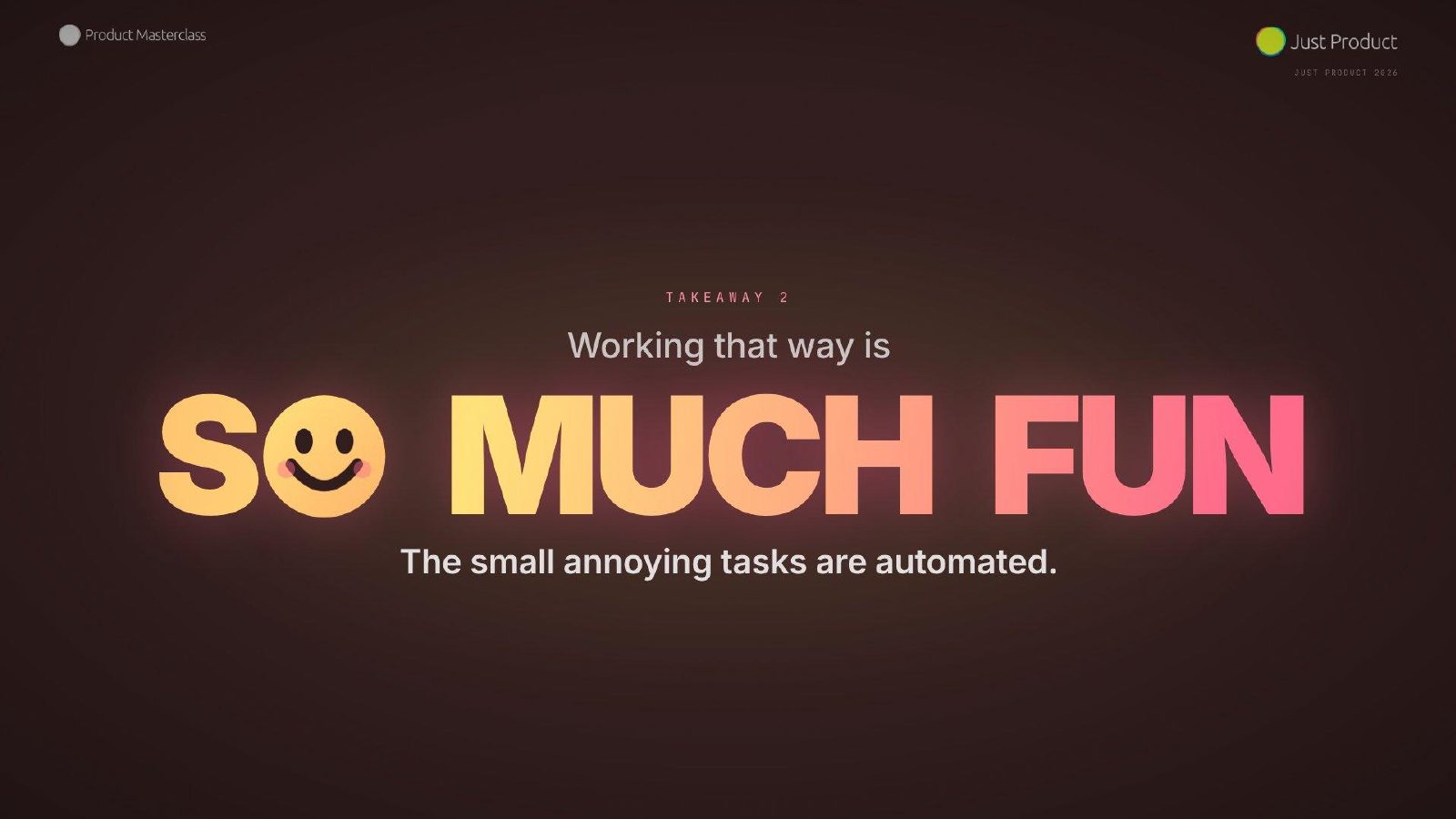
The second moment came at the end of January. Thomas, who has never written a line of code, built a working app for a side business over one weekend, with filters, a map and listing pages. Sebastian, a software engineer, asked how long it took and estimated two to three months for himself. From then on the two co-founders agreed they had a problem, including the uncomfortable question of whether anyone would still come to the Product Masterclass if AI can explain everything. At the same time, daily work looked nothing like superintelligence. A voucher request meant hunting through Eventbrite, checking Fastbill, downloading a PDF and drafting a mail. Twenty to thirty minutes, or two days of putting it off.

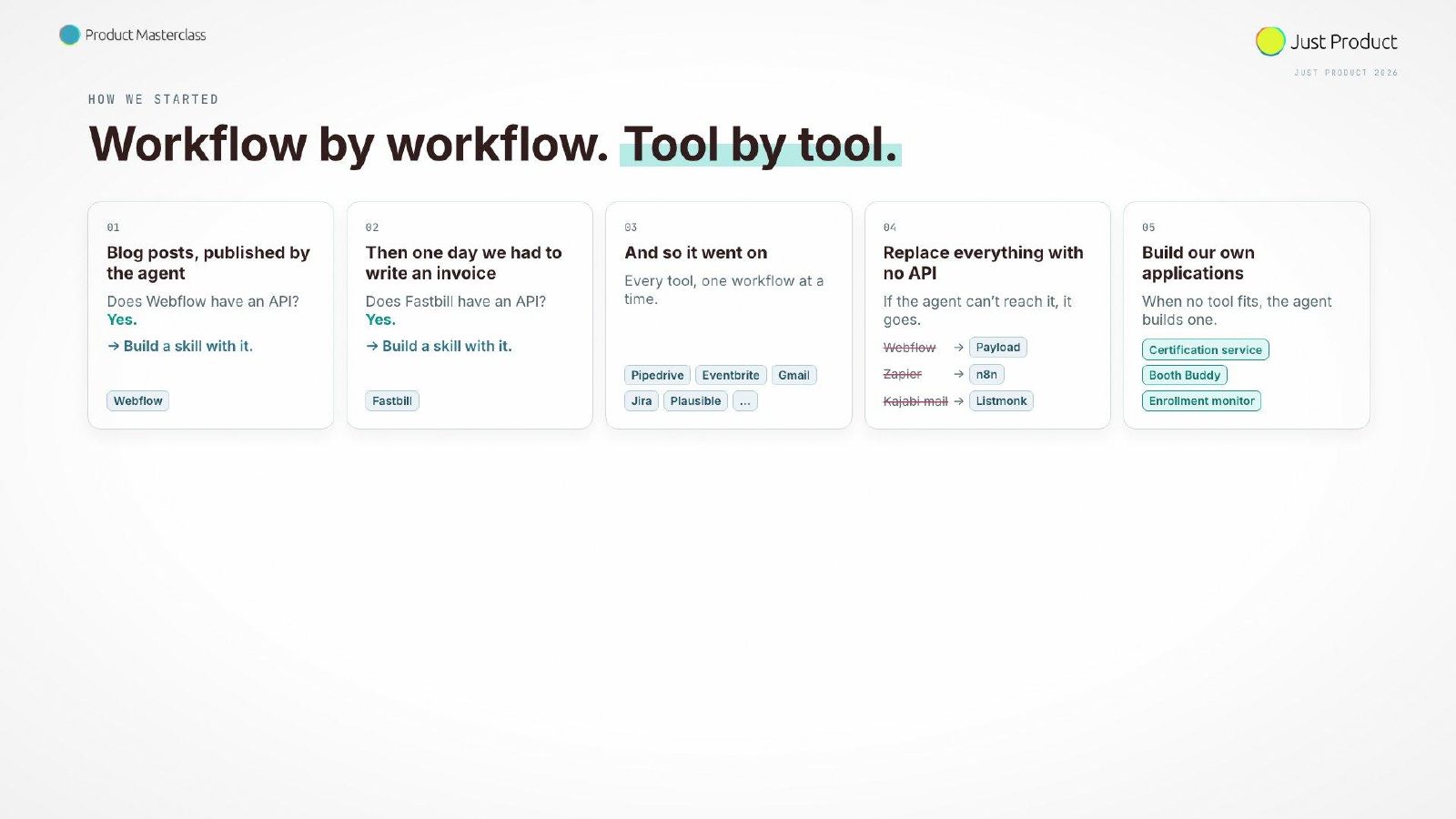
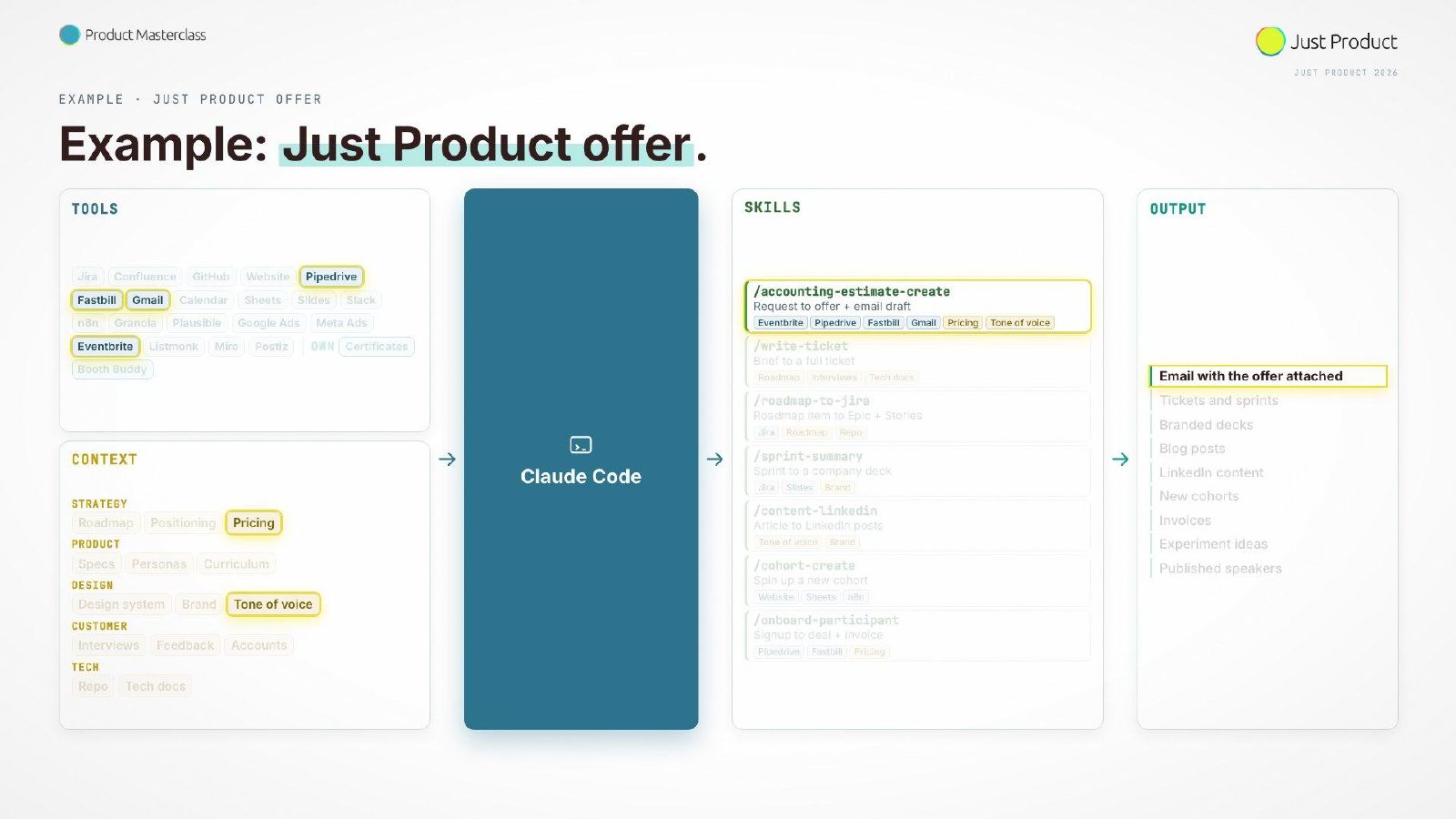
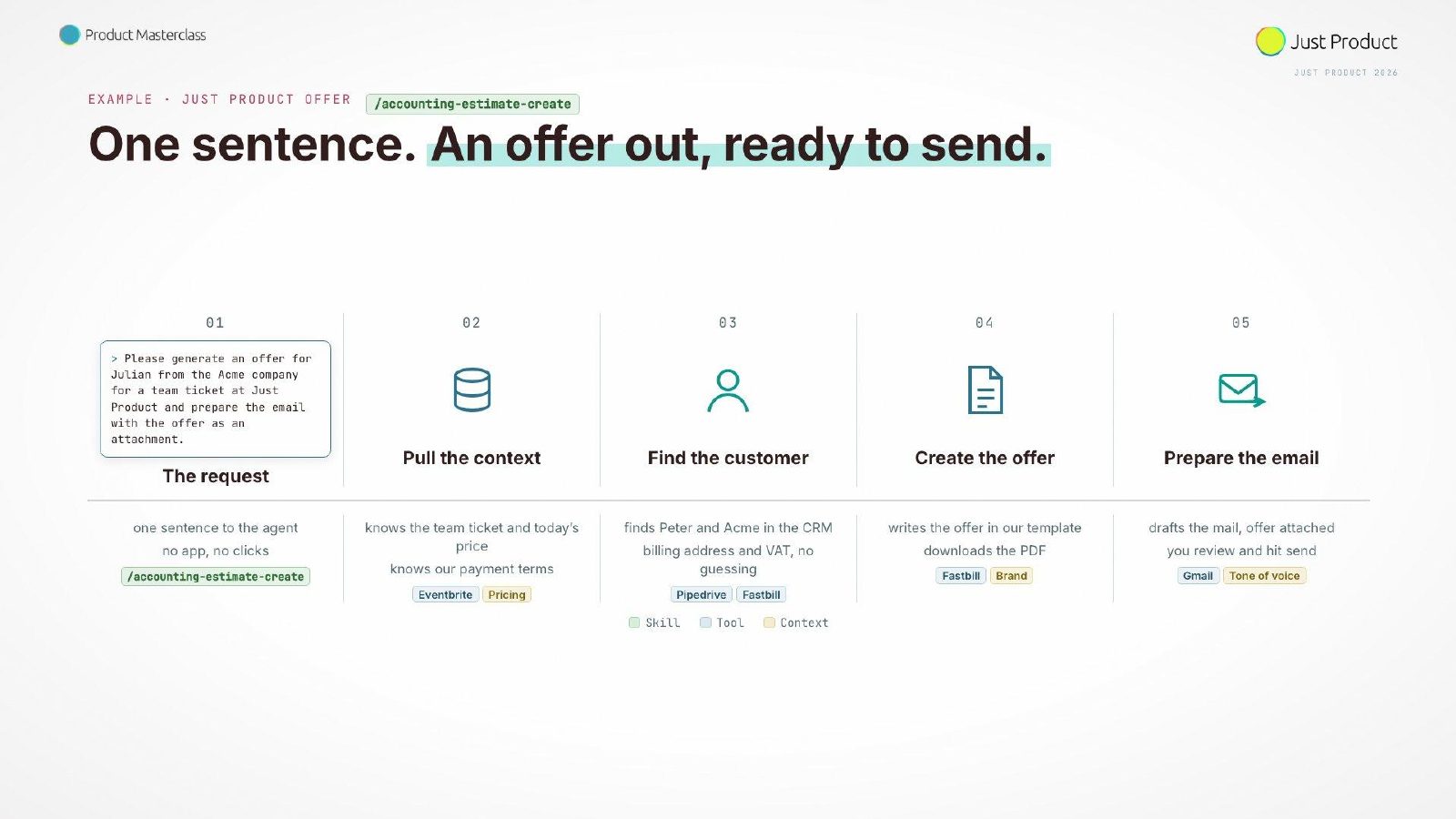
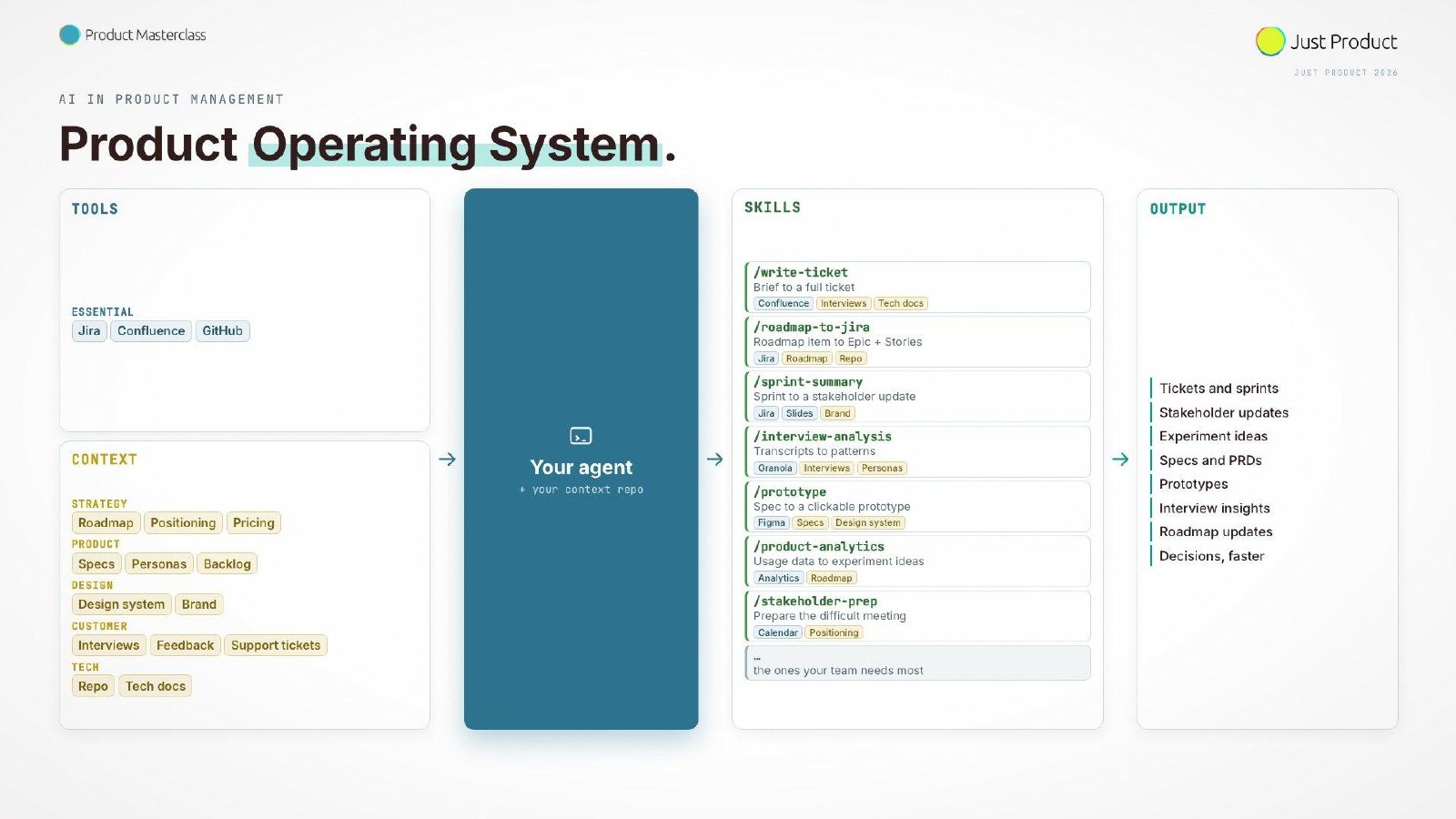
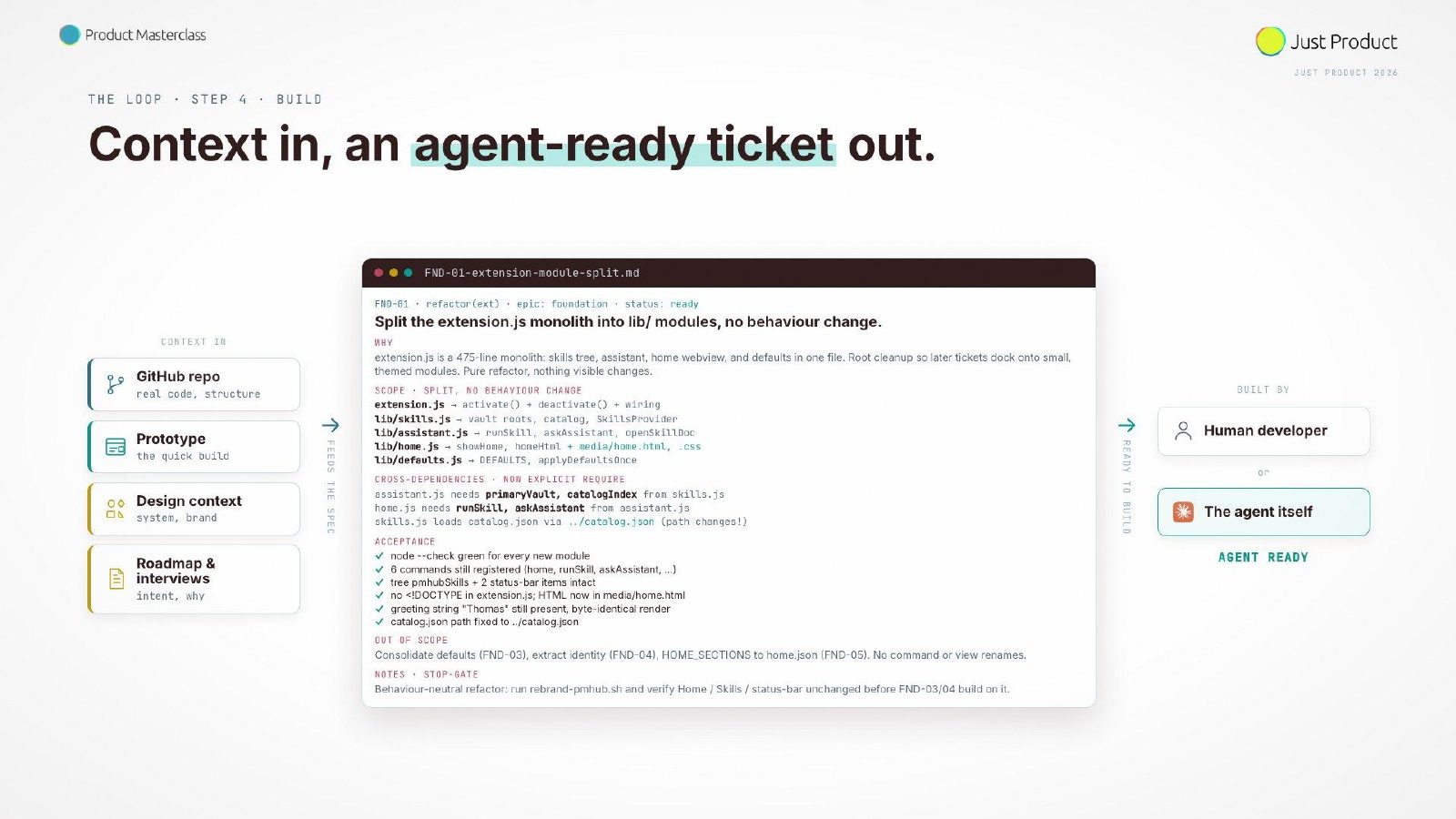
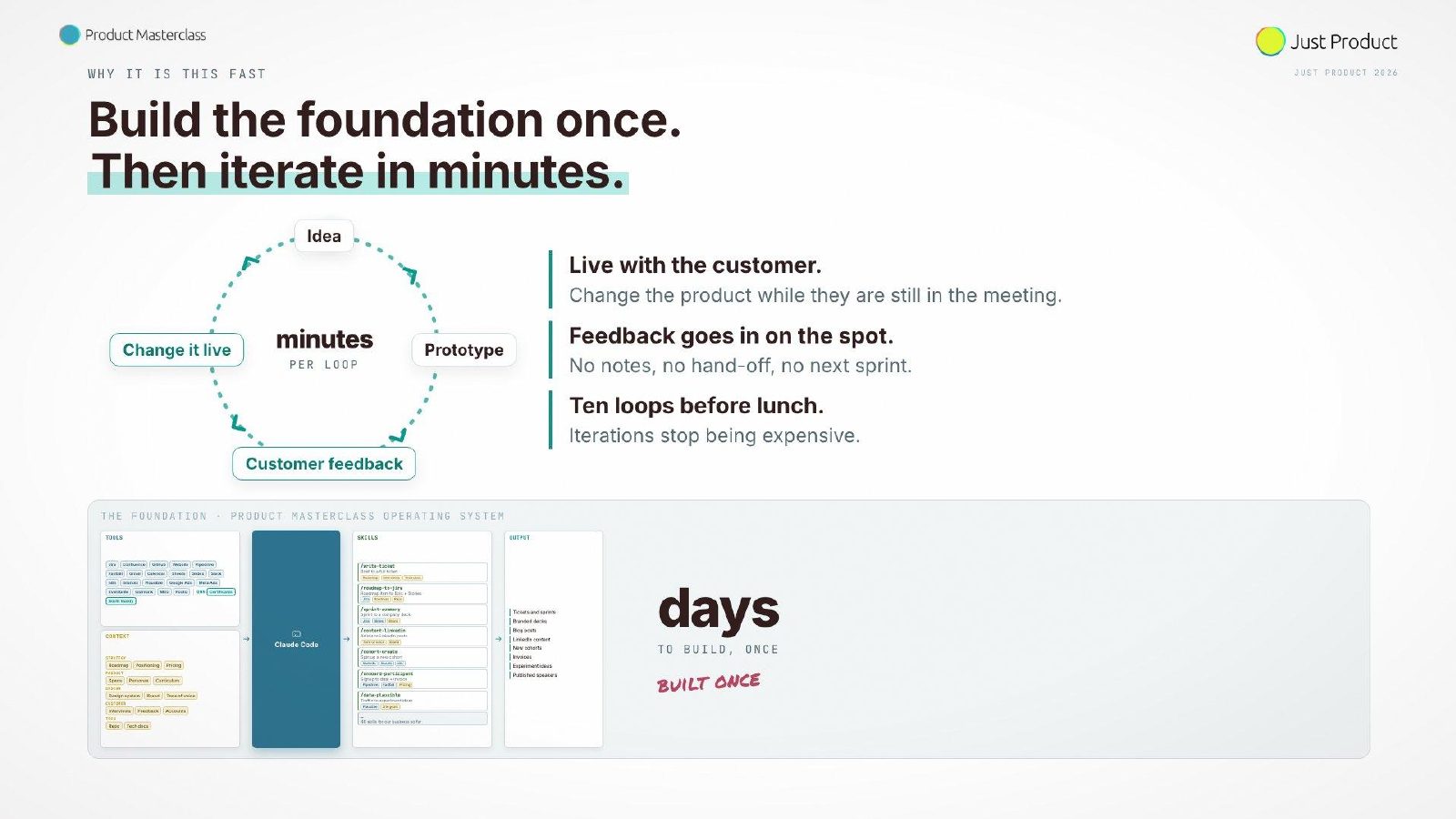
So they decided to automate every workflow. Publish a blog post: does Webflow have an API? Build a skill. Write an invoice: does Fastbill have an API? Connect it to Claude, build a skill. Tools without full API access, such as the newsletter tool and the old website builder, got replaced with ones that had it, and some were replaced with self-built applications. Step by step that became the Product Masterclass operating system: connections to tools and GitHub repos, the business context, and skills that encode the processes, all handed to an agent. Back on stage, the first task was done. The AI had created the Eventbrite voucher, looked Julian up in Pipedrive, created a five ticket offer in Fastbill and drafted the Gmail reply.

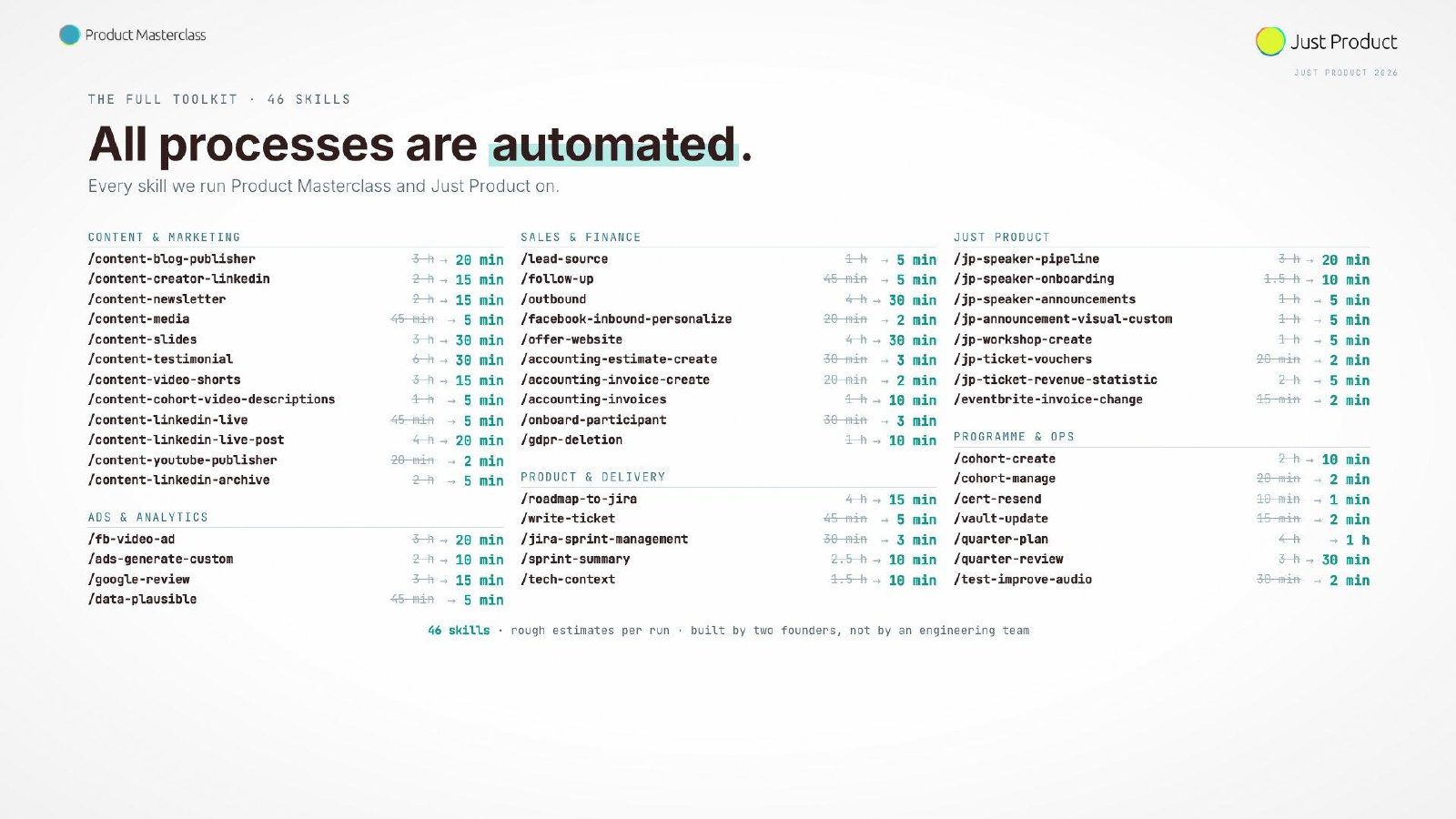
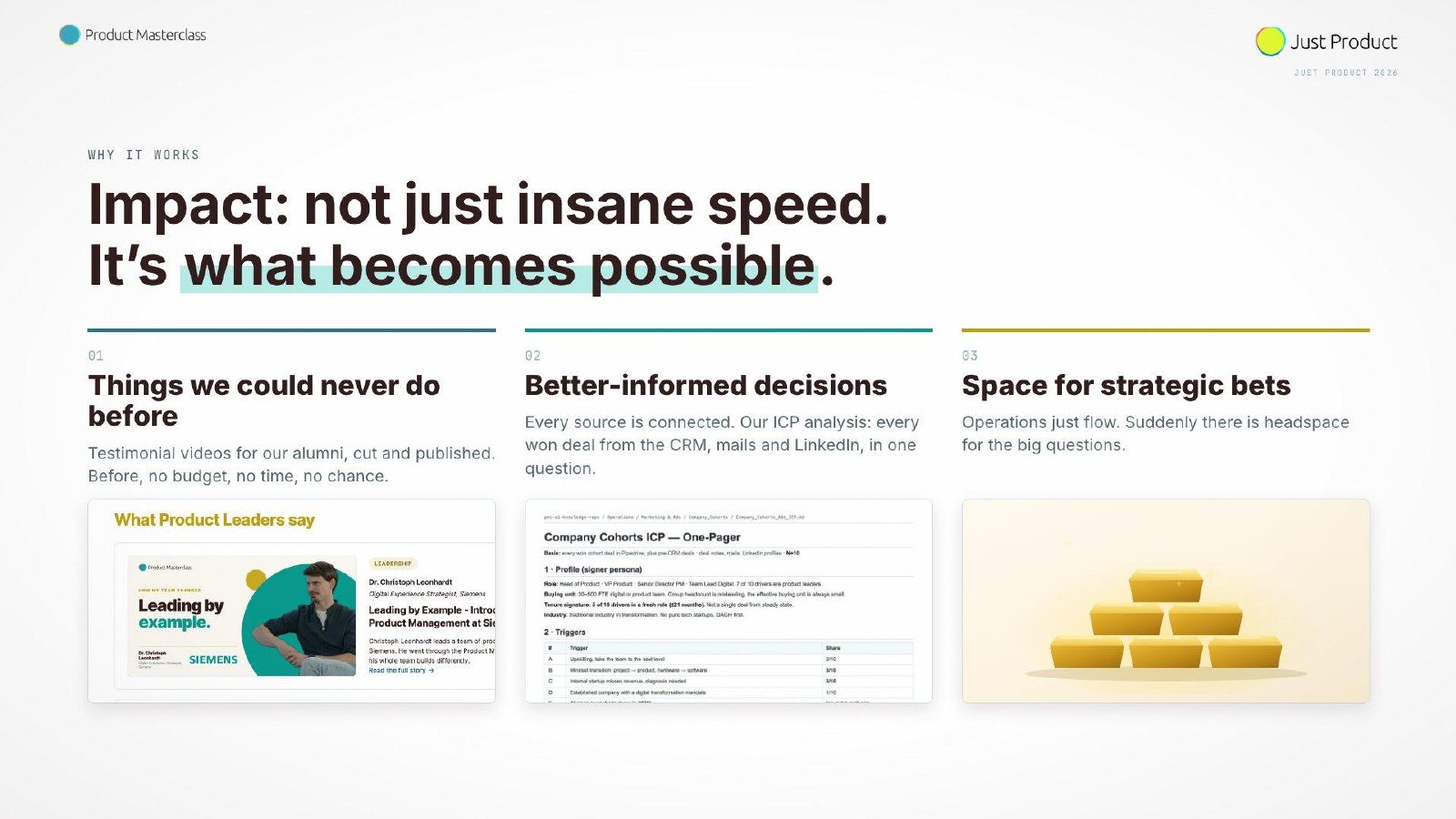
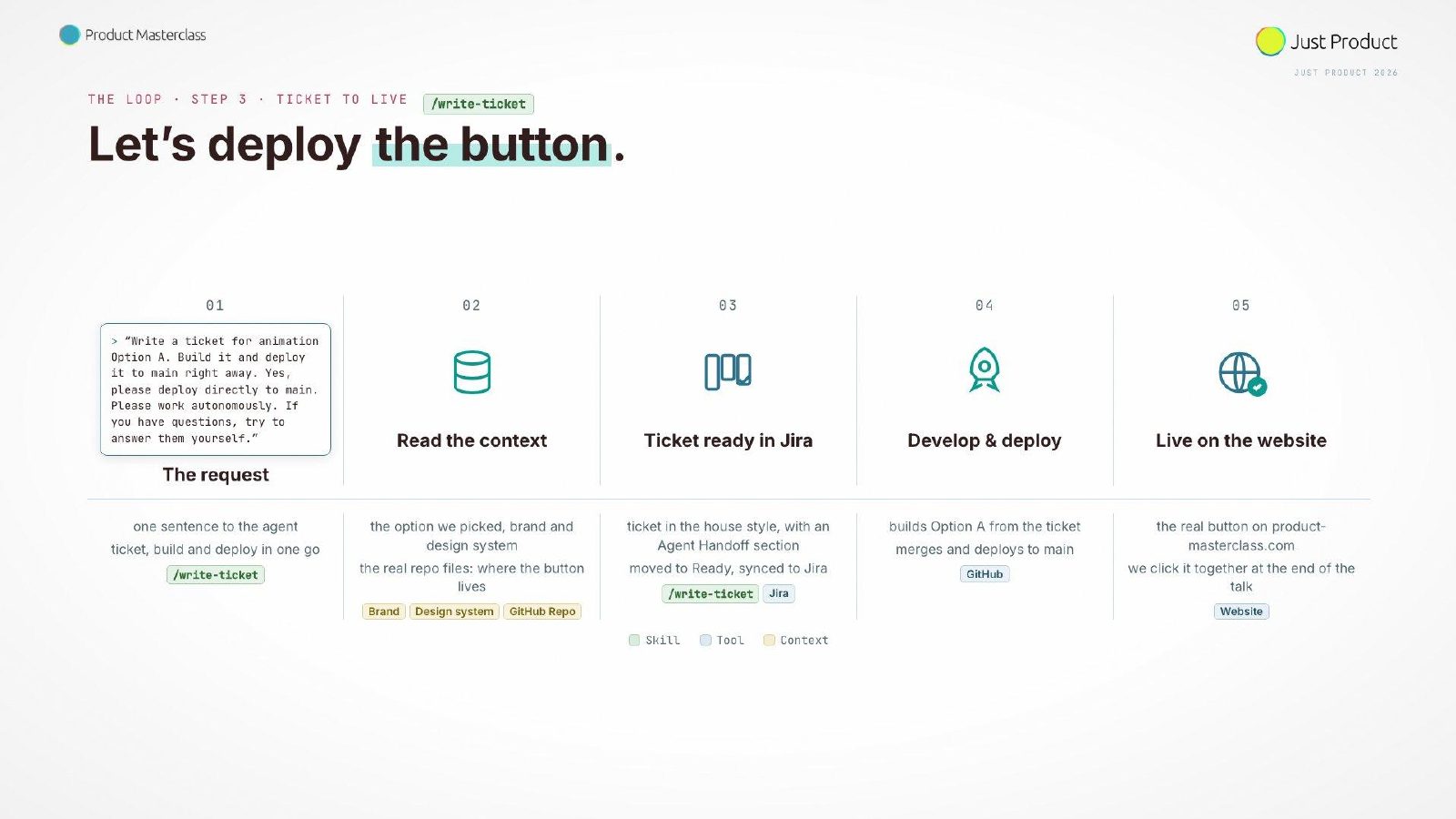
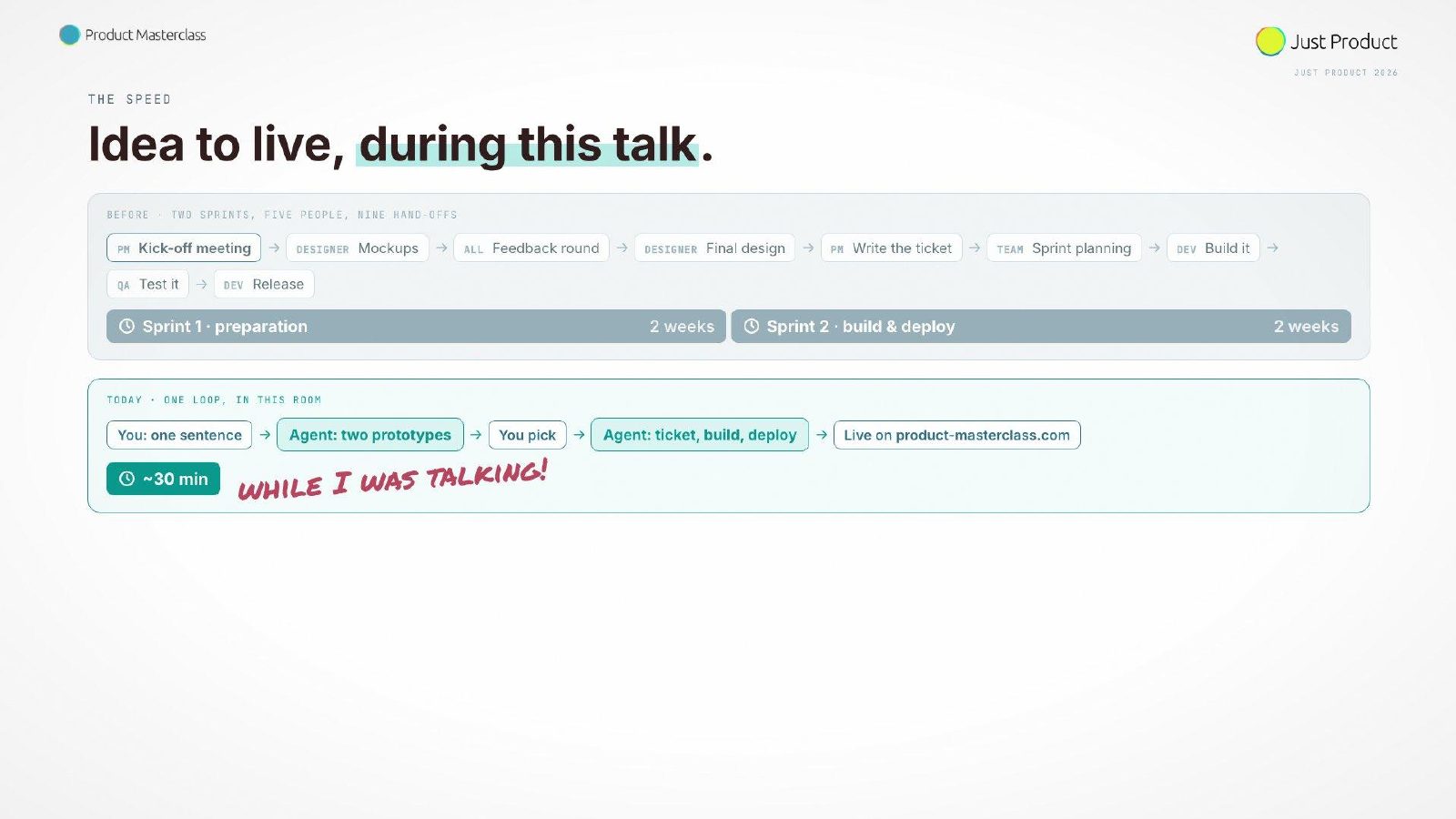
Thomas counted the gain: five to ten times faster for that one chore, and they have around 46 such skills. The bigger effect is new capacity. After each participant's half hour review call, the AI turns the recording into an alumni story page, picks the angle and the video segments, cuts the clips, writes subtitles and the blog post. Two hours on the side instead of three days of focused work. Questions like who visited the website or whether someone is already registered get answered on the spot. Then the second live result: three button prototypes, the audience voted for the third, and Thomas told the AI to write a ticket, implement it and push to main, with 250 people as QA. Normally two sprints.

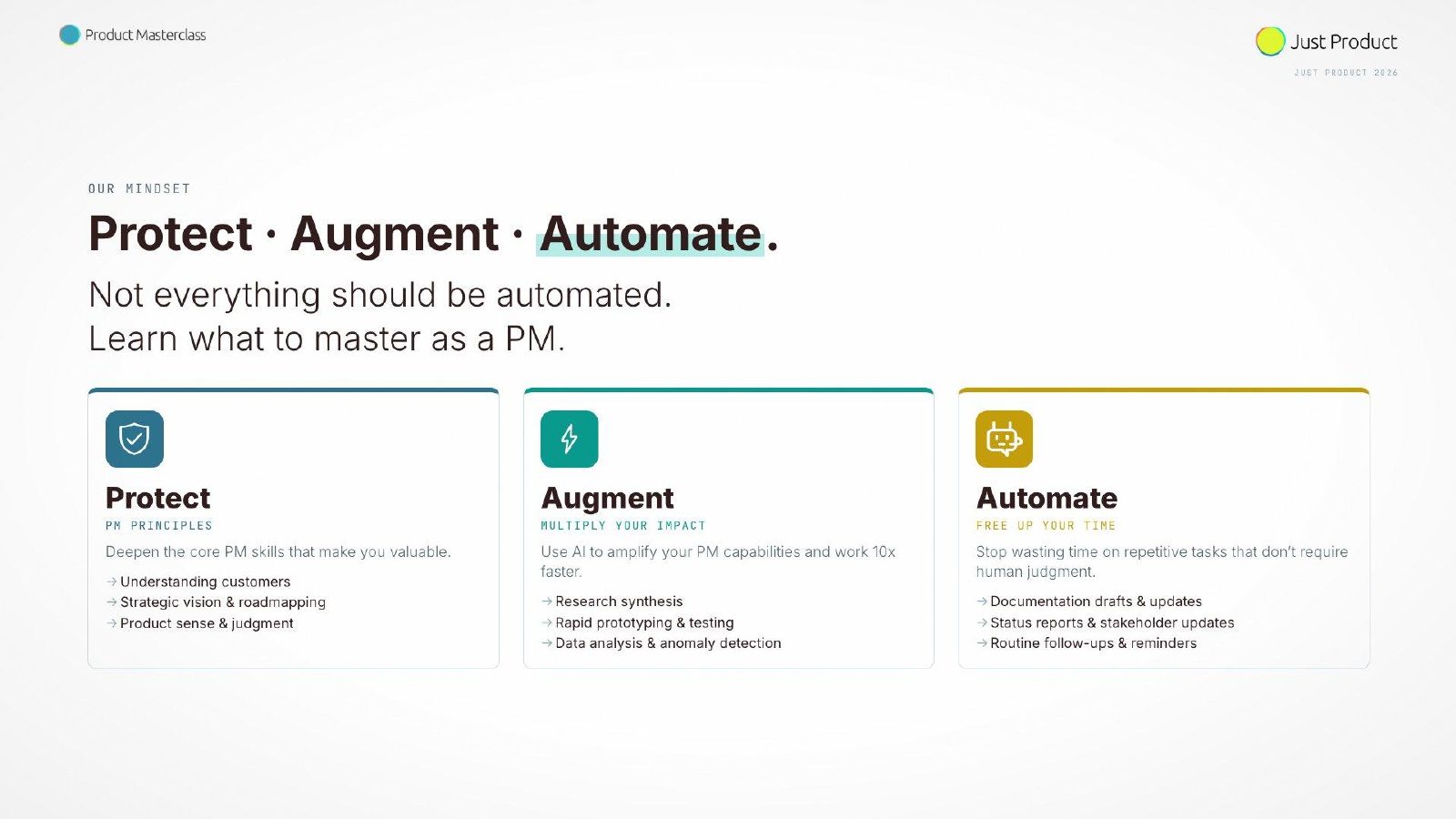
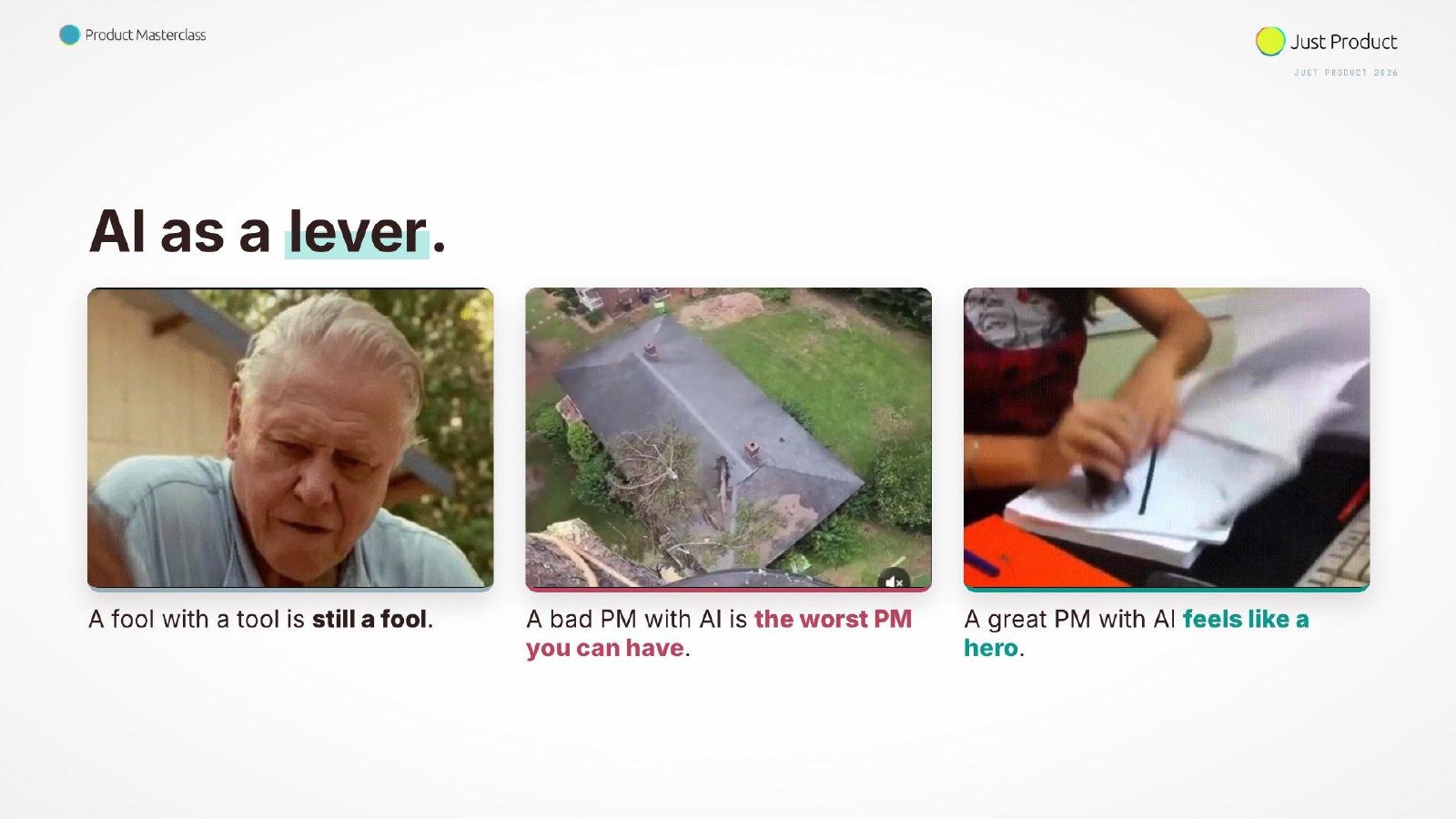
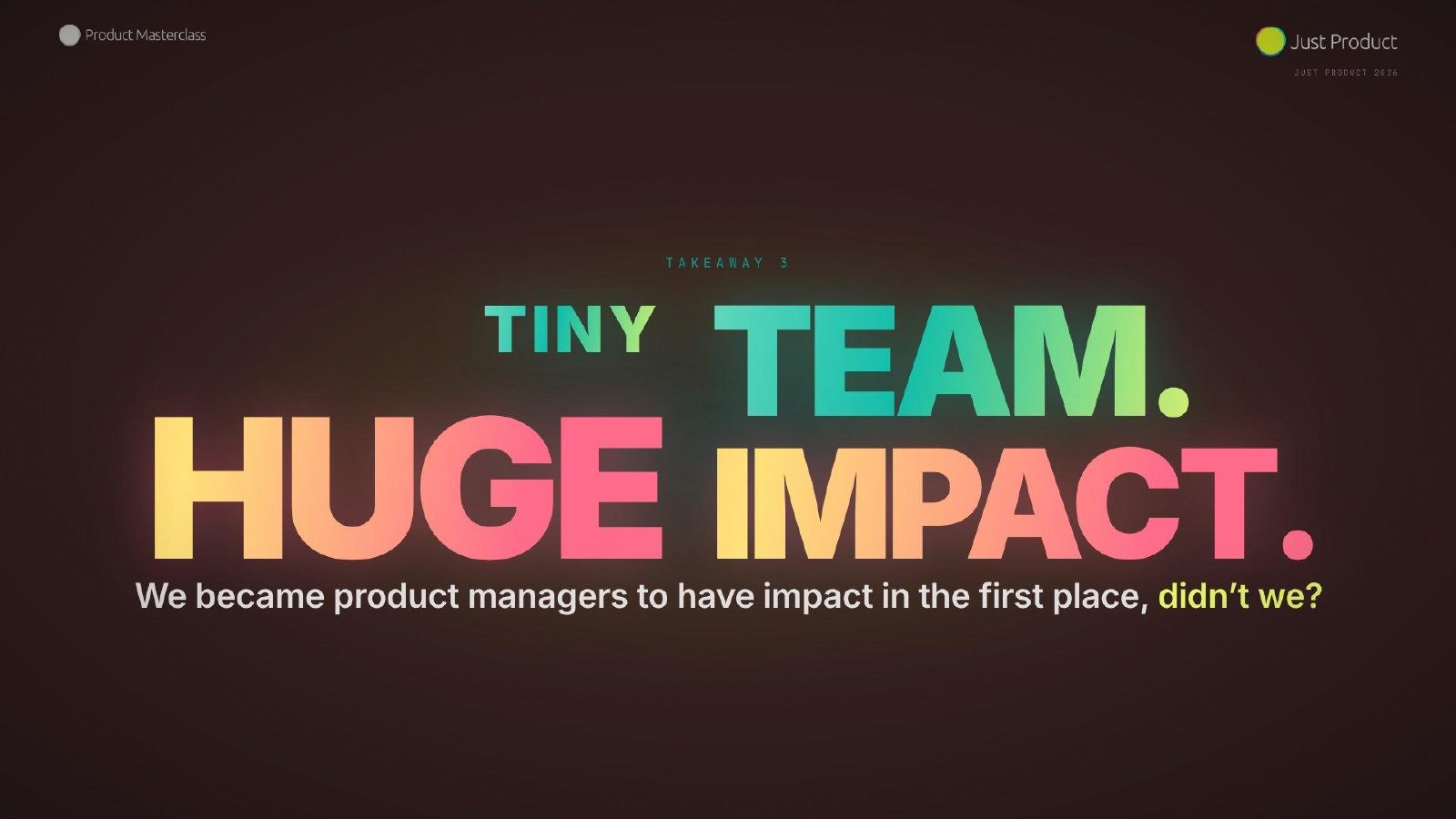
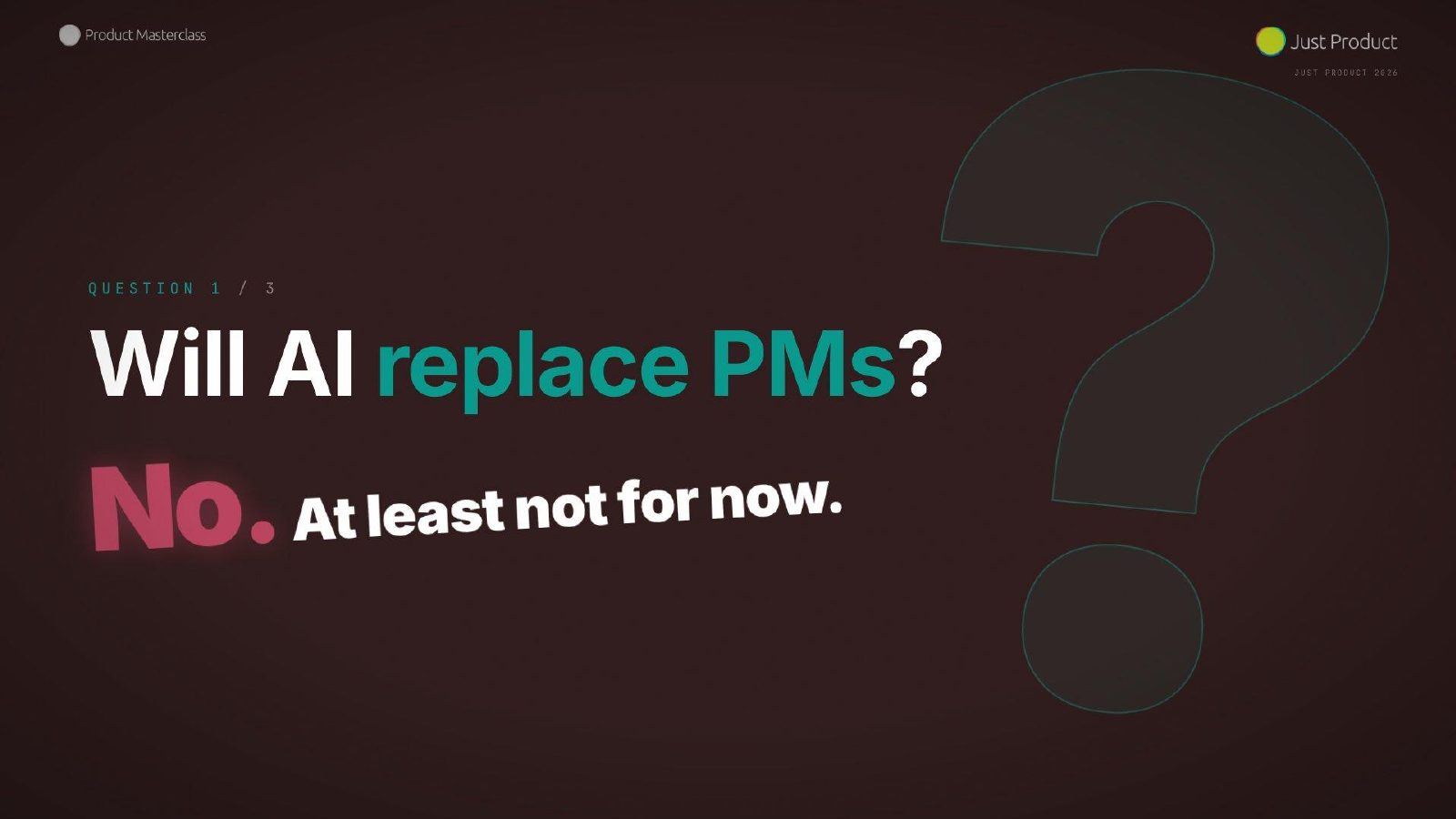
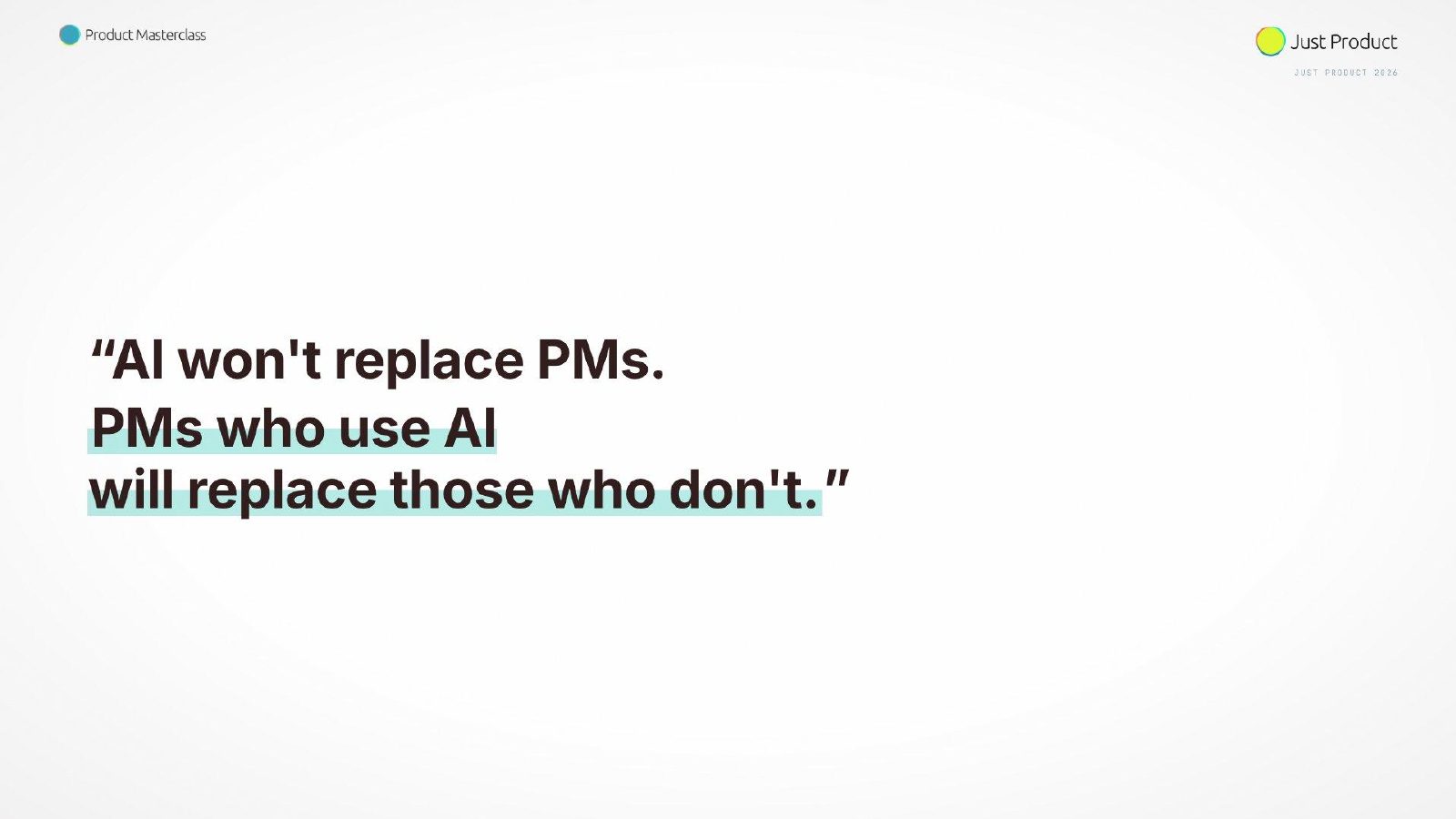
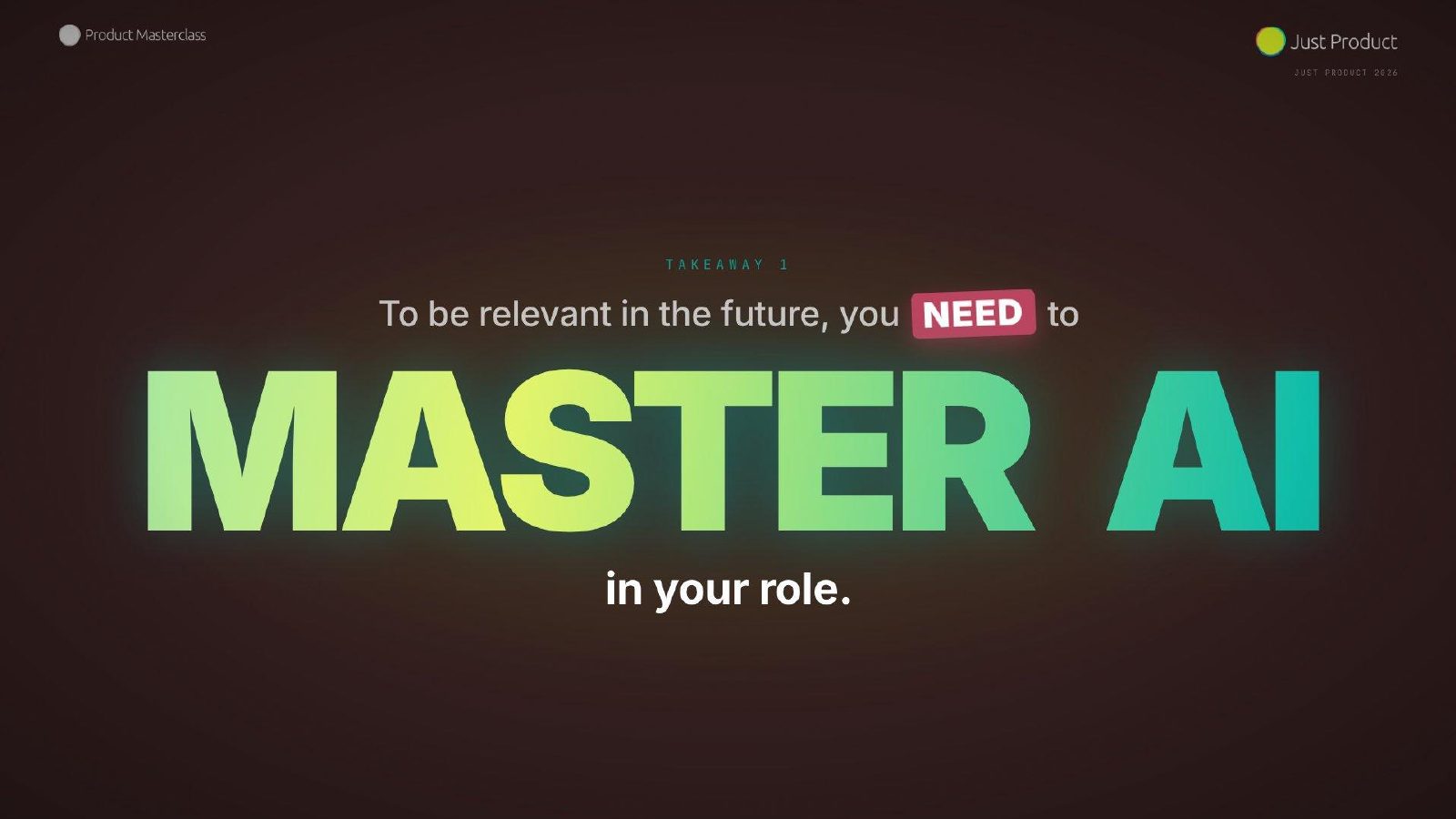
For product managers the recipe is short. Connect your AI to Jira, Confluence and GitHub and you have a first product operating system. AI will not replace PMs, but PMs who use AI will replace those who do not. Sort your workload into protect, augment and automate, master the protected part (customer understanding, strategy, product sense) and automate the rest. Fundamentals matter more than ever because AI is a lever: a fool with a tool is still a fool, a great PM with AI feels superhuman. The new job looks like a three star chef at the pass, inspecting every plate the agents cook and sending back anything with a hair in the soup. Master AI in your field, and remember a tiny team can have huge impact.
Key takeaways

8 things to take back to your team.

  1. Pick one recurring chore, check whether every tool it touches has an API, and encode the full process as a reusable skill.
  2. Replace tools that lack full API access; manual copy and paste steps block automation for everyone on the team.
  3. Start your product operating system by connecting your AI to Jira, Confluence and GitHub, then add context and skills.
  4. Sort your workload into protect, augment and automate; automate anything the AI can finish without you, review what leaves your name on it.
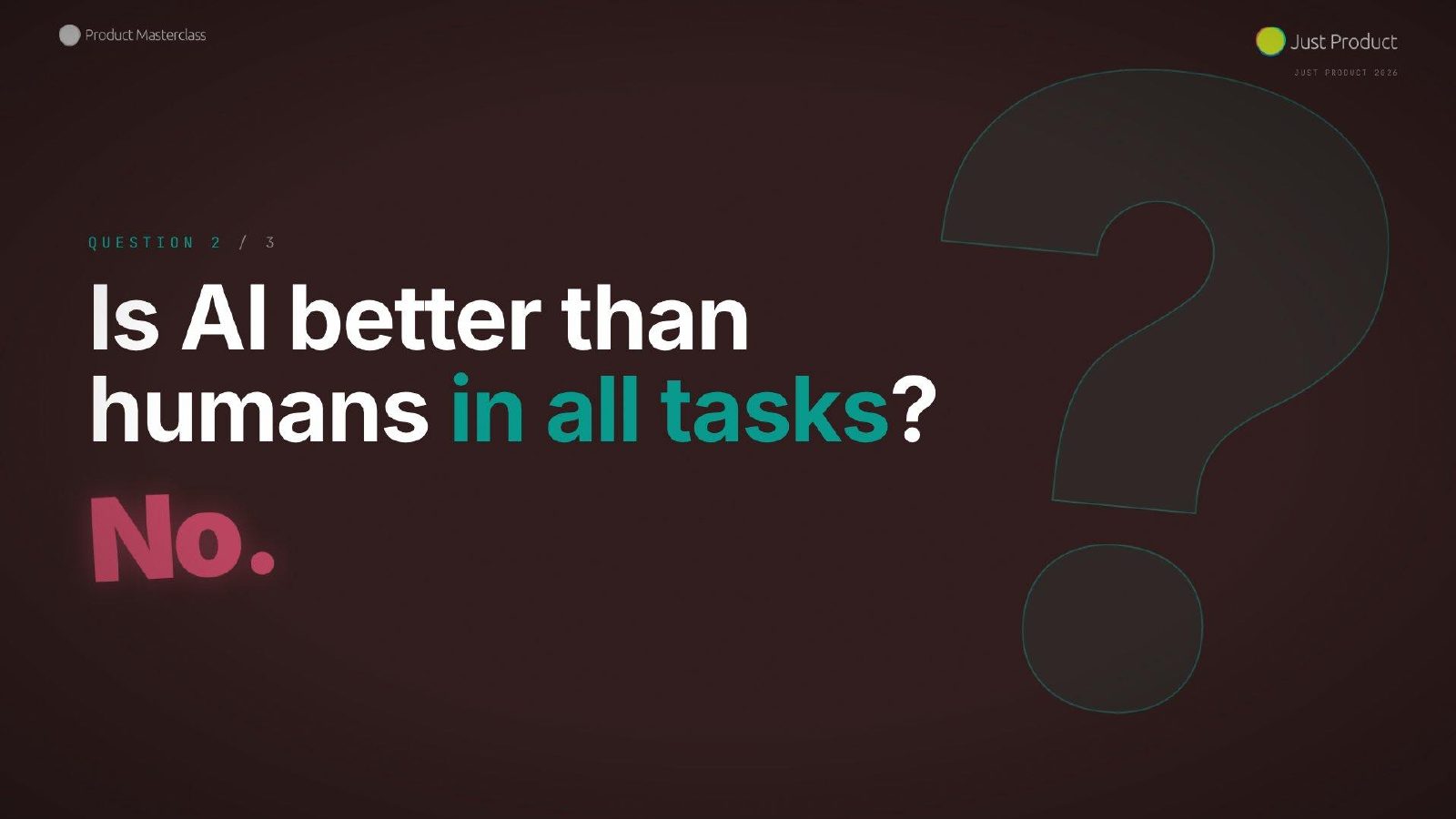
  5. Invest in the protected part yourself: customer understanding, strategic decisions and product sense are where you must beat the AI.
  6. Use freed capacity for work that was impossible before, such as turning every customer review call into a published story.
  7. Treat reviewing agent output as the core job: inspect every result like a chef at the pass and send back anything flawed.
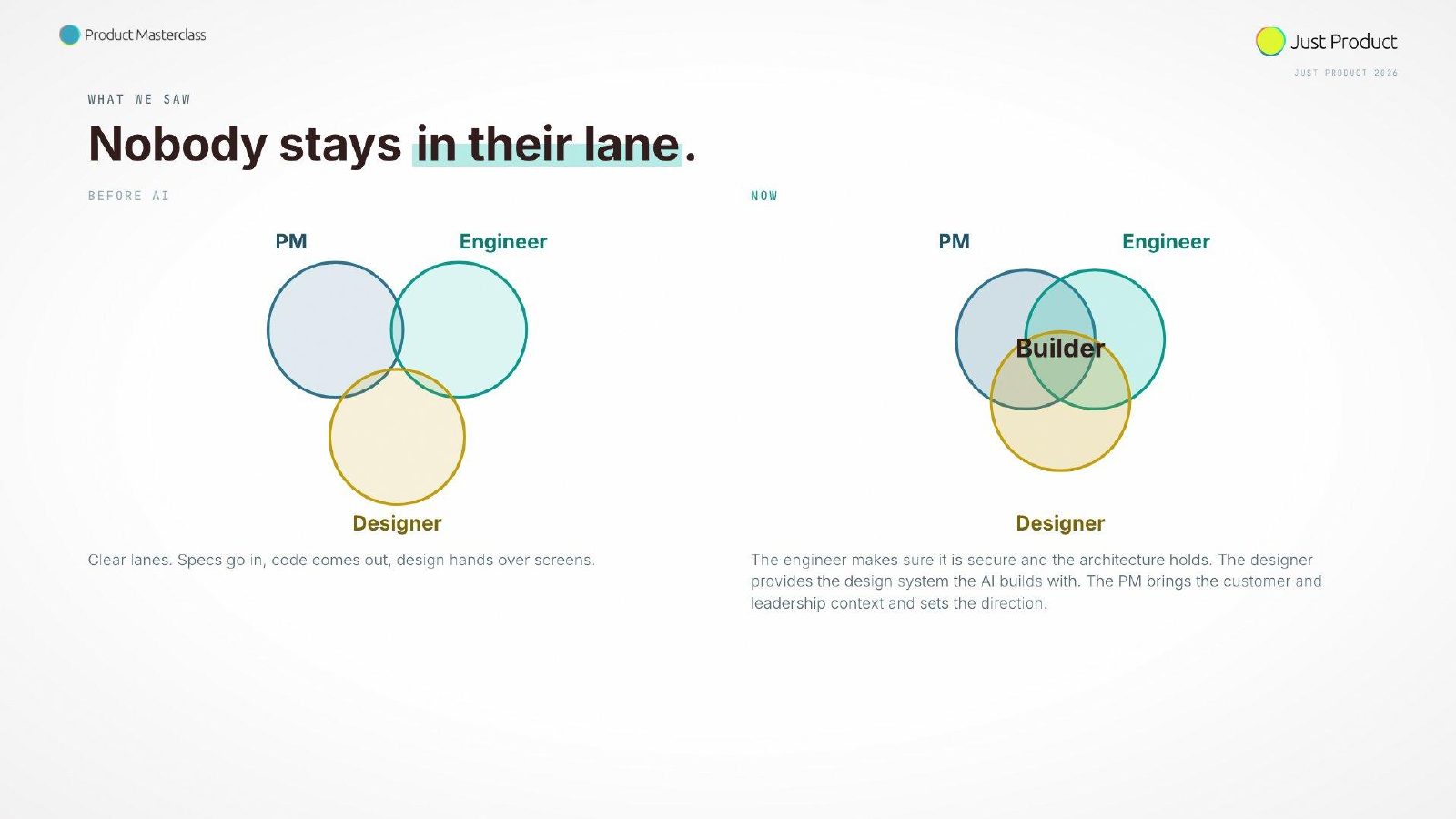
  8. Let designers own the design system and engineers own code maintainability so AI prototypes stay on brand and shippable.

AI won't replace PMs. PMs who use AI will replace those who don't.

A fool with a tool is still a fool. A bad product manager with AI is an even worse product manager. A great product manager with AI is a freaking machine.

Your AI agents cook something, everything passes by, and you look for the hair in the soup. If you find it, you send it back to the kitchen. That's your job now.

Q&A

Questions from the room.

The video ends with the talk. The questions are summarised here.

Where is the line between augmenting and automating your work?

Automate everything you are confident the AI can finish without you. Keep a review step on things like outgoing email, where you want to see the result before it goes out.

How do you work with a designer when the PM prototypes with AI?

Product Masterclass has a design system and the AI pulls from it. In a bigger company the designer owns and maintains the design system, the engineer keeps the codebase maintainable, and the AI builds within both. Asked what the PM does then, Thomas joked: nothing.

Slides

The slides that carry the argument.

Download the deck (PDF, 48 slides)
Slide 7Slide 10Slide 13Slide 16Slide 21Slide 36Slide 38Slide 44
Show all 48 slides
Slide 1Slide 2Slide 3Slide 4Slide 5Slide 6Slide 7Slide 8Slide 9Slide 10Slide 11Slide 12Slide 13Slide 14Slide 15Slide 16Slide 17Slide 18Slide 19Slide 20Slide 21Slide 22Slide 23Slide 24Slide 25Slide 26Slide 27Slide 28Slide 29Slide 30Slide 31Slide 32Slide 33Slide 34Slide 35Slide 36Slide 37Slide 38Slide 39Slide 40Slide 41Slide 42Slide 43Slide 44Slide 45Slide 46Slide 47Slide 48
Mentioned on stage

Names, numbers, sources.

About the speaker

Thomas Hartmann

Thomas Hartmann co-founded Product Masterclass and hosts Just Product together with Sebastian. He is the co-author of From Project to Product Mode. In 2026 he rebuilt the whole company to run on an AI operating system.