AI Transformation and Leadership · 15:15 · 25 min

Building an AI Operating System

Felix GeelhaarDirector of Product and R&D Operations

AI only speeds up the wiring you already have, so rewire the front with problem, proof and prototype first.

Felix Geelhaar
Chapters
Highlights

The moments worth replaying.

Short clips, each a complete thought. Share them, or jump to the spot in the full talk.

AI speeds up the wiring you already have

The core thesis plus the three joints of the system: handoff, check and signal.

6:47 IN THE TALK · 76 S
82 percent and 4 percent

The Atlassian numbers that show the front was thin before AI arrived.

9:33 IN THE TALK · 69 S
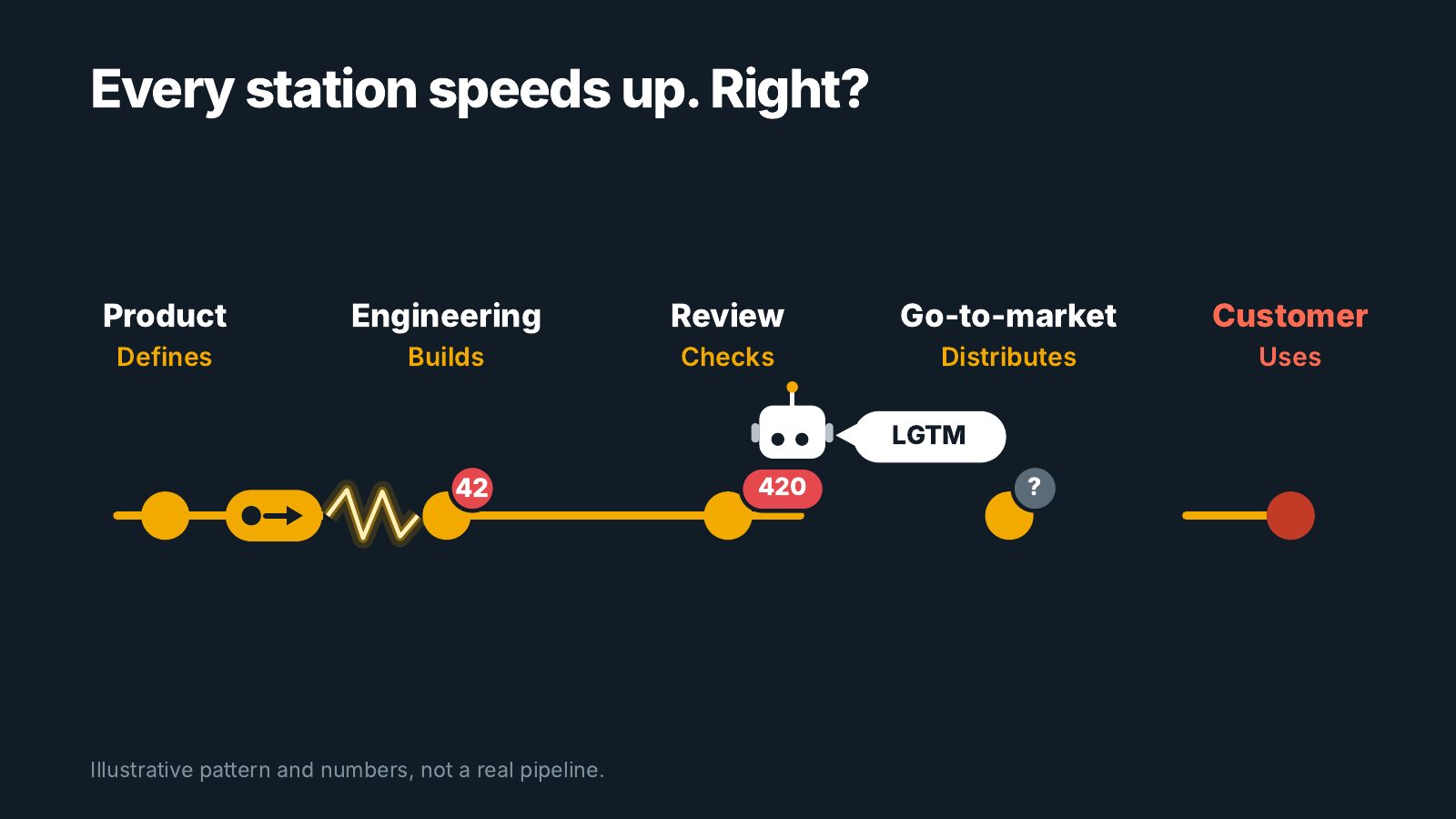
42 issues become 420 and Steve says ship it

A vivid walk through what happens when every station speeds up but the wiring stays the same.

11:32 IN THE TALK · 80 S
Backlog refinement was the moment to ask why

Three hands still do refinement, and an empty roadmap means the bad ideas ship too.

13:32 IN THE TALK · 88 S
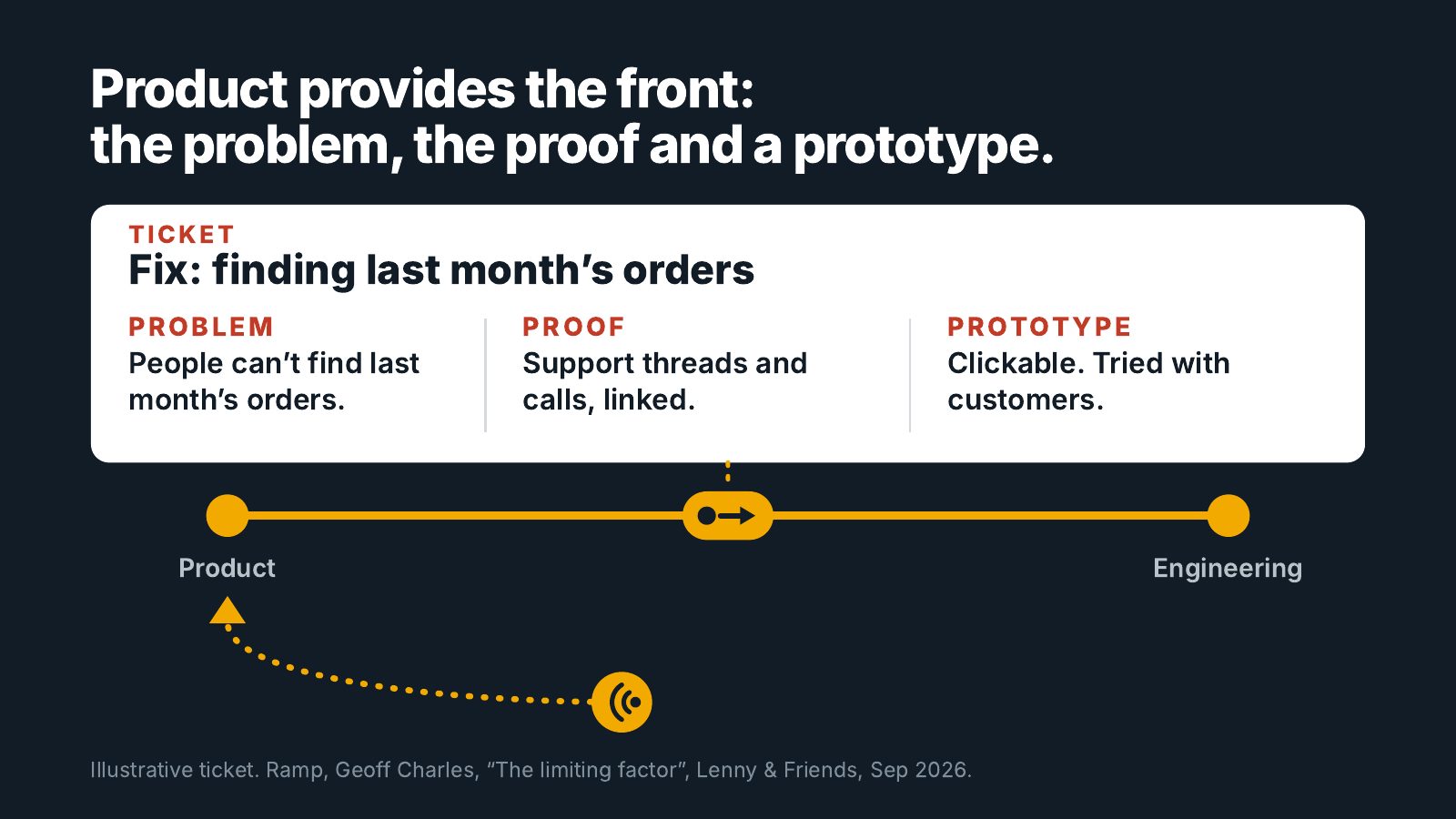
The problem, the proof and a prototype

The practical fix for the handoff, ending on the clickable truth line.

15:22 IN THE TALK · 80 S
What is product for when building is cheap?

The closing question, the great question punchline and the call to rewire the front.

23:33 IN THE TALK · 52 S
In short

What Felix argued.

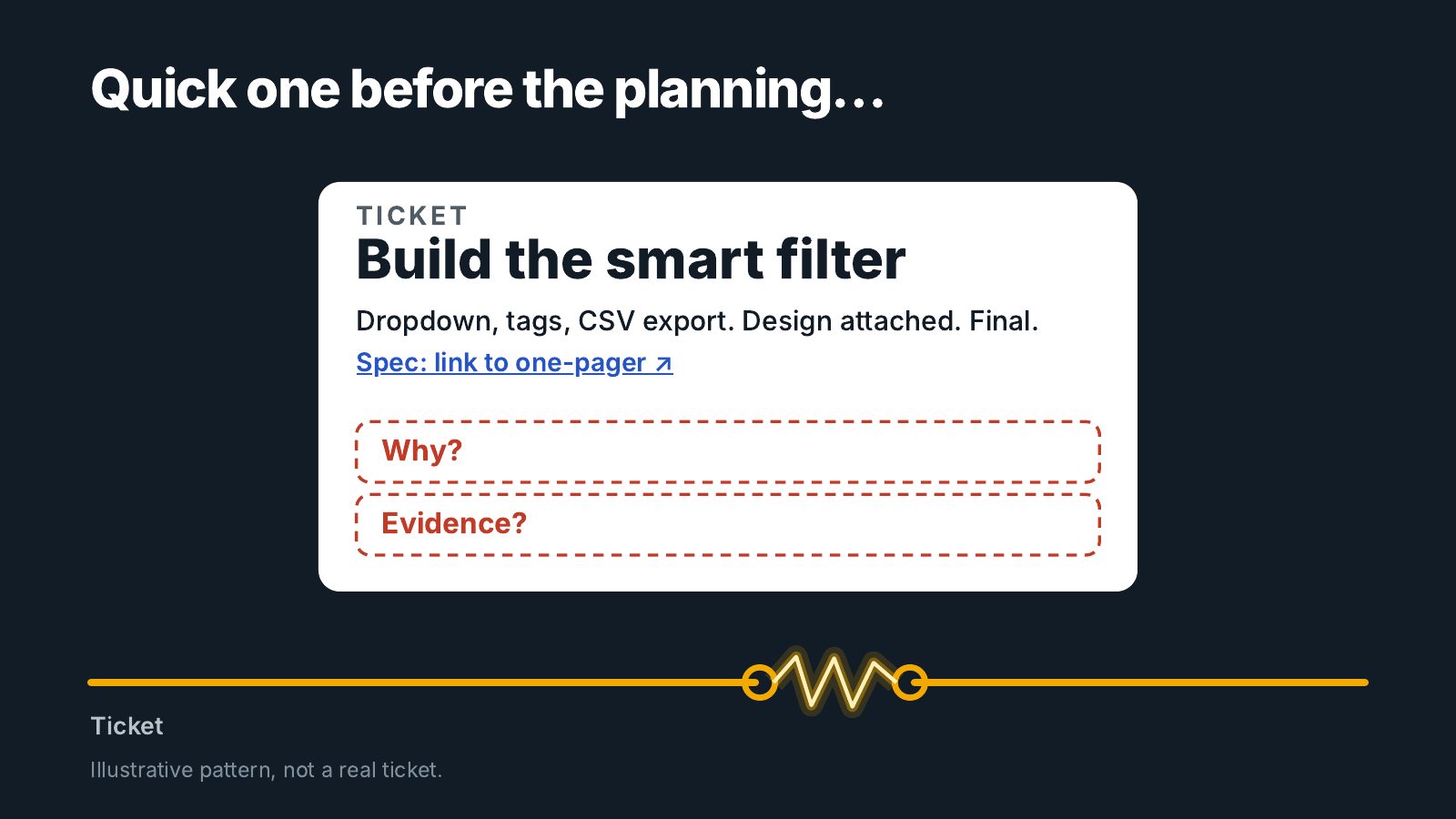
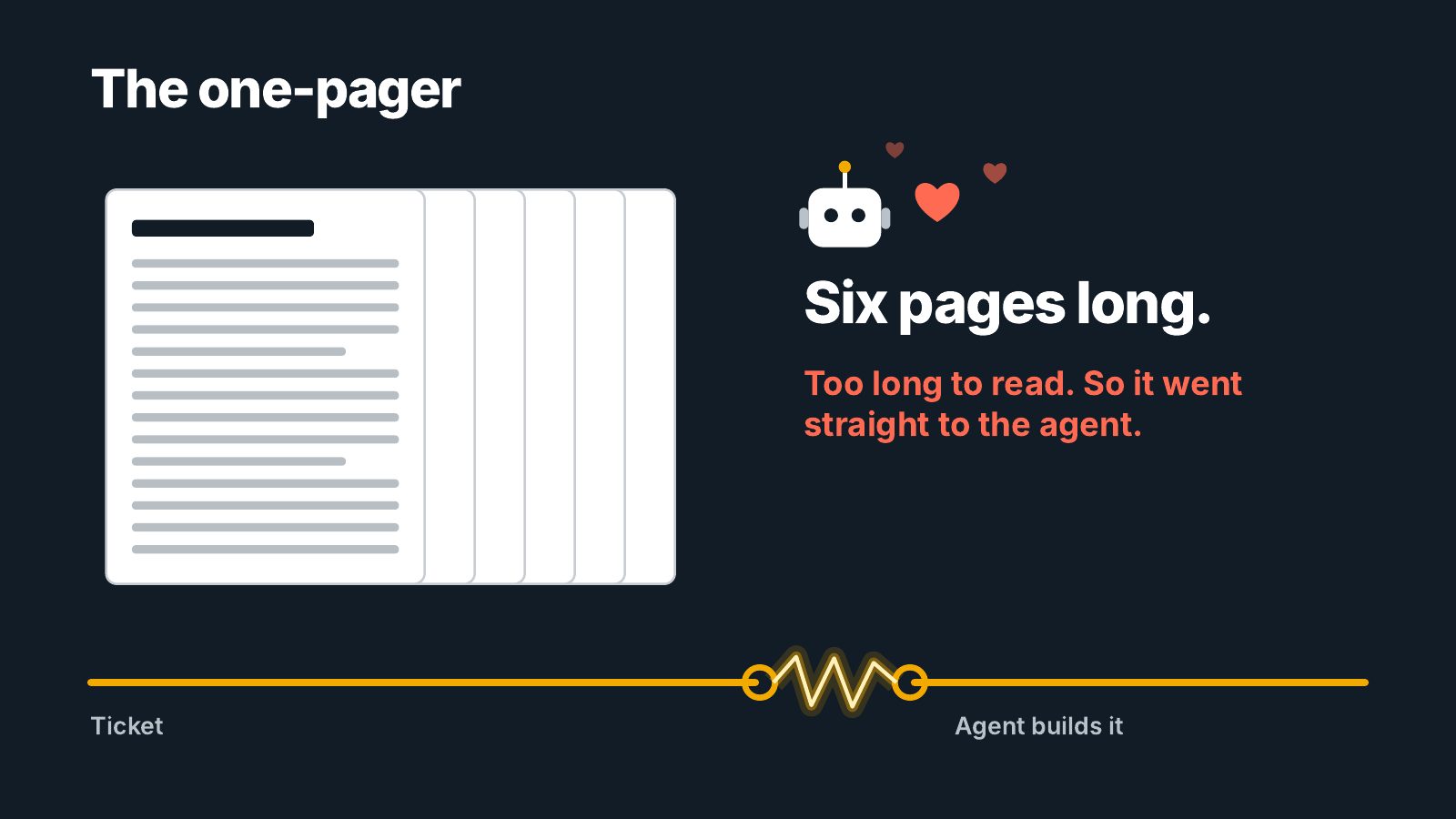
Felix Geelhaar runs product and R&D operations at PandaDoc, after years in engineering and product and a stint at Snyk. That seat lets him watch how product, engineering, design and go-to-market actually hand work to each other, and his talk opens with a scene everyone in the room recognised. Monday, right before sprint planning: quick one before the planning, I have an idea. A ticket appears. Build the smart filter, dropdown, tags, CSV export, design attached, this is final. The one pager was written by Claude from a couple of Gong calls and some metrics. It is six pages long, so nobody reads it. The ticket goes straight to an agent, and engineering never gets to ask why.

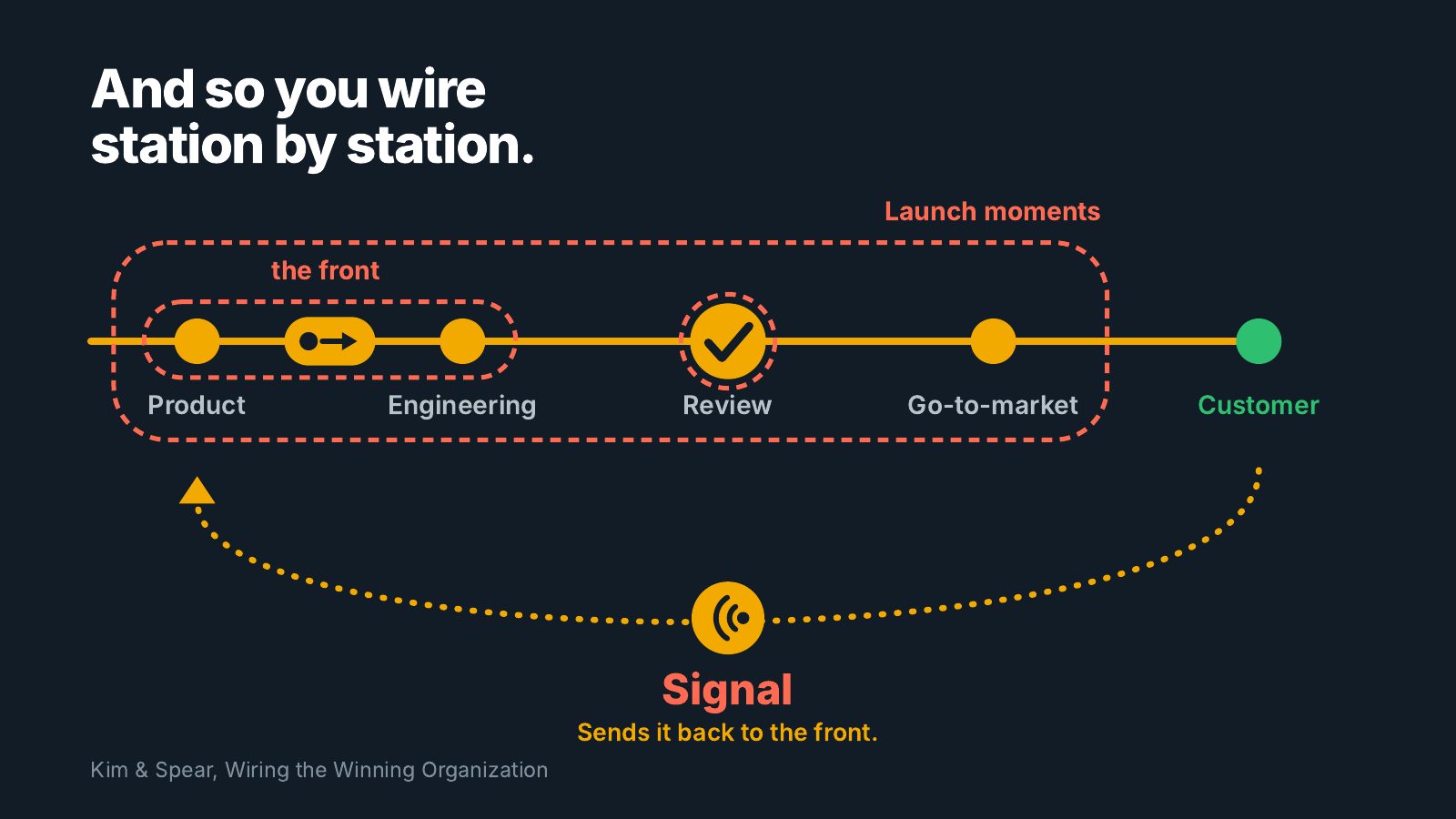
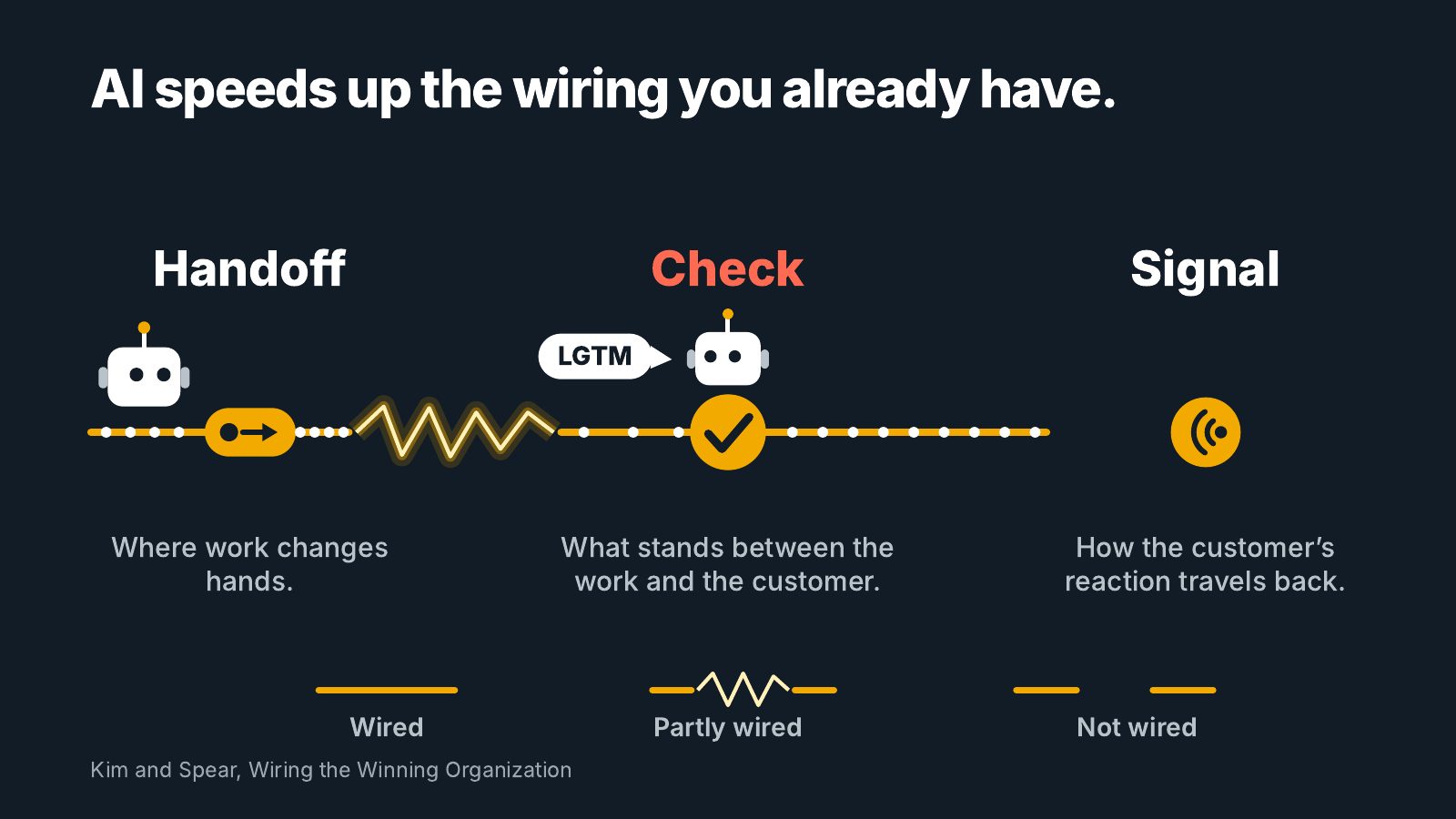
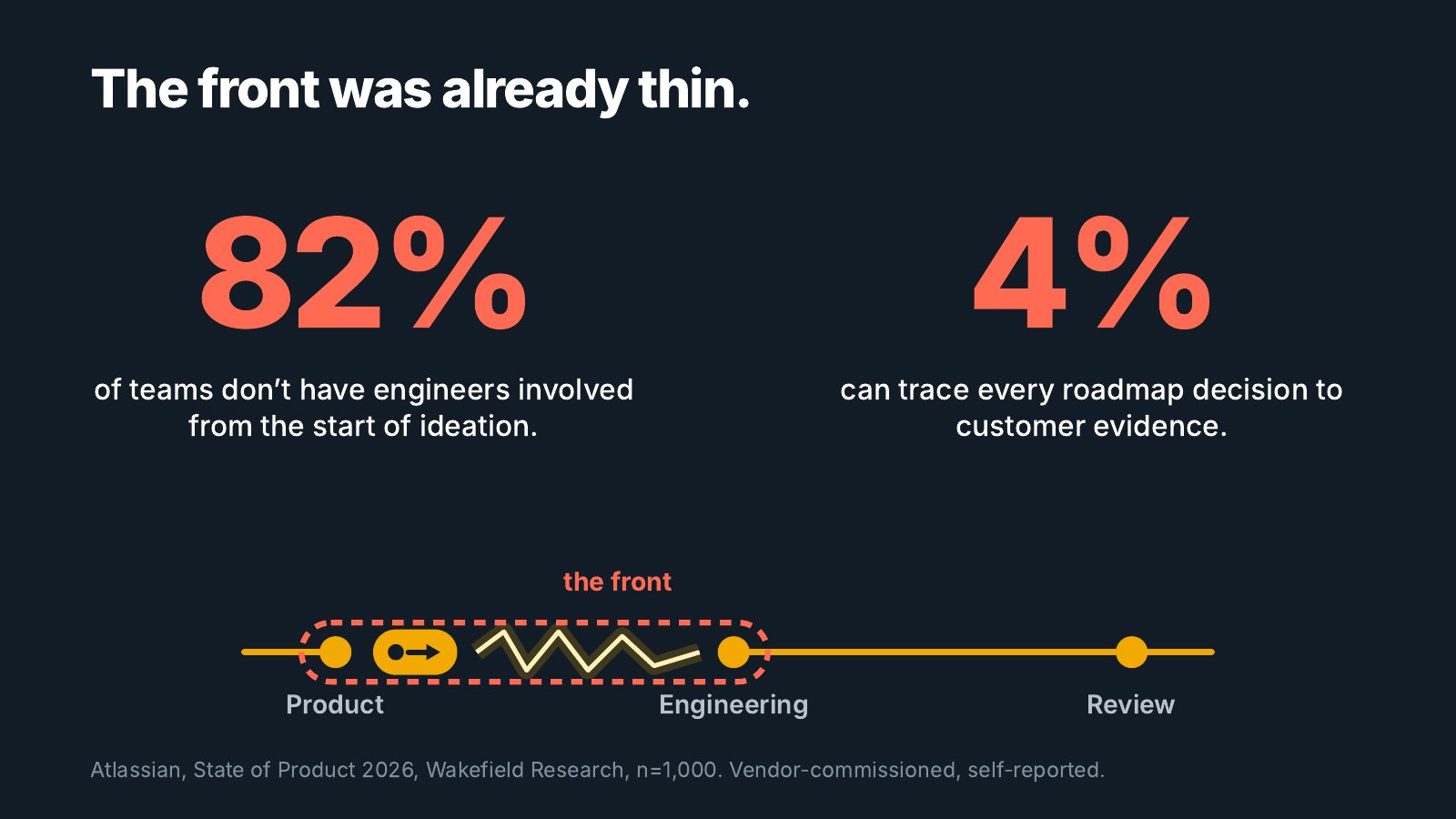
His thesis: AI speeds up the wiring you already have. However product, engineering, design and go-to-market connect today, AI makes that connection faster without fixing it. He names three joints. The handoff, where work changes hands. The check, what stands between the work and the customer. The signal, how the customer's reaction travels back. Agile optimised for time to market. With AI the goal becomes time to signal. And the front was thin before AI arrived: Atlassian's 2026 State of Product survey found that 82 percent of teams have no engineers involved at ideation, and only 4 percent can trace a roadmap decision back to customer evidence.

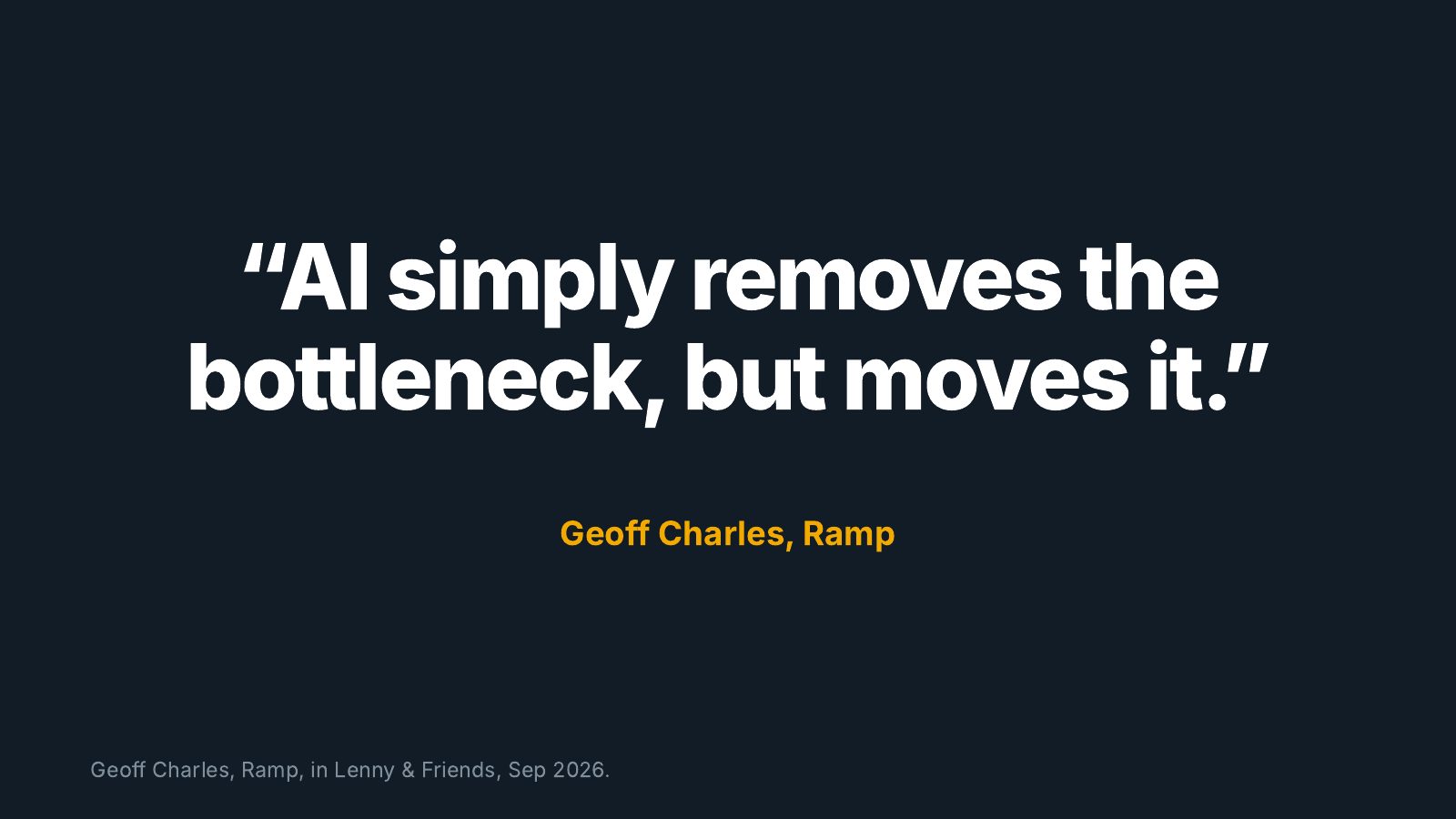
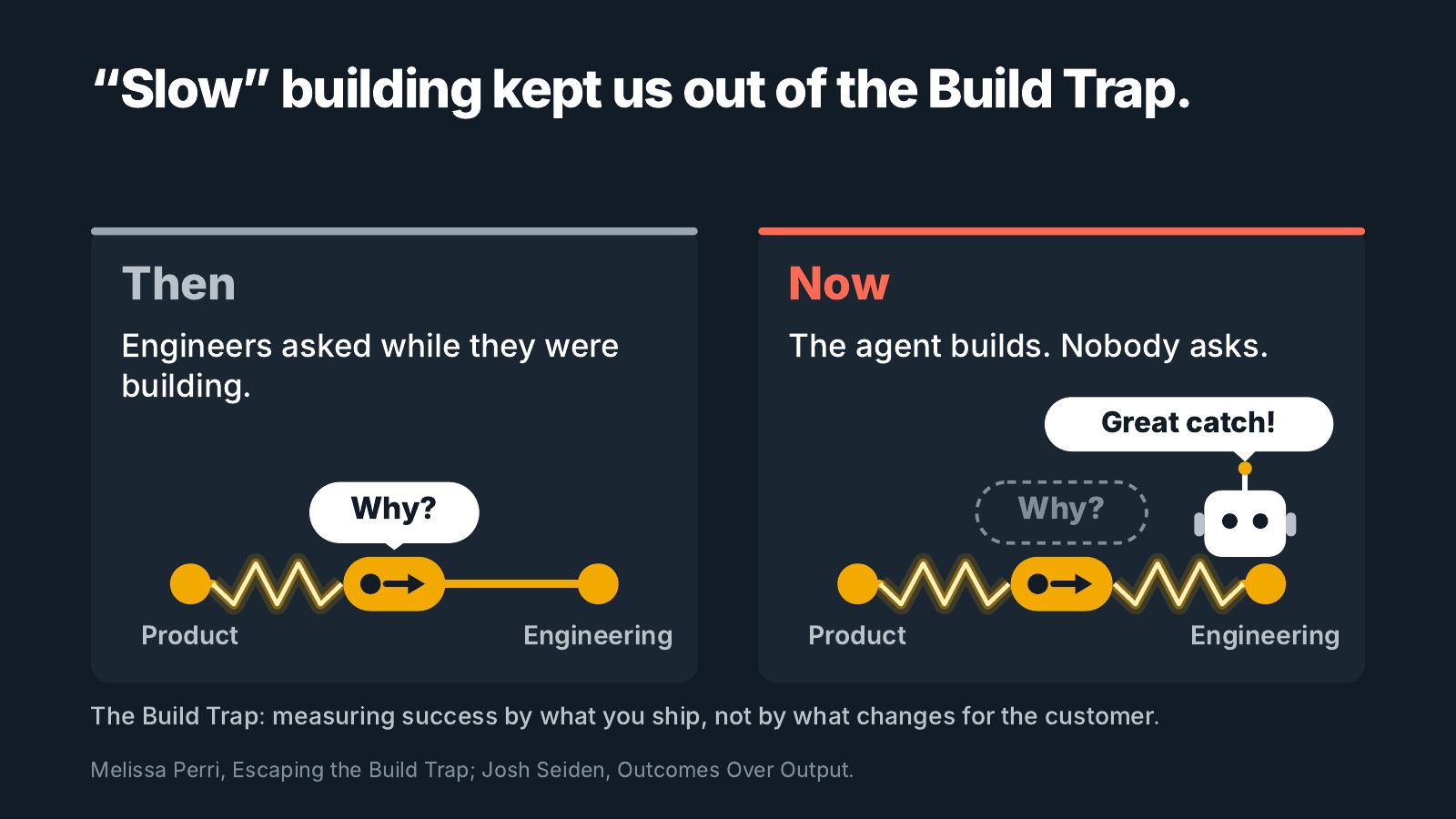
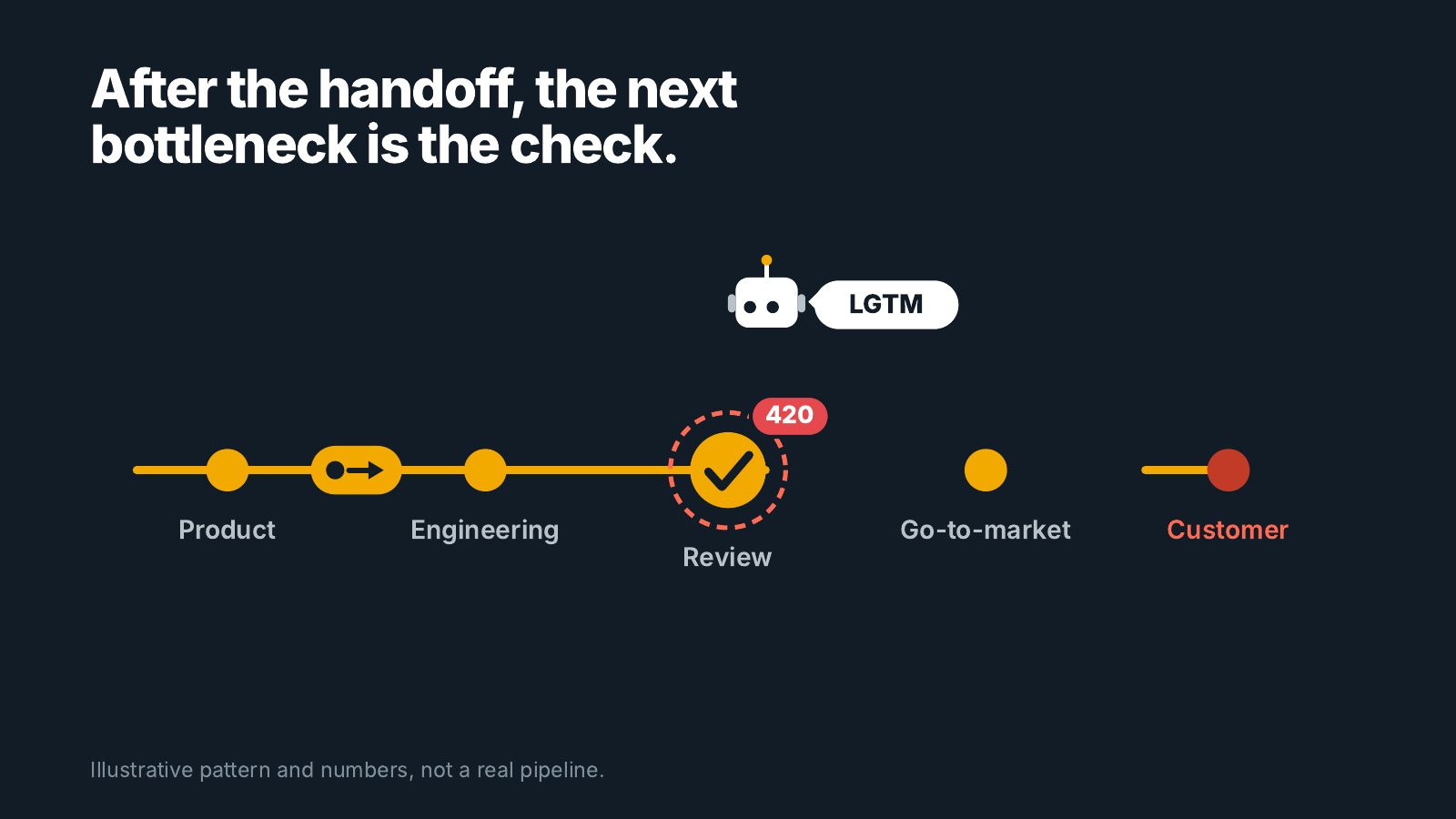
Then he speeds up every station. Engineering ships 42 issues faster, 420 pile up at review, and the natural reflex is an agent named Steve that stamps looks good to me on all of them. Go-to-market hears about the release when a customer asks why the button moved. He quotes Geoff Charles of Ramp: AI simply removes the bottleneck, but moves it. Backlog refinement, the slow ritual where engineering got to ask why, was what kept teams out of the build trap. Three or four hands in the room still do it. Claire Vo's observation completes the picture: your roadmap empties faster, which means every bad idea still on it ships too.

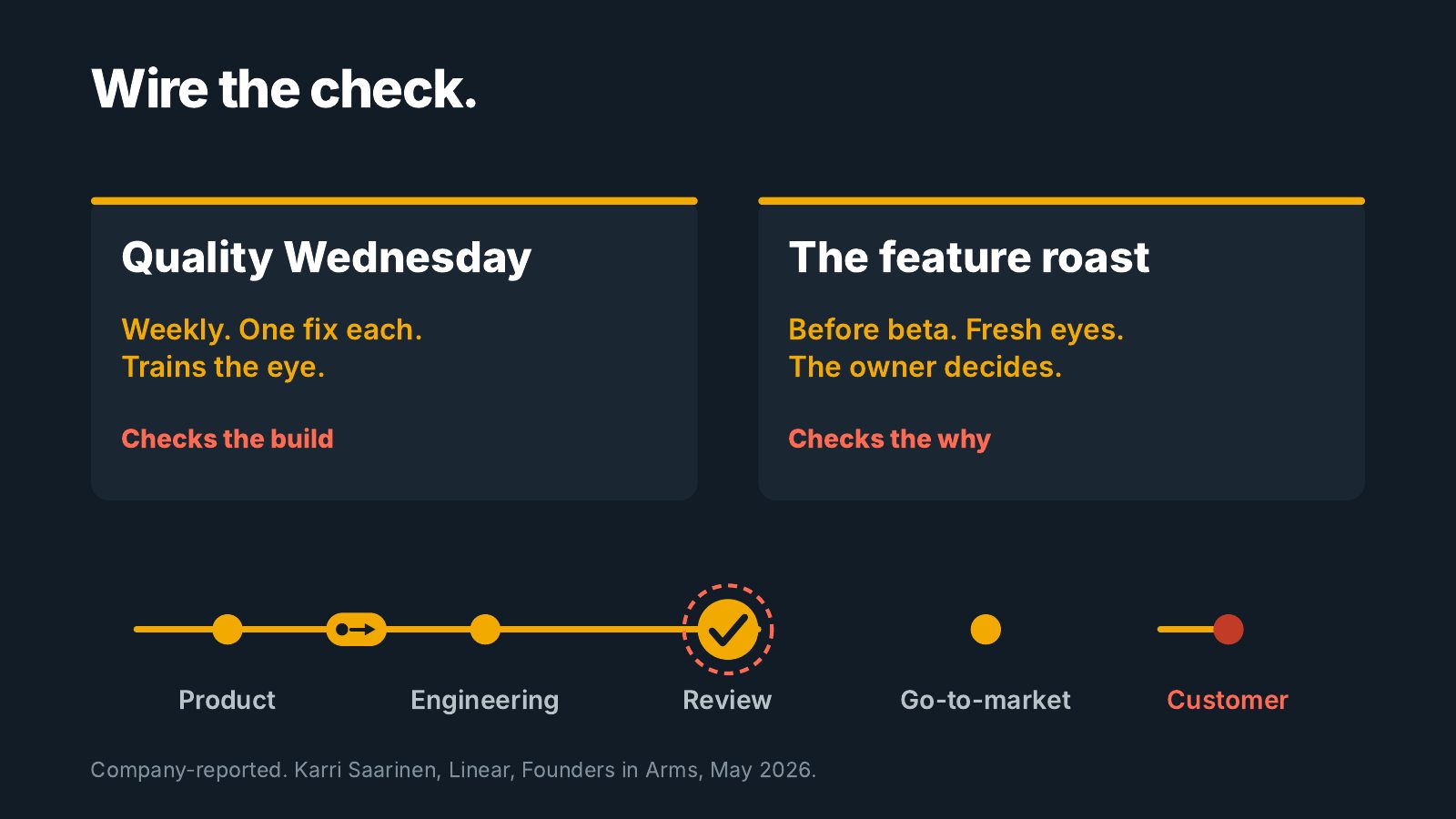
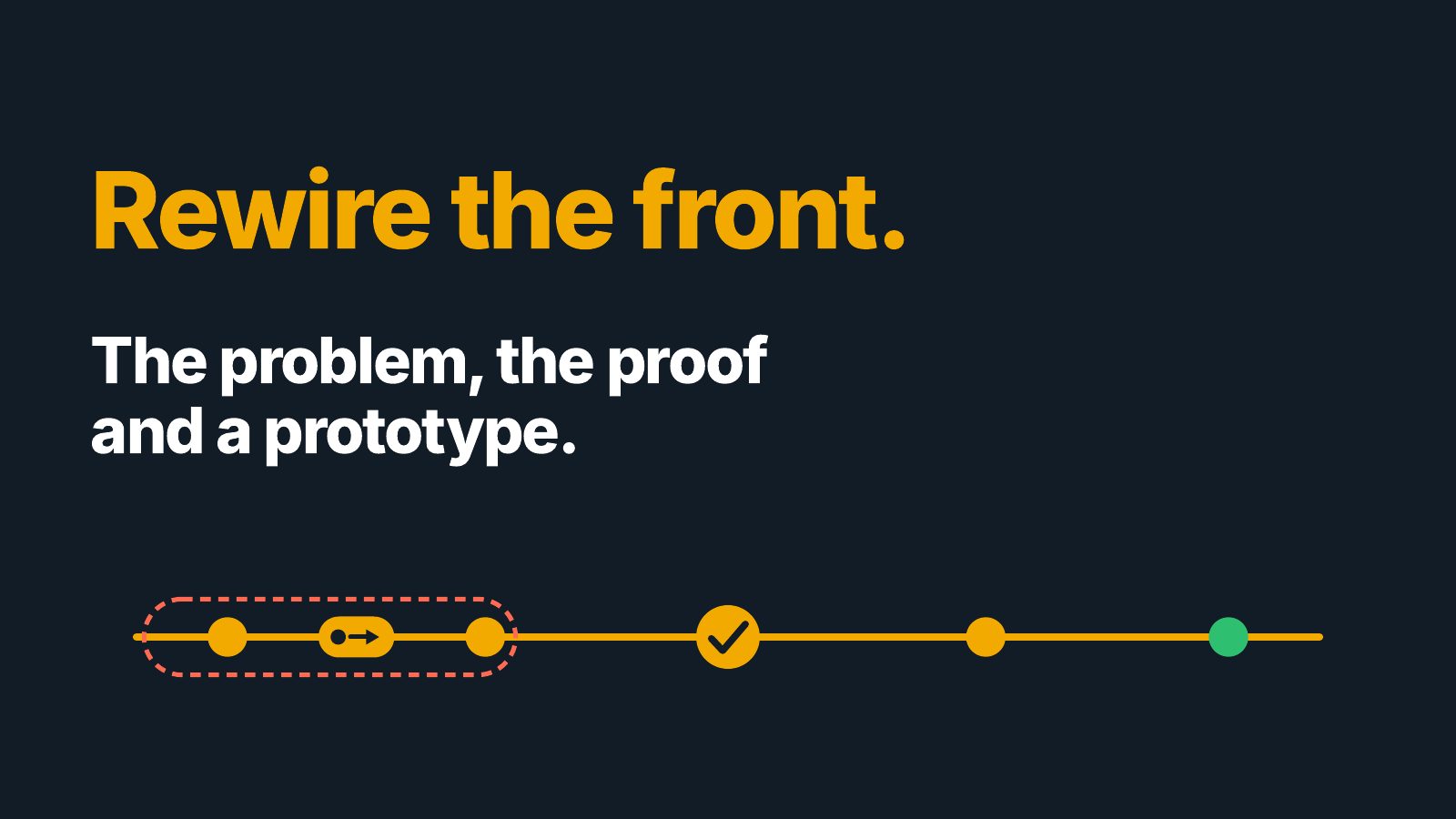
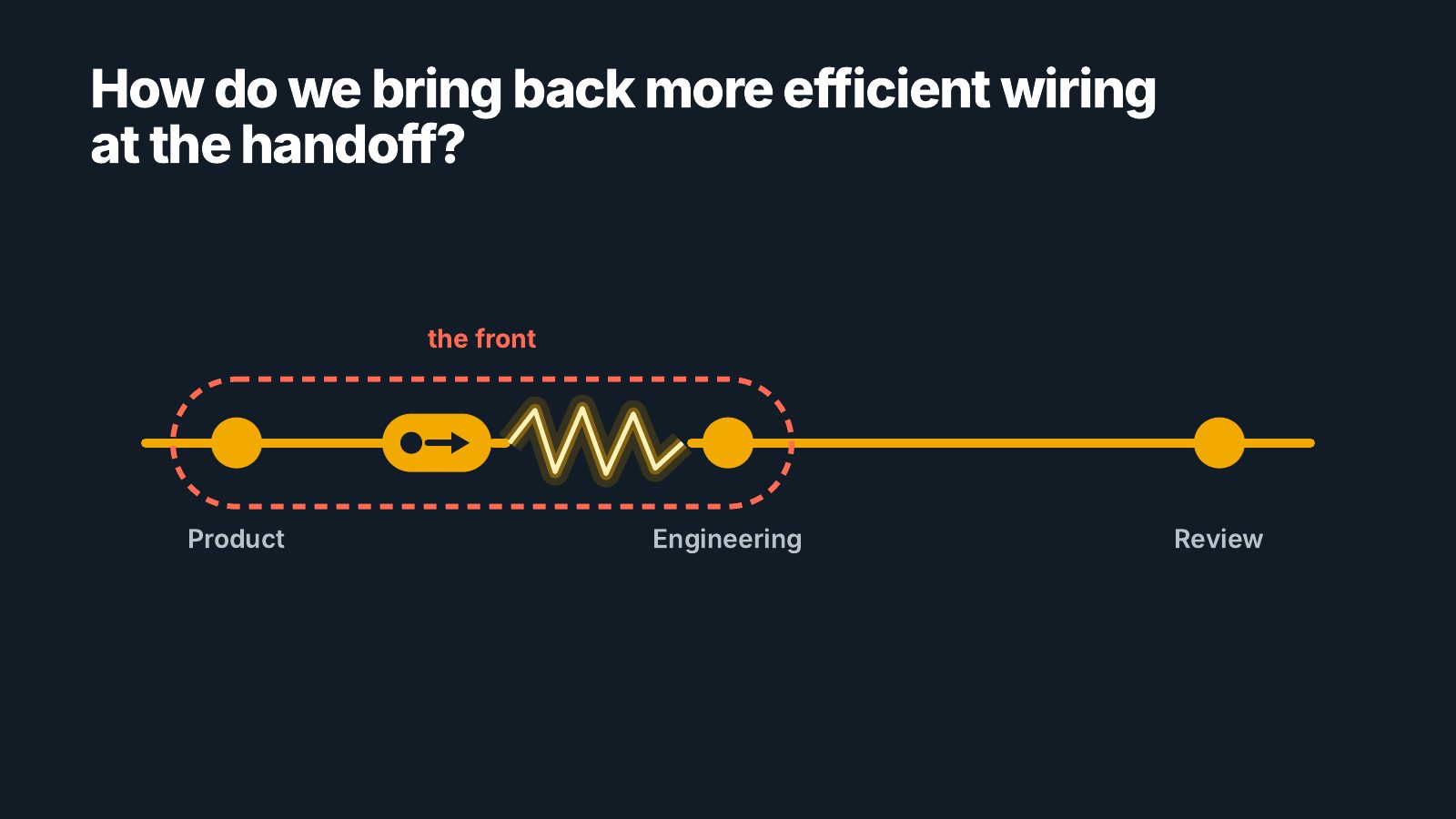
The fix starts at the front. Product brings the problem, the proof and a prototype, the practice Ramp uses and Marty Cagan describes in Transformed: a clickable truth that falsifies an assumption before engineering touches it. Then wire the check on purpose. Linear runs Quality Wednesday, one fix per person per week to train the eye for quality, and a feature roast before each beta where fresh eyes look and the beta owner decides whether to ship. Gene Kim's Wiring the Winning Organization calls this slowifying: slow down at chosen moments to go faster overall. Add deliberate launch moments so go-to-market stays wired in, then keep tracking the signal after launch instead of forgetting the feature.

The Q&A ran long because the keynote was moved back 15 minutes. On people and pushback, Felix described a cross-functional pilot at PandaDoc that first drew the company's interaction model, who talks to whom and why, then fixed one link at a time with retrospectives in between. On regulated environments, drawing on FedRAMP work at Snyk, he said evidence collection is the real gap and no tool collects it in real time yet. On where context should live, he argued against markdown piling up in repos and pointed to a queryable company layer that answers whether there is customer evidence for an assumption, with sources attached.
Key takeaways

8 things to take back to your team.

  1. Map your handoffs, checks and signals before adding AI; it will speed up whatever wiring you already have, gaps included.
  2. Measure time to signal, not only time to market: how fast does a customer reaction reach the team that built the feature?
  3. Bring the problem, the proof and a clickable prototype to every handoff so engineering can still ask why.
  4. Falsify assumptions with a prototype before a ticket exists; many ideas should never reach engineering at all.
  5. Put a deliberate human check in the pipeline, like Linear's Quality Wednesday or a feature roast before each beta.
  6. Decide what not to build before you speed up delivery, or the bad ideas on your roadmap ship first.
  7. Create explicit launch moments so go-to-market learns about releases from you, not from a confused customer.
  8. Pilot the rewiring with one cross-functional team, run retrospectives at each stage and watch where the bottleneck moves.

All the stuff on your roadmap gets done faster. But it also means all the bad stuff is being shipped, because all the bad ideas are still on your roadmap and you haven't made the decision to not build it.

With that prototype, you have essentially a clickable truth.

I definitely didn't want to give that question to an AI, because the first thing I will get is: great question. Thinking. Looks good to me.

Q&A

Questions from the room.

The video ends with the talk. The questions are summarised here.

What about the people side: fear, pushback, obstacles when you introduced this, and how did you solve them?

Pilot in one area with a cross-functional team, set a goal and give people a target picture of what faster means for them, because installing AI as a tool only speeds up the wiring you have. At PandaDoc the pilot first drew an interaction model of who talks to whom, when and why, across internal enablement, support, customer enablement, AEs and SEs, then working groups fixed one link at a time with retrospectives at each stage. They watched the bottleneck move.

In a regulated environment development is fast but validation cannot keep up. Is there a solution?

From FedRAMP work at Snyk: agents write GRC documents fast, but evidence collection is the gap and nobody collects it in real time while building yet, Vanta does it after the fact. Humans were still interviewed about how the system works, and the diagrams product security demanded helped teams understand what the agent had actually built. FedRAMP itself moved from around twenty thousand pages of documentation to one interview with evidence checked asynchronously by an agent.

Where should the context live? Right now I keep it in GitHub with the developers.

Markdown files in repos blow up and go stale within hours without governance, and Boris Cherny says he regularly deletes his CLAUDE.md files for that reason. Felix expects a queryable company layer, which Y Combinator is already funding, that an MCP or CLI can ask for context including how fresh and trustworthy it is. His wish: a Slack bot that answers whether support signals or Gong calls hold customer evidence for an assumption, condensed and linked to the source.

Slides

The slides that carry the argument.

Download the deck (PDF, 15 slides)
Slide 4Slide 5Slide 6Slide 7Slide 10Slide 12Slide 13Slide 15
Show all 15 slides
Slide 1Slide 2Slide 3Slide 4Slide 5Slide 6Slide 7Slide 8Slide 9Slide 10Slide 11Slide 12Slide 13Slide 14Slide 15
Mentioned on stage

Names, numbers, sources.

About the speaker

Felix Geelhaar

Felix Geelhaar is a technology and operations leader focused on operating leverage through systems, organisational design and AI enabled platforms. He leads product and R&D operations at PandaDoc and previously held leadership roles at Snyk.